Call now for a free estimate. Call On Time Garage Door Repair now.
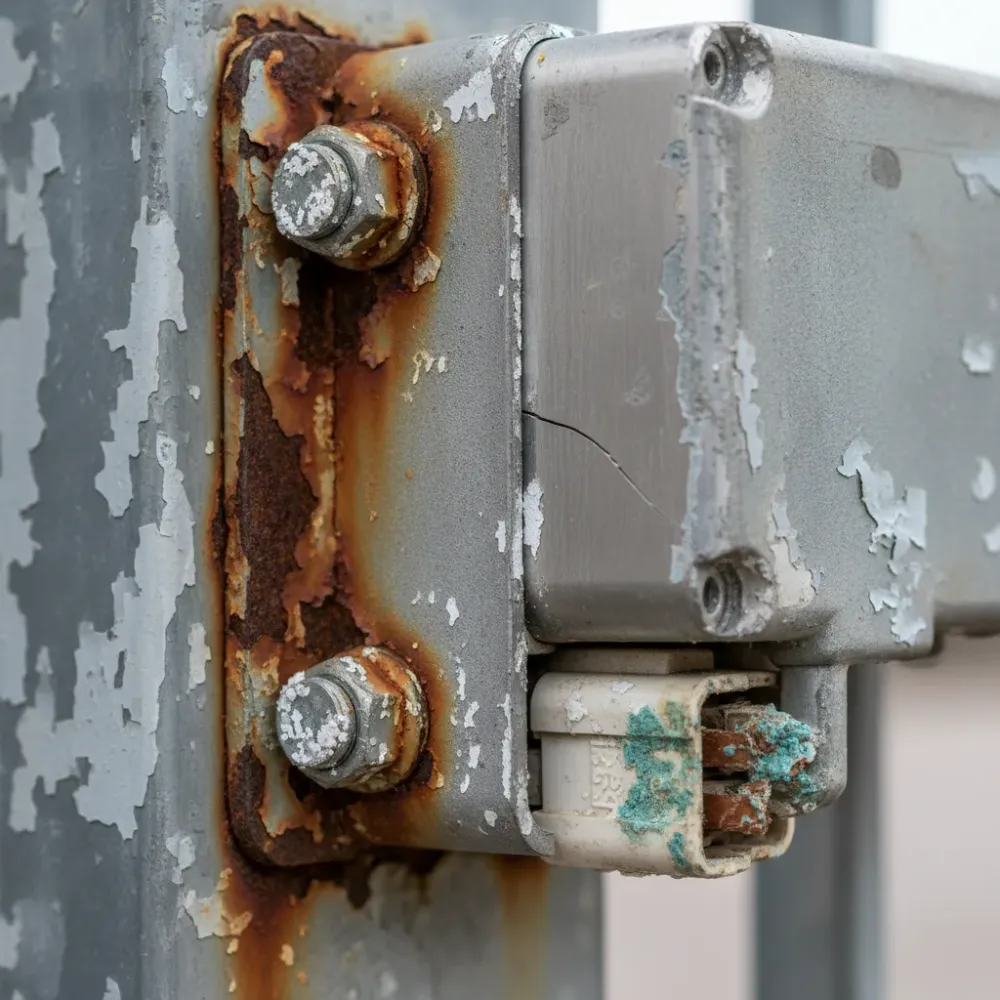
# Why Your Electric Gate Won’t Stay Fixed in Hallandale Beach ## Why Does My Gate Keep Breaking? Hallandale’s Most Common Causes We hear this story constantly in Hallandale Beach. An electric gate operates smoothly for a period of time, then begins malfunctioning. The gate gets repaired, and occasionally even repaired a second time. But then, the issue returns to haunt the homeowner once more. We’ve got plenty of customers who are fed up with their recurring electric gate issues in Hallandale Beach, and for good reason. There are a few fundamental reasons for why your electric gate keeps going out. And often, a quick-fix solution simply doesn’t resolve the problem. So, your gate continues to function for a short duration of time and then fails once more. We will examine all of the possible causes. ### Hidden Problems Caused by Electrical Glitches A loose wire is by far the most common reason for repeat failure. Florida’s heat and high humidity accelerate the corrosion rate of wire connections. While our technicians may simply tighten a connection during a typical service call, the corrosion will come right back if the wiring is not replaced or properly enclosed. Many of our customers with properties along the Intracoastal in Hallandale Beach have reported that the gate power has to be restored several times within a few months due to corrosion of exposed terminals from salt air. Electrical surges also play a large role. Florida receives more lightning strikes than any other state in America per the National Weather Service. A large electrical surge can completely destroy a control board. And a smaller surge that may go unnoticed could cause gradual damage to the electronics of the gate operator. ### Mechanical Failure and the Parts That Wear Out An electric gate is equipped with moving parts. The rollers, chains, pivot points, and drive gears will deteriorate over time. The following mechanical issues may be causing repeated electric gate failure: – Bad rollers that cause your gate to drag, increasing the workload on your motor
– Track misalignment that causes your gate operator to work harder on every single cycle
– A chain or belt that has rusted and skipped, causing the safety sensor to halt the gate
– Bearing or pivot points that bind, due to a lack of lubrication in humid conditions that can be extremely sandy Any of these mechanical failures can cause the motor to quit mid-cycle. The motor operator could be in good shape. But the root cause isn’t the motor, so it is no surprise to homeowners that their new motor is failing once again as well. ### Photo-Eyes and Sensor Malfunction There are safety sensors on your electric gate, commonly called photo eyes, that will prevent the gate from closing on your car or on a person. These sensors are mounted at ground level, making them especially vulnerable to rain splash, fallen leaves from the trees, and lizards nesting inside the plastic cover. A dirty or misaligned sensor may signal the gate that there is an obstruction. The gate reverses, or the operator won’t close at all. Most of our customers assume this is the gate motor failing. But it is often a sensor that just needs to be cleaned and adjusted. And if the actual cause is never discovered, homeowners can continue to incur costs that are unnecessary. ### The Cost of Bad Gate Installation This is the tough topic to deal with. In some cases, the gates are failing because they were incorrectly installed to begin with. We have performed work on gates in communities along East Hallandale Beach Boulevard which the original installer had equipped with operators that were too small for the heavy iron gates involved. The operator heats up and burns out and is replaced and burns out again. Similarly, with gates installed on ground that is not level and does not have posts that are adequately reinforced, the gate can become misaligned over time. That misalignment will be out of spec, and then the next month you are back to square one. An operator that is too small for the size of the gate will not last long, like having a small engine in a truck and trying to use it to haul a full load. The remedy for persistent and recurring electric gate problems is rarely as simple as replacing a component only to have it fail again soon after. The solution is to find and correct the cause of the initial breakdown. This often requires a detailed assessment of the electric gate’s electrical system, mechanical elements and installation. ## How Weather and Climate Exacerbate Electric Gate Deterioration For the Hallandale Beach resident, your electric gate is constantly battling the elements: salty sea air, humidity and the frequent afternoon rainstorms. These weather elements don’t get a break and neither does your gate hardware and electronics. We find that many of the recurring electric gate problems reported are weather-related. Often, residents and facility managers fail to make the connection at first. A problem is fixed, a different component is replaced, and soon you have another failed part a few months later. This is when you realize that the weather is causing problems in the electric gate. ### Exposure to Salt in the Air If you live on or east of US-1 or on or near the Intracoastal waterway, salty air is not only present; it is constant. Metal parts will corrode. Gate hinges, roller chain and track hardware will have significant rust within months or a few years rather than years or decades, depending on how well they have been protected. That rust will increase the friction between moving parts, which will make the motor operate more heavily and burn out prematurely. We have seen gate operator assemblies taken off of the property near Golden Isles which looked to have been used for 10 years, yet had only been installed two years previously. Inside, the printed circuit boards had corroded contacts, covered in green oxidation. This is what is done to electrical components by salty air; it does not care how old or new your electric gate components and installation are. Areas of a gate that are attacked by the salt in the air first include: – Exterior wires and terminals
– Steel roller chains, sprocket and bearings
– Control board and relay contact soldering
– Safety sensors and limit switch cases If the gate components are regularly maintained and inspected, this type of corrosion is easily avoided before it causes damage. Protective coatings may be applied. But they will deteriorate at some point. The most effective way to protect the gate is by regularly inspecting these parts and cleaning them as corrosion begins to set in. ### Moisture and Humidity Influx South Florida is generally more humid than 70% humidity most of the year. Humidity in the air gets inside the gate control boxes and junction enclosures; these components and enclosures may not have a tight, sealed construction, but moisture also collects inside the enclosure due to the temperature fluctuations. These enclosures may get very hot during the day, and cool down considerably at night. Inside this box, the metal may get cold while the air gets warm, and moisture is drawn out of the air and deposited as water on the electrical parts. Water in the electric gate causes the gate to fail intermittently, which makes it difficult to find. For instance, the gate may work fine in the early hours in the morning, then act up in the afternoon. The gate operator may start to operate and then stop halfway through its cycle. Or just starts doing the opposite, for no apparent reason. These erratic “ghost” failures are infuriatingly unpredictable. Except they aren’t. They’re completely tied to the humidity cycle. Whenever we go out for a service call, the first thing we do is crack open the operator housing to hunt for any trace of moisture: water spots, salt deposits, condensation on the display. If those signs are there, then the gate is running on borrowed time. Installing a desiccant can or opening up a drainage hole will save you a lot of trouble down the road. ### Storm Surge & Lightning Hallandale Beach ranks as one of the most lightning-prone areas in the country per NOAA. Power surges from near misses or direct strikes will often fry gate operator boards. You don’t have to have a lightning bolt land on your gate. It only has to be about a half-mile away. The energy from it will travel down your power line or through your ground wire to fry your system. Right after every storm, we see a spike in service calls where people report their gate won’t close, it won’t open, or it’s stuck halfway open. Other problems we encounter are the keypad throwing up an error code or the remote not working at all. Most of the times, this damage comes from a fried transformer or a blown logic board. The thing that most homeowners don’t realize is that it doesn’t have to be a major storm to destroy your system. Even the smaller surges cause the circuit boards to fail eventually. One day the surge will come and the gate might not do anything. Then the next, maybe it does. Then it fails completely. So the failure seems abrupt, but it’s usually happened over the course of several weeks. If you want to protect your gate, there are surge protectors designed specifically for gate operators. They will help. Grounding is also very important. We check the ground for every service call because that the soil conditions of Hallandale Beach will loosen your ground rods over time. If you are seeing frequent issues with your gate failing at all but can’t pinpoint the problem, then there is a good chance it’s because of our local weather. Making sure your gate is prepared for the weather isn’t a one-time thing. You need to build it into your electric gate repair maintenance plan if you want to stop it from happening. ## Electrical & Sensor Problems Which Cause Recurring Gate Issues You close your gate on Monday. By Wednesday, you’re trying to close your gate but it stops halfway down. You reset it, the gate works again. Then you have to do it again on Friday. Does that sound familiar? We get a call like that almost every week in Hallandale Beach and, nine times out of ten, the reason it happens is electrical. I mean not electrical in regards to the motor. I mean, there’s no mechanical problem with your gate. It’s the wires, the sensors or even your gate control board. The thing about an electric gate that keeps breaking down is, it’s rarely random or coincidental. It’s going to follow a pattern. Usually the pattern is related to one of these issues: – Corroded wire connections. Salt air off the coast will corrode the wiring much faster than you’d expect, particularly in areas like near the Diplomat or down A1A.
– Photo-eye sensor that is out of alignment. One small movement from a landscaper’s mower and the beam can shift just enough to cause false obstruction readings.
– A failing logic board or control board. This happens if water is getting in, which will damage the circuits gradually, causing your gate to act a different way each day.
– Loose wiring or undersized wiring. The vibration of the gate’s daily usage will eventually cause the wiring to work loose. The challenge is that these problems may appear sporadically, perhaps every few months or more frequently. An electrical connection that works just fine most of the time may be broken when the temperature drops. That is why your gate will open perfectly well for the morning rush and then fail to open when you come home that evening. ### Sensor Problems Are the Most Frequent Troublemaker Photo-eye (photoelectric) sensors are usually located on either side of the gate at ground level. These sensors work in a very simple fashion. A small light is emitted from the sensor on one side of the gate opening, while a light sensor on the other side of the gate opening receives the beam. Any break in the beam will cause the gate to either stop moving or reverse. This is a very important feature. However, photo-eye sensors are very vulnerable in South Florida. Rain will carry debris to the light sensor’s window. Lizards may build a nest inside or behind the sensor housing. Insects may build a web across the sensor opening., due to Hallandale Beach’s proximity to the ocean, the high humidity will often cause fogging on the lens’ window. I have even seen water droplets inside a sensor housing when they are opened. When sensors get dirty or foggy, your gate will often assume that the pathway is blocked and stop or reverse. Or, the gate may simply refuse to move at all. You will get the gate working for a while after you clean the sensor, but as the fog or debris accumulates once again, the sensor will fail. This may become an infinite cycle. Unless the sensor is properly sealed or replaced with one made to operate in a high-humidity, coastal environment, the sensor will eventually fail again. ### Control Board Damage From Power Surges Florida has a lot of lightning strikes. According to the National Weather Service, there are approximately 1.4 million cloud-to-ground lightning strikes per year. That’s the most of any other state! The control board of an electric gate is a small computer and is located outdoors. When lightning strikes close to an electric gate, it can send a surge of electricity through the electrical lines that damages or destroys electronic components in the control board., the lightning strike may or may not destroy the control board completely. Sometimes the damage may only result in one relay or capacitor going bad. The gate may continue to operate mostly normal, only to then start behaving strangely. For example, it opens when you push the button but does not close, it closes when you press the button but the LED light stays on, it does not always respond to remote controls and other times it does. We regularly encounter customers attempting to repair these types of issues by replacing remotes or keypads that are not actually at fault. This often leads to wasted money on repairs when in reality, there is damage to a control board that needs to be repaired and properly tested to identify the problem. This problem can easily be avoided if an electric gate has a good surge protector on its power supply. It is a simple and affordable step to take that can prevent a lot of potential headaches in the future. If your electric gate started to malfunction right after a thunderstorm, do not dismiss the timing; it may actually be a clue as to the nature of the problem. ### Summary If you are experiencing frequent problems with your electric gate, there may be no obvious pattern for when the gate will operate normally and when it will not. This type of electrical problem requires an expert to trace the electrical system from start to end. The team at our electric gate repair company in Hallandale Beach does exactly this. Our team will thoroughly examine each connection, test each sensor, and inspect the control board before we recommend any repair solutions.
Frequently Asked Questions
Common questions about recurring electric gate problems: why it keeps happening and how to fix it for good services in 301 NE 3rd St. unit 206 33009 Hallandale Beach
Why does my electric gate keep breaking even after it’s been repaired?
Your gate keeps breaking because the root cause was never fixed — only the symptom. A technician might tighten a wire or replace a motor, but if corroded wiring, a worn roller, or a misaligned track is the real problem, the new part will fail too. This cycle of repeat repairs is one of the most common issues we see. Our electric gate repair page covers how a full diagnostic can stop this pattern for good.
Does Hallandale Beach’s salt air really damage electric gates faster than inland areas?
Yes, salt air causes serious damage much faster than most homeowners expect. If you live near the Intracoastal or east of US-1, exposed metal parts like hinges, roller chain, and terminal connections can corrode within months. We have seen gate operators near Golden Isles that looked 10 years old but were only installed two years prior. Salt air attacks circuit boards, creates green oxidation on contacts, and makes motors work harder until they burn out.
Can a dirty sensor really cause my gate to stop working?
Yes, a dirty or misaligned photo eye sensor is one of the most common reasons a gate reverses or refuses to close. These sensors sit at ground level and collect rain splash, leaves, and even lizards nesting inside the cover. Most people assume the motor is failing. But cleaning and realigning the sensor often solves the problem completely. If the real cause is never found, you keep paying for repairs that do not fix anything.
What is the biggest mistake homeowners make with a recurring gate problem?
The biggest mistake is replacing parts without diagnosing why those parts failed. Swapping out a motor sounds like a fix, but if the gate track is misaligned or the operator is too small for a heavy iron gate, the new motor will burn out just like the last one. We have seen this happen on properties along East Hallandale Beach Boulevard where undersized operators were installed from the start. Fixing the wrong thing just delays the real repair.
When should I call a professional instead of trying to fix my electric gate myself?
Call a professional when the problem keeps coming back after a repair, when you notice burnt smells or visible corrosion on wiring, or when the gate drags, binds, or stops mid-cycle. These are signs of deeper electrical or mechanical issues. Adjusting a sensor yourself is low risk. But touching control boards, wiring, or operator mounts without the right training can make the problem worse and create a safety hazard.
How does Florida’s lightning affect my electric gate?
Florida gets more lightning strikes than any other state, according to the National Weather Service. A direct or nearby strike can destroy a control board instantly. Smaller surges that go unnoticed can slowly damage gate electronics over time. You may not connect the storm from last month to the gate failure happening today. Surge protection added to your gate system can reduce this risk and protect the operator’s circuit board from gradual damage.
Ready to Get Started?
Call now for a free estimate Call (954) 329-1361 today.


Recent Comments