
Fast, reliable garage door and electric gate repair and installation in South Florida — call today, fixed today.
What’s Covered on This Page
- What Gate Safety Sensors Actually Do, and Why They Are Required
- Signs Your Gate Sensors Need Replacement or Installation
- How Gate Safety Sensor Installation Works, Step by Step
- Adding Sensors to Older Gates Without Replacing the Whole System
- HOA and Code Compliance for Automatic Gate Sensors in Hallandale Beach
- Do Hallandale Beach properties actually require gate safety sensors by law?
- How do I know if my gate sensors are actually working or just look like they are?
- What happens during a gate safety sensor installation visit in Hallandale Beach?
- Can South Florida’s salt air and humidity damage gate safety sensors over time?
- My gate reverses on its own with nothing in the way. Is that a sensor problem?
- How is sensor installation different for HOA or commercial gates versus a home driveway gate?
What Gate Safety Sensors Actually Do, and Why They Are Required
Gate safety sensors stop your gate from closing on a person, a pet, or a car. Simple job, but it saves lives.
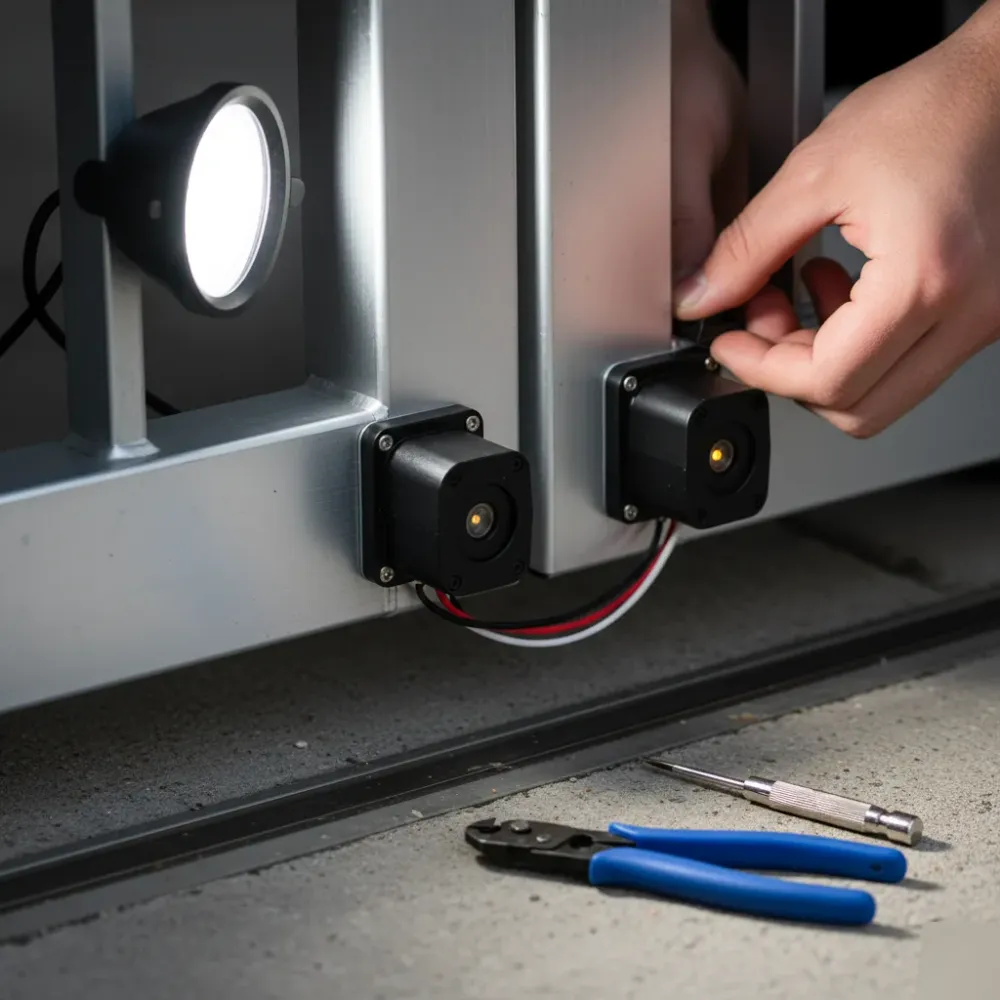
Here’s how they work. A pair of sensors sits on either side of your gate opening. One sends an invisible infrared beam to the other. When something breaks that beam, the gate stops moving or reverses direction. It happens in a fraction of a second. No delay. No guesswork.
We install these on every type of gate we work on in Hallandale Beach. Sliding gates, swing gates, barrier arms. Doesn’t matter the style. If it moves automatically, it needs safety sensors. This isn’t just our opinion.
According to UL 325, the safety standard published by Underwriters Laboratories, every automated gate system must include a method to detect obstructions. That’s a federal requirement, not a suggestion. Skip it and you’re looking at real liability problems. We’ve seen property managers near Golden Isles scramble to add sensors after a close call with a resident’s vehicle. Don’t wait for that moment.
So what can go wrong without them? More than you’d think:
- A child runs through the gate opening while it’s closing
- A delivery driver’s hand gets caught between the gate and post
- Your own car gets clipped because the gate didn’t detect it pulling through
- An HOA faces a lawsuit because the entry gate lacked proper safety devices
The gates we get called out to inspect in Hallandale Beach either have no sensors at all or have sensors that were installed wrong years ago. Misaligned, corroded from the salt air, or wired into the wrong terminals. A sensor that doesn’t work is the same as no sensor.
When gate safety sensor installation is done right, you get a system that protects everyone who passes through that opening. Your family. Your tenants. Your customers. It’s the one part of your gate system you cannot cut corners on. We tell every customer that before we start any job.
Signs Your Gate Sensors Need Replacement or Installation
Your gate closes on someone’s car. Or it won’t close at all. That’s usually the moment people call us.
But the warning signs show up long before that happens. Most homeowners and property managers in Hallandale Beach just don’t know what to look for. We see this every week. A gate that’s been acting funny for months finally does something dangerous, and now it’s an emergency. Let’s skip that part.
Here’s what to watch for:
- The gate reverses for no reason. Nothing’s in the way, but it keeps bouncing back open. Dirty or failing sensors send false signals.
- It closes all the way without stopping. This is the scary one. If your gate doesn’t reverse when something blocks the path, the safety sensors are either dead or missing entirely.
- Sensor lights blink or stay off. Most photo-eye sensors have small LED indicators. No light means no protection.
- The gate hesitates mid-cycle. It starts closing, pauses, then finishes. That stutter usually points to a weak sensor connection.
- You hear grinding but the gate barely moves. The motor’s working. The sensors aren’t communicating properly with the control board.
Here’s one people miss. If your gate was installed before UL 325 safety standards were updated, you might not have the right sensor setup at all. According to UL, automated gates require specific entrapment protection devices to meet current safety codes. Older properties near Golden Isles and along the Intracoastal often have gates from the early 2000s that were never retrofitted.
Not sure if your sensors are working right? That’s common. The gate still opens and closes fine, so people assume everything’s good. The sensors only matter in the moment something goes wrong. A kid runs behind the gate. A delivery driver pulls in too close. That’s when you find out your safety sensors weren’t doing their job.
Don’t wait for that moment.
How Gate Safety Sensor Installation Works, Step by Step
People ask us all the time what actually happens during a gate safety sensor installation service call. Fair enough. You’re letting someone work on equipment that protects your property. You should know exactly what we do.
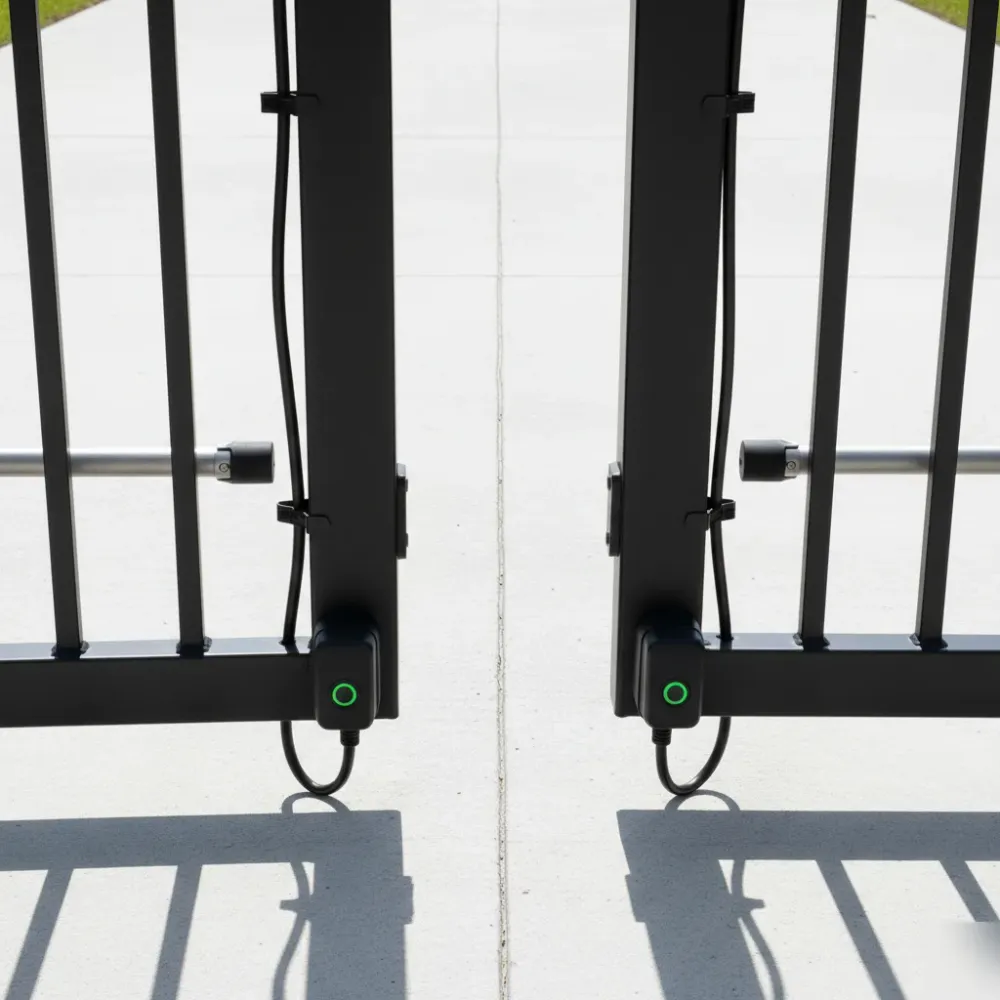
Here’s how our team handles it from start to finish in Hallandale Beach:
- We inspect your existing gate system. Before we touch a single wire, we look at what you’ve got. Sliding gate, swing gate, barrier arm. Every setup needs sensors mounted differently. We check the gate operator, the power supply, and the current wiring so nothing surprises us halfway through.
- We map out sensor placement. This is where experience matters. Sensors need to sit at the right height and angle to catch people, pets, cars, and anything else that could get in the path. We measure the gate opening and figure out the positions so there are zero blind spots.
- We mount and wire the sensors. Photoelectric eyes get secured on both sides of the gate opening. We run wiring back to the gate operator, keeping everything clean and protected from South Florida rain and humidity. Nothing loose. Nothing exposed.
- We program the sensors to your gate operator. The sensors have to talk to your motor correctly. We configure the settings so the gate reverses or stops the moment something breaks the beam. No delay.
- We test everything. Multiple times. We put objects in the gate path at different heights. We test with the gate closing at full speed. If anything doesn’t react instantly, we adjust right there on the spot.
The whole process usually takes a couple hours for a standard residential gate near Golden Isles or anywhere else in town. Commercial setups or HOA gates with wider openings can take a bit longer. We always let you know upfront.
Sensor placement that’s off by just a few inches can leave a gap big enough for a child to slip through undetected. We’ve seen installs done by other companies where the beams were aimed too high to catch a pet or a toddler. That’s not a small mistake. According to UL 325 safety standards, entrapment protection devices have to detect objects across the full gate opening. We take that seriously every time.
The part that matters? Once we’re done, you don’t have to think about it. Your gate just works safely.
Need help with gate safety sensor installation service?
Call Today For A Free Estimate. On Time Garage Door Repair is ready to help.
Adding Sensors to Older Gates Without Replacing the Whole System
Here’s the question we hear almost every week in Hallandale Beach. “Do I need a whole new gate just to get safety sensors?” The answer is almost always no.
Most older gates, whether they’re swing or sliding, can accept modern safety sensors without a full teardown. We’ve retrofitted gates that were installed fifteen or twenty years ago. The gate itself is usually fine. It’s the safety technology that’s missing or outdated. That’s a much smaller job than people expect.
What Retrofitting Actually Looks Like
The process depends on what you’re working with. But the basic steps stay the same for most older systems:
- We inspect your existing gate operator and wiring to see what connections are available.
- We check the gate’s swing or slide path to figure out the sensor placement.
- We mount the photo eye sensors at the right height and angle for your specific opening.
- We wire the sensors into your current operator or add a compatible receiver module if needed.
- We test every sensor with real obstructions to confirm it stops or reverses the gate properly.
The hardest part is running new low-voltage wire through existing conduit. Not replacing anything major.
Over near Golden Isles, we worked on a wrought iron swing gate from the early 2000s. No sensors at all. The homeowner thought the whole system needed replacing. We added a pair of photo eyes and a new edge sensor in about two hours. Gate worked perfectly after.
What makes some retrofits trickier? Operators that are completely obsolete can sometimes lack the input terminals for sensor wiring. But even then, we can usually add a standalone safety module that bridges the gap. Full replacement is the last resort, not the first suggestion.
According to UL 325, any automatic gate needs entrapment protection devices to meet current safety standards. That means if your older gate doesn’t have sensors, adding them isn’t just smart. It’s what the code requires.
If you’ve got an older gate and you’re not sure what’s possible, give us a call. We’ll take a look and tell you straight what it needs.
HOA and Code Compliance for Automatic Gate Sensors in Hallandale Beach
Here’s something we deal with almost every week. A property manager or homeowner calls us after getting a violation notice from their HOA. Their gate doesn’t have the right safety sensors, or the ones they have don’t meet current code. That’s a stressful letter to open.
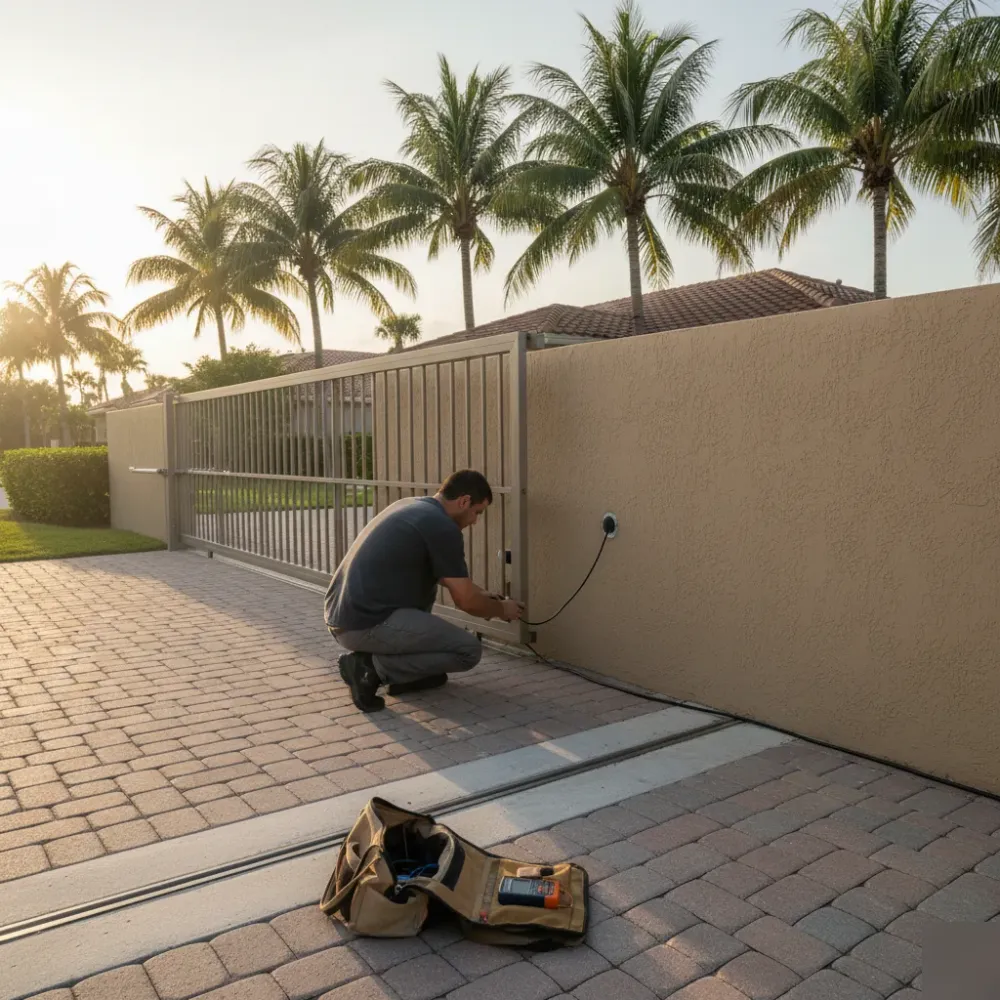
Hallandale Beach falls under Broward County building codes, and those codes reference UL 325 standards for gate operators and safety devices. UL 325 spells out exactly what types of sensors your automatic gate needs. It covers entrapment protection, reversing mechanisms, and where sensors must sit relative to the gate’s path of travel. Skip any of those requirements and you’re looking at a failed inspection or worse.
What HOAs Typically Require
Most HOA communities in Hallandale Beach go beyond basic county code. We’ve worked with boards in Golden Isles and along the Diplomat corridor. Each one has slightly different rules layered on top of the standard requirements. But the common threads look like this:
- Photo eyes installed on both sides of the gate opening at the correct height
- A monitored reversing edge along the leading edge of sliding or swing gates
- Visible warning signs posted near the gate’s swing or slide path
- Annual sensor testing documentation submitted to the HOA board
We keep copies of the most common HOA gate specs on file so we can match them during gate safety sensor installation service. It saves you a callback and a second trip.
Even if your gate worked fine when it was first installed, codes update. According to the Door and Access Systems Manufacturers Association, UL 325 has been revised multiple times since 2010. A gate system that passed inspection five years ago might not pass today. That doesn’t mean your gate is broken. It means the safety bar moved higher.
We’re licensed and insured in Hallandale Beach. what the local building department expects to see. When we finish a sensor install, we provide documentation you can hand straight to your HOA or your inspector. No guesswork on your end. Want to make sure your gate meets current code? Give us a call and we’ll walk through it with you.
Frequently Asked Questions
Common questions about gate safety sensor installation service services in 301 NE 3rd St. unit 206 33009 Hallandale Beach
Do Hallandale Beach properties actually require gate safety sensors by law?
Yes, automated gates in Hallandale Beach must meet UL 325 safety standards, which require entrapment protection devices on every automatic gate system. This is a federal requirement, not just a local preference. Property managers and HOAs that skip sensors face real liability exposure. If your gate was installed before UL 325 updates, it may not meet current code. We see this often on older properties along the Intracoastal and near Golden Isles.
How do I know if my gate sensors are actually working or just look like they are?
Walk up to your closing gate and break the beam path with your hand or a box. The gate should stop or reverse immediately. If it keeps closing, your sensors are not working. Other warning signs include blinking or dark LED lights on the sensor units, a gate that reverses for no reason, or a mid-cycle stutter. A gate that opens and closes normally can still have completely failed safety sensors. You only find out when something goes wrong.
What happens during a gate safety sensor installation visit in Hallandale Beach?
When we arrive, we inspect your full gate system before touching anything. We check the operator, power supply, and existing wiring. Then we map sensor placement to cover the full gate opening with no blind spots. After mounting and wiring the sensors, we program them to your gate operator and run multiple live tests at different heights. The whole job usually takes a couple of hours for a standard residential gate. We tell you upfront if your setup will take longer.
Can South Florida’s salt air and humidity damage gate safety sensors over time?
Yes, and it happens faster than most people expect. Hallandale Beach’s coastal air corrodes sensor housings, weakens wire connections, and fogs up the lens on photoelectric eyes. A corroded or misaligned sensor can stop detecting obstructions entirely while still appearing to function. That is one of the most common problems we find on older gates here. When we install sensors, we protect all wiring from moisture and use hardware rated for South Florida outdoor conditions.
My gate reverses on its own with nothing in the way. Is that a sensor problem?
Most of the time, yes. A gate that reverses without an obstruction is usually receiving a false signal from a dirty, misaligned, or failing sensor. Dust, spider webs, and moisture on the sensor lens can all trigger false reversals. This is one of the most common calls we get in Hallandale Beach. The fix is usually cleaning, realigning, or replacing the sensor pair. Ignoring it and adjusting the sensitivity instead can make the gate stop responding to real obstructions.
How is sensor installation different for HOA or commercial gates versus a home driveway gate?
Commercial and HOA gates in Hallandale Beach are wider, busier, and often have higher liability stakes. Wider openings sometimes need additional sensor pairs to eliminate blind spots. High-traffic gates also need sensors rated for frequent cycling. The programming setup is more involved because the operator controls more functions. We always do a full site assessment before quoting a commercial job. A residential driveway gate is more straightforward, but the same UL 325 standards apply to both.
Ready to Get Started?
Call Today For A Free Estimate. Call 9543291361 today.

Recent Comments