
Fast, reliable garage door and electric gate repair and installation in South Florida — call today, fixed today.
What’s Covered on This Page
- Signs Your Garage Door Spring Needs Repair
- Torsion vs. Extension Springs, What Hallandale Beach Homes Typically Use
- Why Garage Door Springs Break Faster Near the Coast
- What Happens During a Spring Repair Visit
- How to Check Your Door Is Working Correctly After Repair
- How quickly can you get someone out to fix my garage door spring in Hallandale Beach?
- Is it safe to use my garage door if I think the spring is broken?
- Why do garage door springs seem to break faster in Hallandale Beach than other places?
- What’s the difference between torsion and extension springs, and does it matter which one I have?
- What should I expect when the technician arrives for a spring repair?
- Can I just replace one spring if only one broke?
Need garage door spring repair?
Call now for a free estimate. Call On Time Garage Door Repair now.
Signs Your Garage Door Spring Needs Repair
Most people don’t think about their garage door springs until something goes wrong. That’s normal. But the signs usually show up days or even weeks before a full break happens. Catching them early can save you a lot of trouble.
Here’s what to watch for:
- The door feels heavy. You hit the button and the opener strains. Or you try lifting it by hand and it barely moves. That’s a spring losing tension.
- A loud bang came from the garage. We get calls about this every week in Hallandale Beach. People think something fell off a shelf or someone broke in. Most of the time, it’s a spring that snapped.
- The door opens a few inches, then stops. The opener can’t do its job without spring support. It’ll try, stall out, and quit.
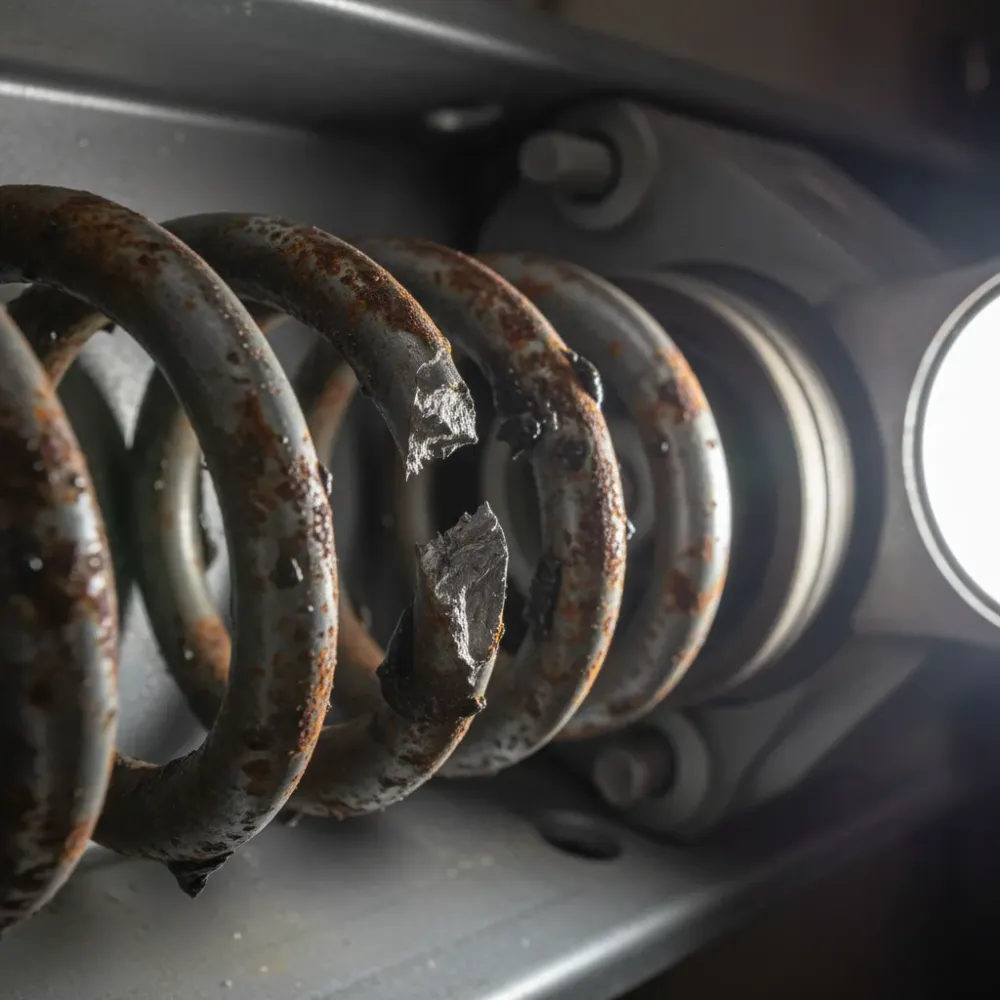
- You see a gap in the spring coil. Look at the spring above your door. If there’s a visible separation in the coils, it’s broken. Don’t touch it.
- The door closes too fast. A weak or broken spring means nothing is counterbalancing the weight. The door drops hard. That’s dangerous.
One thing we notice a lot near Golden Isles is older homes with original springs that have never been replaced. Those springs have a lifespan, usually around 10,000 cycles. If you open and close your garage door four times a day, you’re looking at roughly seven years before the spring wears out.
And here’s something people overlook. The door might still work with a failing spring, it just works poorly. Crooked movement, jerky stops, cables slipping off the drum. These are all connected to spring problems, they just don’t look like spring problems at first glance.
Not sure if what you’re dealing with is a spring issue? A lot of homeowners call us thinking it’s the opener or the track. We sort it out fast once we see it in person. The important thing is don’t ignore a door that’s acting different than it used to.
Torsion vs. Extension Springs, What Hallandale Beach Homes Typically Use
Most people don’t think about their garage door springs until something breaks. You don’t need to become an expert. But knowing which type you have helps you understand what happened and what comes next.
There are two main types. Torsion springs sit on a metal shaft right above the door opening. Extension springs run along the horizontal tracks on both sides.
Torsion Springs
These are what we see on most newer homes in Hallandale Beach. Single-car doors usually have one torsion spring. Double-car doors typically have two. They wind and unwind to lift the door’s weight, last longer than extension springs, and fail in a more controlled way. When a torsion spring snaps, the door just won’t open. We get calls about this every week from homeowners near Golden Isles who wake up and can’t get their car out.
Extension Springs
Older homes and smaller garages tend to have these. They stretch and contract like a heavy-duty rubber band. The problem? When one breaks, it can fly across the garage. That’s why safety cables should always run through them. In almost every case where someone tells us a spring “shot across the room,” it’s an extension spring without a safety cable.
Here’s what matters for your spring repair decision:
- Torsion springs handle heavier doors and last roughly 15,000 to 20,000 cycles
- Extension springs cost less up front but wear out faster in South Florida humidity
- Many homeowners upgrade from extension to torsion during a repair
- Both types need professional replacement due to the tension involved
So which do you have? Walk into your garage and look up. Spring mounted above the door on a bar? Torsion. Springs running along the tracks on each side? Extension. Takes about three seconds to check.
Either way, don’t touch a broken spring yourself. The tension stored in these things is serious. Spring repair sends people to the ER every year. According to the US Consumer Product Safety Commission, garage doors cause thousands of injuries annually, many involving springs.
Why Garage Door Springs Break Faster Near the Coast
Living close to the ocean is great until it starts eating your garage door parts. Salt air is rough on metal, there’s no way around it. If you’re in Hallandale Beach, your springs are fighting corrosion every day.
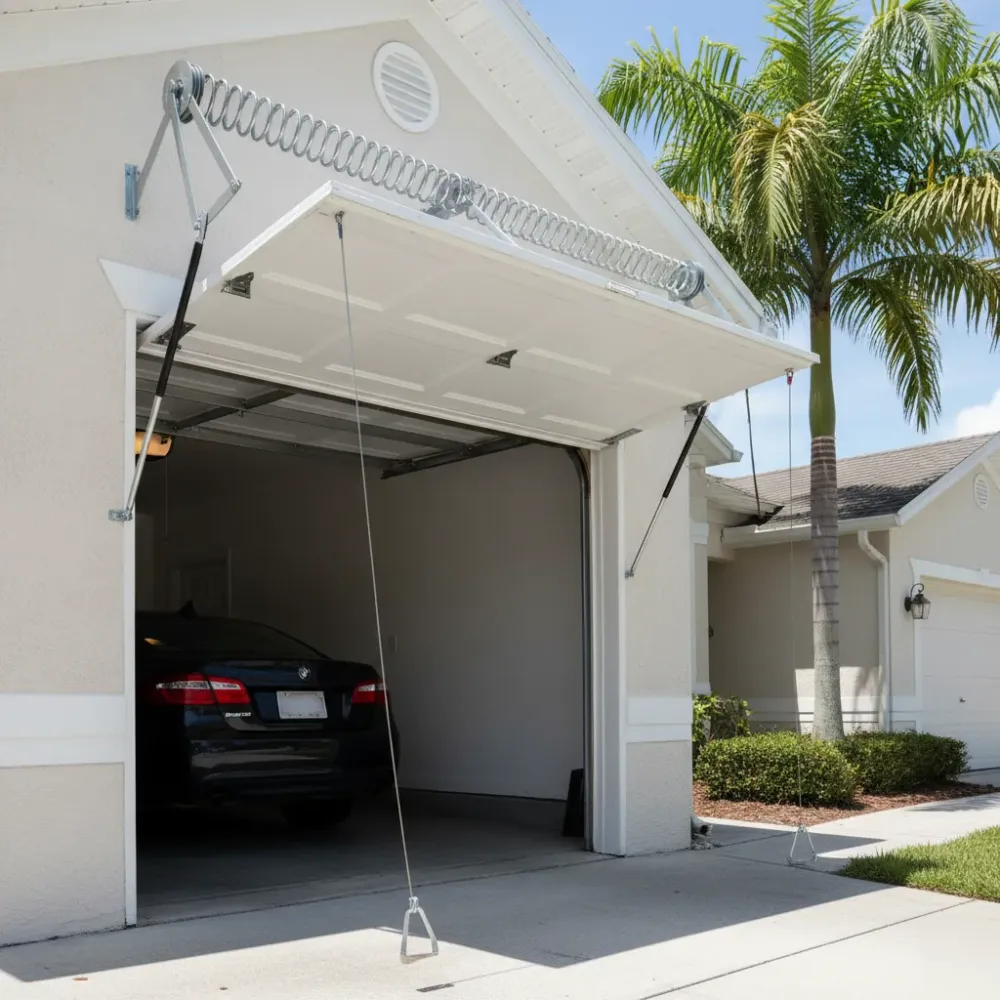
Here’s what happens. The salt carried in humid coastal air settles on the spring coils. Over time it causes tiny pits in the steel surface. Those pits become weak spots, and weak spots are where springs snap. A spring rated for 10,000 cycles inland might only give you 7,000 here. We see this constantly on homes near Golden Isles, especially in garages that stay open during the day.
It’s not just salt, though. Humidity accelerates rust on bare metal. Most springs come with a light oil coating from the factory, but that wears off fast in our climate. Once it’s gone, rust starts within weeks.
A few things speed up the damage even more:
- Garages without weather seals that let moist air circulate freely
- Springs that haven’t been lubricated in over six months
- Homes within a mile of the Intracoastal where salt concentration is highest
- Older springs installed without any protective coating
According to the International Door Association, environmental corrosion is one of the leading causes of premature spring failure in coastal regions. That tracks with what we deal with on a weekly basis.
So what does this mean for you? Your springs probably won’t last as long as the manufacturer says. Not a scare tactic, just reality. Most people wait too long on a broken spring because they assume it should still have years left. The math changes when you live this close to saltwater.
Regular lubrication helps slow things down. We recommend it every three to four months here in Hallandale Beach. A quick spray of silicone-based lubricant on the coils creates a barrier against moisture. It takes two minutes and buys you real time. But once a spring shows visible rust or starts making grinding noises, lubrication won’t save it. That spring needs to come off before it snaps on its own.
Need help with garage door spring repair?
Call now for a free estimate. On Time Garage Door Repair is ready to help.
What Happens During a Spring Repair Visit
You called, we’re on the way. But what actually happens when our truck pulls into your driveway? Most people have never seen a garage door spring repair up close. Here’s the honest rundown so you know what to expect.
We don’t just walk in and start wrenching.
The first thing we do is talk to you. We want to hear what happened. Did the door slam shut? Did you hear a loud bang? Was it stuck halfway up this morning? Your description helps us confirm what we’re dealing with before we even touch the door. More often than not, you’ve already told us the diagnosis just by describing the sound.
After that, the visit follows a clear sequence:
- We inspect the full spring system, cables, drums, and hardware for any related damage.
- We secure the door in place so it can’t move while we work.
- We release the tension on the old spring using proper winding bars. Never with a screwdriver, never with a wrench.
- We remove the broken spring and install the correct replacement.
- We wind the new spring to the right tension for your specific door weight.
- We test the door through several full open-and-close cycles, checking balance and alignment.
The whole process usually takes about an hour for a standard two-car garage. Homes near Golden Isles with heavier custom doors might take a bit longer, but we’ll let you know up front.
One thing we always do that some companies skip is a full balance test at the end. We disconnect the opener and lift the door by hand to about waist height. If it stays put, the tension is right. If it drifts up or drops down, we adjust. A door that’s off-balance puts stress on your opener and wears out the new spring faster. We see this overlooked all the time on doors that were “fixed” by someone else.
And we clean up after ourselves. Springs, hardware, packaging, your garage looks the same as before we got there. Better, actually, because now the door works.
How to Check Your Door Is Working Correctly After Repair
Once we finish a garage door spring repair, we walk you through everything so you can see the difference yourself. But even after we’re gone, you should know what “normal” looks and sounds like.
Start with the basics. Stand inside your garage and hit the wall button. Watch the door travel all the way up, then all the way down. It should move smooth and steady with no jerking or hesitation. The whole cycle should take about twelve to fifteen seconds for a standard door.
Here’s what to pay attention to over the first few days:
- The door stays put when you stop it halfway open. It shouldn’t drift up or creep down.
- Both sides of the door move at the same speed. No tilting or uneven gaps at the bottom.
- The opener isn’t straining or running louder than before the repair.
- The door seals flush against the garage floor when fully closed.
Now try the manual test. Pull the emergency release cord so the door disconnects from the opener. Lift the door by hand to about waist height and let go. A properly balanced door stays right there. If it slams down or shoots up, something’s off with the spring tension. We see this maybe once out of every fifty jobs, rare but worth checking.
And don’t forget the safety reversal test. Place a small object like a roll of paper towels on the ground where the door meets the floor. Close the door with the opener. It should reverse the moment it touches that object. This tells you the opener’s force settings are calibrated right for the new springs. According to the International Door Association, this auto-reverse check should be done monthly on every residential garage door.
Most folks along Hallandale Beach Boulevard use their garage door three or four times a day. That’s a lot of cycles. So if anything feels different after a week, sounds louder, moves slower, seems off balance, give us a call. Catching a small issue early saves you a bigger repair later.
Frequently Asked Questions
Common questions about garage door spring repair services in 301 NE 3rd St. unit 206 33009 Hallandale Beach
How quickly can you get someone out to fix my garage door spring in Hallandale Beach?
We offer same-day service for garage door spring repairs in Hallandale Beach. Most calls are handled within a few hours of booking. When you call, let us know if your car is stuck inside the garage. That helps us prioritize. Our tech will show up with the right springs for your door type already on the truck. You won’t be waiting around for a parts run.
Is it safe to use my garage door if I think the spring is broken?
No, you should stop using the door right away if you suspect a broken spring. Forcing the opener to work without spring support puts serious strain on the motor. It can also cause the door to drop fast and hard. That’s a real safety risk for anyone standing nearby. Disconnect the opener and leave the door alone until a tech can look at it. It’s not worth the risk.
Why do garage door springs seem to break faster in Hallandale Beach than other places?
Salt air from the coast speeds up corrosion on the spring coils. Hallandale Beach sits close to the Intracoastal, and that salt-heavy humidity settles on bare metal fast. A spring rated for 10,000 cycles elsewhere might only last 7,000 here. Homes near Golden Isles see this a lot. Lubricating your springs every three to four months with a silicone-based spray slows the damage down and adds real life to the spring.
What’s the difference between torsion and extension springs, and does it matter which one I have?
Yes, it matters because they work differently and fail differently. Torsion springs sit above the door on a metal bar. Extension springs run along the side tracks. Most newer Hallandale Beach homes have torsion springs. Older or smaller garages often have extension springs. Extension springs can snap and fly across the garage if there’s no safety cable. Either type needs a professional to replace it safely. The tension stored in both is serious.
What should I expect when the technician arrives for a spring repair?
The tech will inspect the spring, the cables, and the overall door balance before touching anything. They’ll tell you exactly what broke and why. If you have an extension spring without a safety cable, they’ll flag that too. Most repairs are done in under an hour. Before they leave, they’ll test the door several times to make sure it opens and closes evenly. You’ll know the job is done right before they pack up.
Can I just replace one spring if only one broke?
You can, but replacing both at the same time is usually the smarter move. If one spring broke, the other is likely close to the same age and wear level. Replacing just one leaves you with a mismatched setup that can cause uneven lifting. For double-car doors with two torsion springs, this is especially true. Your tech will walk you through what makes sense for your specific door so you can make the call yourself.
Ready to Get Started?
Call now for a free estimate Call (954) 329-1361 today.

Recent Comments