
Fast, reliable garage door and electric gate repair and installation in South Florida — call today, fixed today.
What's Covered on This Page
Why Your Electric Gate Stopped Working Isn't Usually Sudden
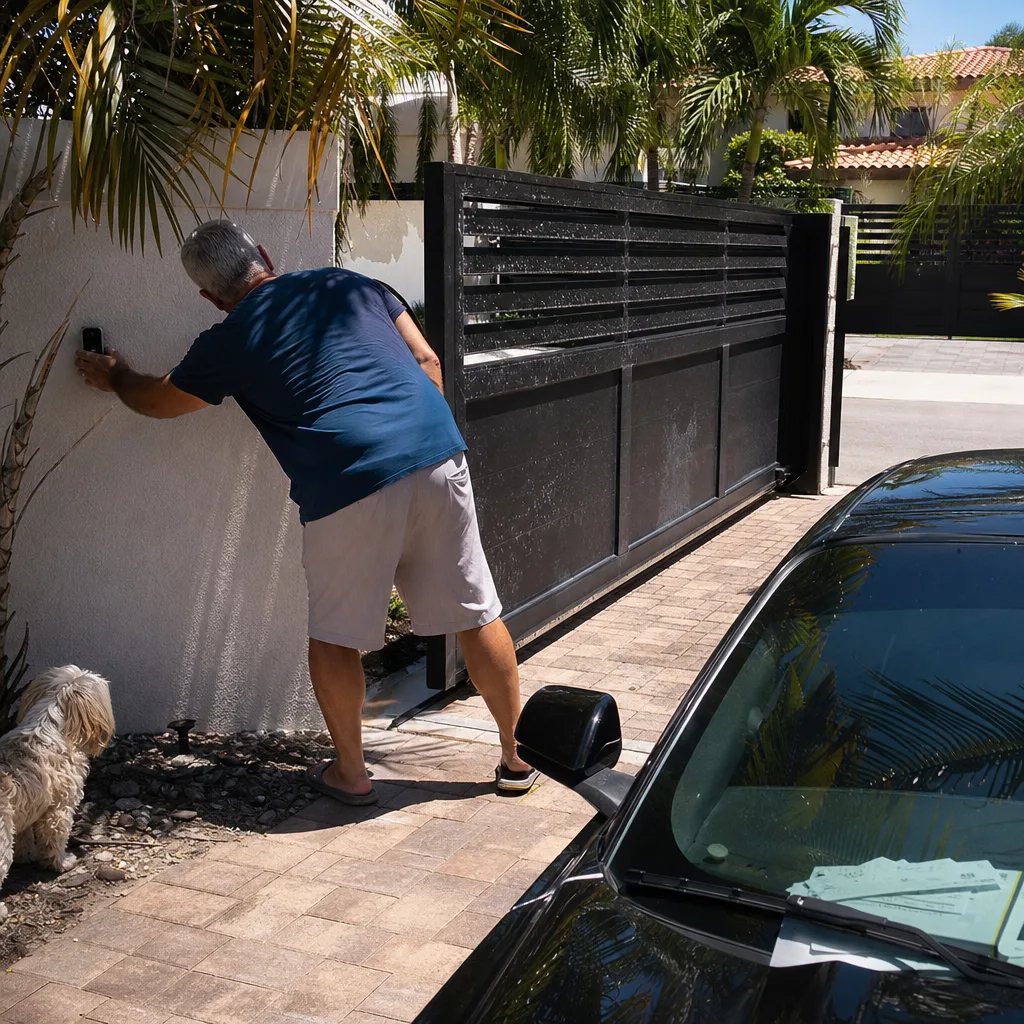
"It worked yesterday. Today it won't move." We hear that line on almost every call. And it makes sense. From where you're standing, the failure feels sudden.
But your gate usually saw it coming. Most electric gate problems build slowly. A worn part gets weaker each day. A loose wire slips a little more with every cycle. Then one morning, the gate just quits.
Think about how often your gate runs. A busy driveway gate might open and close 10 to 20 times a day. That's thousands of cycles a year. Every one of them puts stress on the motor, the hinges and the wiring. Not a little stress, either.
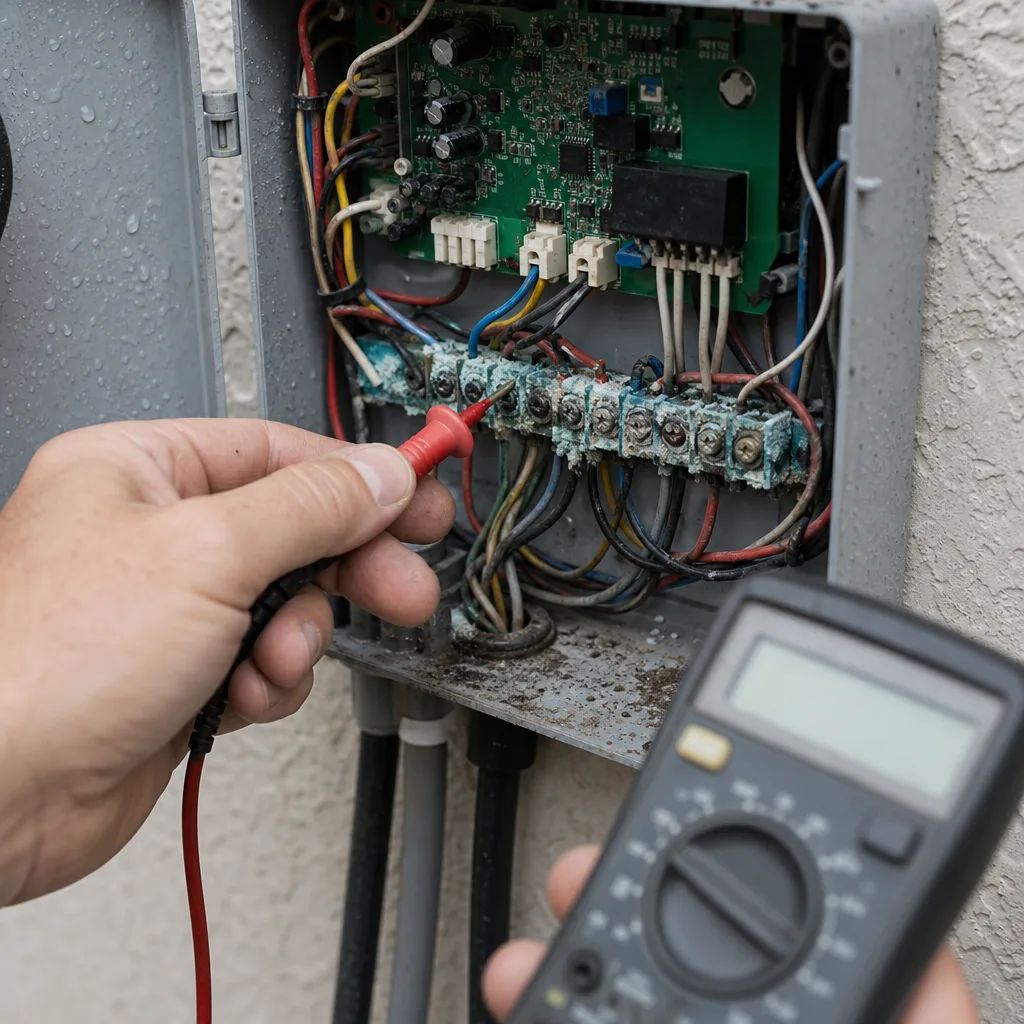
Hallandale Beach adds its own pressure. We're right by the ocean, so salt air settles on everything. It eats at metal parts and corrodes electrical contacts. Summer heat bakes control boards inside their boxes. Afternoon storms push water where it shouldn't go. And lightning surges hit gate openers hard, especially in older setups without surge protection -
So what does that slow slide look like? Here are the warning signs we see most often before a full breakdown.
- The gate moves slower than it used to
- Grinding, clicking or humming sounds during each cycle
- Your remote only works when you're parked right next to the gate
- It stops halfway and reverses for no clear reason
- Rust spots show up near the hinges, motor arm or control box
Any one of these is a clue. Two or more together? That's your gate asking for help.
Last year we got a call from a homeowner in Golden Isles. Her swing gate had been groaning for about two months. She figured it was just old, plenty of gates make some noise. Then it stopped dead with her car stuck inside before work. The cause was a worn gear in the motor and a hinge seized up with salt buildup. If we'd seen it at the first groan, it would've been a short visit. The motor wouldn't have strained so hard for so long, either.
A small noise is a quick fix, a dead motor is a much bigger job.
Most people don't realize this until they're locked in or locked out. Your electric gate is a machine with moving parts. It needs the same care you'd give your car. A yearly check catches loose wires, dry hinges and tired batteries before they leave you stuck.
Here's the good news. Because most failures build slowly, most can be caught early. You don't need to be an expert to spot the signs. You just need to pay attention when something feels off. But don't wait for the gate to make the call for you.
Power and Electrical Problems Behind a Gate That Won't Open
Most dead gates aren't broken. They're just not getting power. We see this all the time in Hallandale Beach, and the fix is often simpler than people expect. So before you assume the motor is shot, start with the power.
Your gate opener runs on household current, a low-voltage transformer, or a solar panel with a battery. If any link in that chain fails, the gate sits still. No hum. No click. Nothing.
Here's a safe order to check things yourself. Don't open the control box or touch any wiring. These steps only use switches and outlets you'd reset at home anyway.
- Look at your breaker panel for a tripped breaker that feeds the gate.
- Find the GFCI outlet near the gate or garage and press the reset button.
- Check if the control box has a power light on.
- Test your remote close to the gate to rule out a weak signal.
- If you have solar, look for dirt, leaves, or new shade on the panel.
Did the gate wake up after one of those steps? Great. But if it trips again within a day or two, something is pulling too much power. That points to a short, a failing motor, or water in the wiring.
Storms are a big trigger here. Summer in South Florida brings almost daily lightning, and a nearby strike can send a surge straight into your gate's control board. Last August we got a call from a homeowner just off Hallandale Beach Boulevard. Her gate quit right after an evening storm, the breaker looked fine. The surge had fried a fuse on the board and scorched the board itself. A surge protector would've saved her that headache.
Salt air is the slow problem. Homes near the beach and along A1A deal with it constantly. Salt creeps into connections and turns copper green. Over time the current just can't get through, and the gate starts acting up before it stops for good.
And then there's the backup battery. Many openers keep a battery for outages, and most people forget it's there. After a few years it won't hold a charge, so the gate dies the moment the power blinks. Solar setups have the same weak spot, a tired battery can't store enough sun to get through the night -
Batteries usually give a warning first.
Slow movement, a gate that stops halfway, or beeping from the control box are all early signs. We tell clients to watch for those changes. Catch them early and you'll often avoid a full lockout.
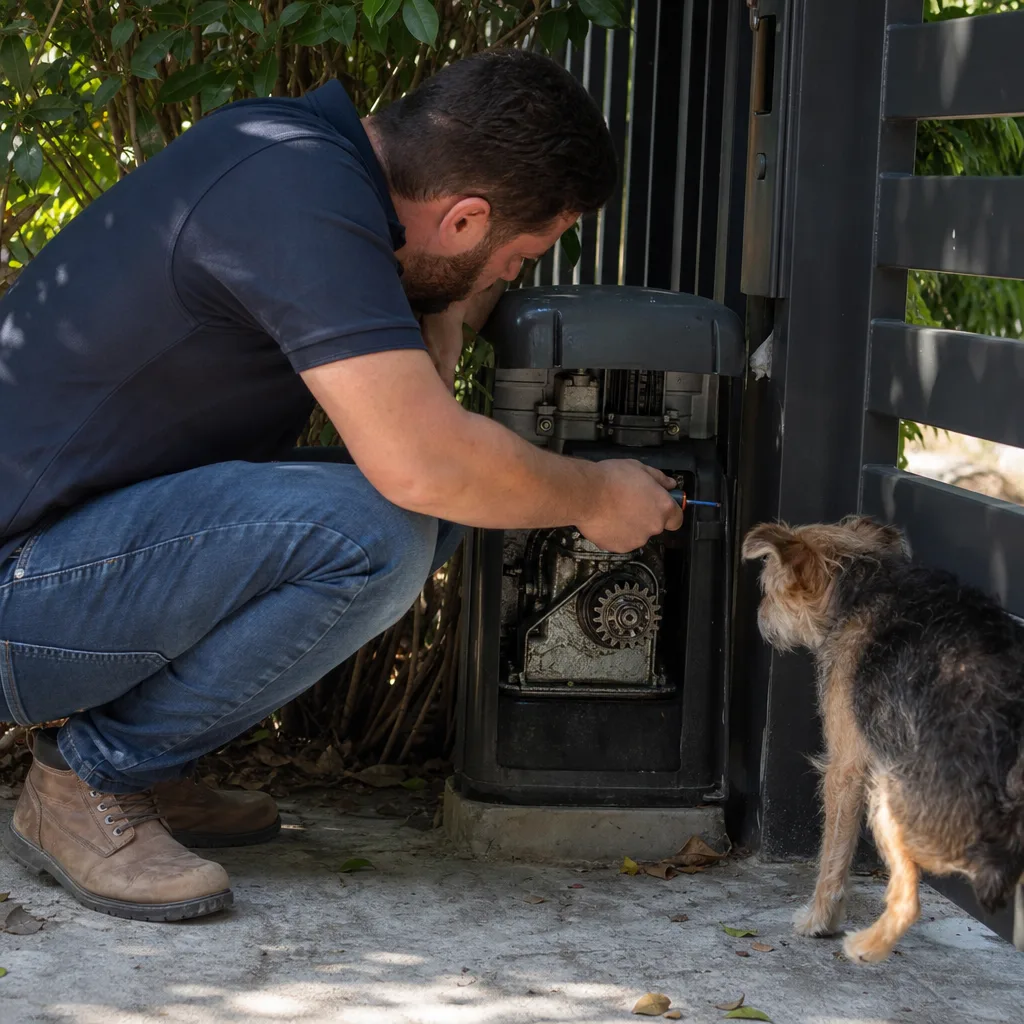
Some electrical work isn't a DIY job. Burnt smells, melted wire jackets, and a breaker that trips the second you reset it all call for a trained tech. A proper electric gate repair service starts with testing voltage at each point. That's how a pro finds the real fault instead of guessing. On our calls, we check the board, fuses, transformer, and battery before we ever touch the motor. If the motor is the real issue, our Gate Motor Repair Service picks up from there.
Why pay for parts you don't need? A good diagnosis keeps the fix small. And it gets your gate opening again fast.
That same focus carries through the practical electric gate repair guidance our team provides to local families.
Why a Humming Motor Doesn't Always Mean Motor Failure
You press the remote and hear a low hum. The gate doesn't move. Most people assume the motor just died, but that's rarely the case.

A humming sound means power is reaching the motor. That's good news. The motor is trying to work, something is just stopping it from turning.
We get calls about this every week. And in most cases, the motor itself is fine.
So what's really going on? Here are the most common culprits we find when an electric gate hums but won't open:
- A weak or failed start capacitor that can't give the motor its first push
- Hinges or rollers that have rusted stiff and won't let the gate swing or slide
- Stripped gears inside the gearbox, so the motor spins but nothing moves
- The manual release lever left partly engaged after a power outage
- Something blocking the gate's path, like a rock, branch, or debris in the track
- Low voltage from a dying backup battery or a loose wire
Notice how few of those involve replacing the motor. A capacitor is a small part. Hinges can often be freed up or repaired. Even stripped gears are usually a gearbox fix.
Salt air plays a big role here in Hallandale Beach. Being this close to the ocean, metal parts corrode faster than they would inland. Add summer humidity and heavy rain, and hinges seize up quicker than most owners expect. We see it constantly on swing gates near A1A and along the Intracoastal.
Here's a quick example. A homeowner off Hallandale Beach Boulevard called us sure she needed a new motor. Her electric gate hummed every morning but barely budged. The real problem? Two bottom hinges packed with rust. We cleaned and repaired them, the gate opened smooth that same visit.
Before you call anyone, there are a few safe things you can check yourself. Don't open the motor housing or touch any wiring. Just look and listen.
- Walk the gate's full path and clear anything in the way.
- Check that the manual release lever is fully locked back in place.
- Disconnect the motor using the release, then push the gate by hand.
- If it's stiff or heavy to move, the problem is likely hinges or rollers.
- If it moves easily by hand, the issue is probably inside the operator.
That last test tells you a lot. A gate that fights you by hand is going to fight the motor too. But a gate that glides freely points us toward the capacitor, gears, or power supply.
One warning. Don't keep pressing the remote over and over while it hums.
Every time the motor strains against a stuck gate, it builds heat. Do that enough and you can burn out a motor that was perfectly healthy. That's how a small fix turns into a gate motor replacement. We've seen people hold the button down for a full minute hoping it'll break free -
Stop after one or two tries. Not worth the risk.
Ready to Get Started?
Call 9543291361 Today For A Free Estimate.

Recent Comments