Call now for a free estimate. Call On Time Garage Door Repair now.
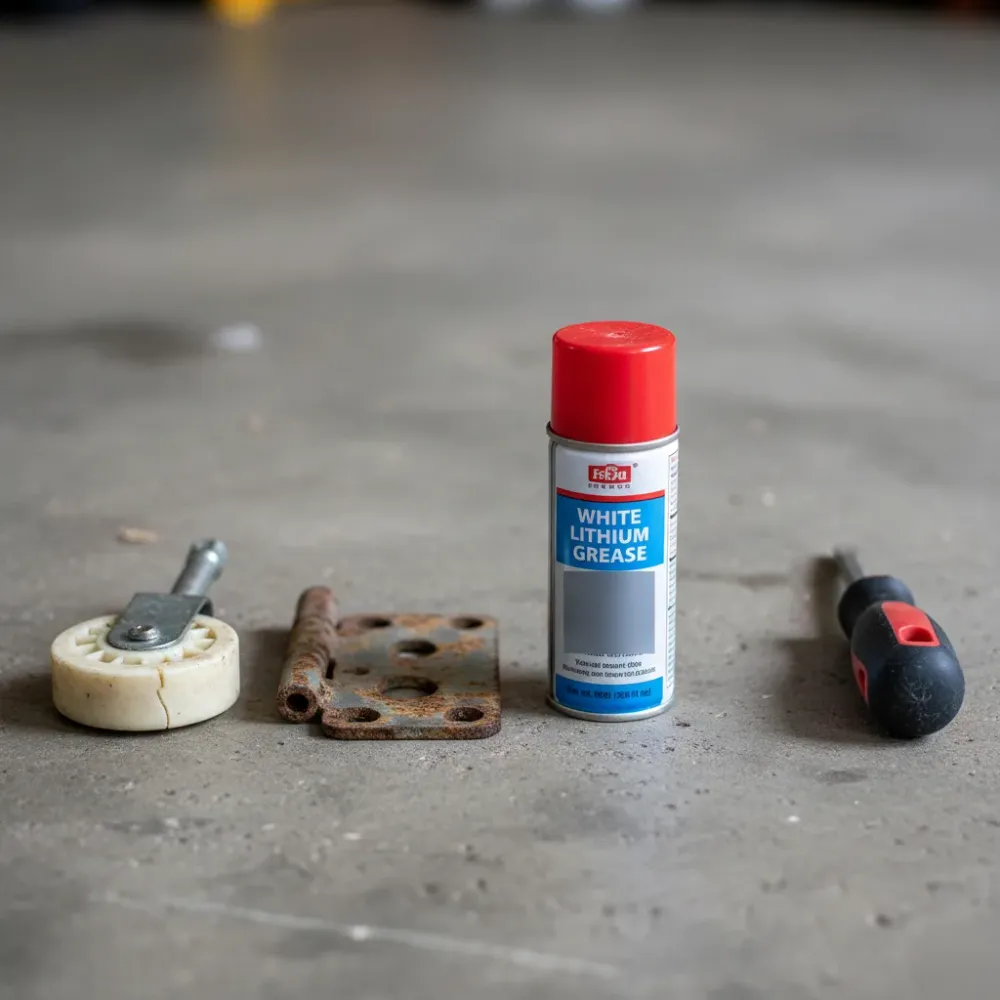
# Is It Possible to Repair a Garage Door Yourself? versus Professional Repair In Hallandale Beach ## There Are Some Garage Door Repairs That Are OK To Do Yourself Not all garage door issues require a repair service call. Some are easy enough to do over the weekend if you have basic tools that you probably already have on hand. The challenge is figuring out which repairs are safe for you to do. We get calls about this every week from Hallandale Beach homeowners who attempted a garage door repair themselves. Many did the right one. Some did the wrong one. So here’s what is safe to do yourself. ### Repairs That Are Safe To Do Yourself Here’s a quick list of garage door repairs that most of us can repair without professional training or special equipment: – **Lubricating all moving parts.** Rollers, hinges and tracks that become very noisy can be fixed with a spray of white lithium grease or silicone garage door lubricant.
– **Tightening loose hardware.** Because garage doors move hundreds of times a month, bolts and brackets can sometimes loosen. This is easy to repair using a socket wrench.
– **Replacing worn weather stripping.** If the rubber seal on the bottom of your garage door is peeling or worn (common in hot South Florida weather), you can buy a replacement at any hardware store and simply cut it to size.
– **Cleaning and aligning photo-eye sensors.** If your garage door won’t close, the photo eyes just under the bottom of the door may just be clogged or misaligned. Simply wipe them clean with a cloth, adjust their alignment.
– **Changing a dead garage door remote battery.** Pretty self-explanatory, but it can easily get overlooked. These all pose minimal risk. There are no spring tension. No cables that can snap. You will generally be working with garage door parts that are within easy reach and sit near the ground. ### A Couple Safety Tips Even with the simplest garage door repairs, a couple things are worth remembering. First, always disconnect the garage door opener before beginning repair. Pull the red emergency release cord so the garage door opener is now operating in manual mode., never stand directly under an open, unsupported garage door. Clamp the door with a track C-clamp so it doesn’t slide down. It’s not until something goes badly wrong that people realize how dangerous a garage door really is. A standard two-car garage door can weigh over 150 pounds and according to the U.S. Consumer Product Safety Commission, there are roughly 20,000 garage door injuries reported every year. A great deal of these happen because the person doing repair work was working with the wrong parts or doing things improperly. So changing your garage door’s weather stripping, and lubricating the rollers? Fine. But don’t mess with the weight of the garage door when doing repairs. ### It Isn’t Always So Simple Here’s a story we hear a lot: A homeowner near Diplomat notices that their garage door is off track and crooked when opening. They figure a roller probably slipped out of its track and that happens. They grab a pair of pliers and try to shove the roller back into the garage door track. The garage door is in mid-air. That’s the problem. While a slightly off track might seem harmless, a damaged cable or a weakening spring on a single side may mean that you’re putting the roller back when it shouldn’t be, resulting in an unbalanced drop of the garage door. Generally, it’s OK to attempt a repair yourself if you can spot the problem and you’re able to safely access it from the ground. You should always stop, though, if you must get up a tall ladder, you see something that appears broken, bent or is under tension, and you don’t know what caused the issue. Don’t be embarrassed to reach out for professional assistance. If you aren’t certain if your garage door repair project fits in the safe zone, our garage door repair experts can discuss it with you by phone. Don’t do more than you know; let a professional take care of it. ### Repairs that should always be left to the pro Some garage door repairs can hurt you. Yes, really. We get calls every week from Hallandale Beach homeowners who attempt a garage door repair only to find that they have gone beyond their limits. A garage door is the heaviest moving part of a house. A residential door weighs 150 to 400 pounds, according to the International Door Association. All that weight needs to be supported by the garage door spring and cable system, both of which remain under significant tension. It is not unusual for something to break while you are fixing that component. The end result could be disastrous. **Repairing a torsion spring.** This is the big one. A torsion spring is located over your garage door on a metal shaft. It’s wound very, very tight. When a torsion spring breaks while you’re fixing it, it can send metal pieces flying around your garage. I have seen dents in drywall, damaged car windshields, and other accidents. Most of the people who end up calling me for a garage door repair waited too long to repair their garage door spring. Instead of paying for a pro, they tried a YouTube garage door spring repair. It’s important to remember that torsion springs must be correctly sized and wound with the proper torsion springs tools. If you turn the torsion winding bar a couple of times too much, you’ll lose control of the garage door spring. Our garage door repair experts use calibrated torsion winding tools and know the torque specifications for all types of garage doors. This is not a job to be accomplished with crescent wrenches and your guess. **Replacing and realigning the cables.** Your springs will raise the garage door evenly if you have the right number of garage door cables. When the cables fray or break, the garage door might fall from one side and appear crooked as it hangs in the tracks. Perhaps you can put in a new cable. It must be set at the same tension as the cable on the opposite side to be of any use. Here is something that is not commonly known. If a garage door cable is too tight, the door will move on an uneven track. The roller will start rubbing on the side, the side of the track will become bent and you will have even more of a repair. Corroded cables are an everyday occurrence here in Hallandale Beach, especially in houses located along the beach on both Collins Avenue and A1A. ### Opener Motor and Electrical Work When it comes to your garage door opener, electricity is how it works. I know that sounds obvious, but people don’t think about that when they start pulling wires. A faulty board, a shorted sensor, or a burned out motor capacitor. It all involves electricity and electrical components that you can get shocked or cause fires if you mess with. If the opener hums but the door doesn’t move, that usually means a bad capacitor or some bad gears inside. If you try to open your garage and nothing happens, you could have a bad logic board inside. Either way, you need testing equipment to know for sure. Most people don’t keep testing equipment at home. ### Track Replacement or Major Realignment Bent tracks are complicated. If the track is just slightly bent, you might think you could just bend it back. But, the garage door tracks have to be parallel and perfectly plumb. If a track is even one quarter of an inch out, you can have all the rollers bind, which puts a lot of strain on the opener, the springs, and the door panels. We get tons of calls about this. Someone will fix their tracks, the door runs for about a week and a half, and then a roller pops off and it buckles the door. At that point, you end up needing to fix both the track and a door panel, not just the track. Here are a couple of things you can look at to see if your repair needs to be done by a professional: – Your repair requires anything dealing with under spring tension
– You will have to completely disconnect the door from the garage door opener
– Electrical wiring or circuit boards need to be dealt with
– The garage door doesn’t stay up when you let go of it manually
– The specific tool you need isn’t in your toolbox If one of these is true, it’s time to call a pro for garage door repair. Not because you aren’t handy, just that there are much more significant risks involved if you mess up. A professional will arrive fully equipped with the right parts, the right tools, and the training to safely repair it in less than one hour. That’s pretty hard to beat when you are trying to do it on your own, no matter how many videos you’ve watched. ## How to Know If Your Garage Door Issue Is Minor or a Major Problem First things first. You need to know what you’re dealing with before you head to the home improvement store. A garage door problem doesn’t always mean you need to hire someone to repair it. Some problems can seriously injure you if you try to fix it yourself. We get a lot of calls from Hallandale Beach residents on a weekly basis, and they are all the same. Someone hears a noise coming from their garage door, or they notice the door is sticking. They want to know what the noise is, and if it’s a quick problem to fix. This guide will help you know whether it’s a minor or serious garage door repair. ### Signs of a Minor Problem Minor problems are usually things you can see with your own eyes and fix with your hands. A minor problem is usually something you can repair with no special tools, and they never deal with heavy objects or any type of spring tension. Let’s just call these “Minor.” – A track that squeaks, this just requires lubrication
– Dirty or misaligned photo-eye sensors near the ground
– A remote with dead batteries
– Screws or brackets that have come loose, which you can tighten yourself
– Crumbling or flaking weather seals If the door closes the majority of the way, but then reverses, then it’s likely the sensors. Take a cloth and wipe down the sensors; clear up the area around the sensors. 50% of the time, this fixes the problem. ### Signs of a Serious Problem These are issues related to components that store a tremendous amount of power: torsion springs, cables, and the internal mechanism of the opener. These are jobs that should not be tackled as a weekend project. Watch out for these indicators: 1. You hear a loud pop in the garage, and the door won’t open. That is most likely a broken torsion spring.
2. One side of the door is lower than the other, or it looks lopsided or out of level. That is usually a broken cable.
3. The motor runs, but the door does not move at all. That can be a stripped gear.
4. There is a gap in the spring that is attached to the header. It’s broken. It has to be replaced.
5. The door falls down too quickly if you pull the cord (emergency release) on the motor head. That means the springs are not supporting the weight of the door. A torsion spring is a very dangerous component to work with, due to the force that it’s under. It can be responsible for broken limbs or worse. The U.S. Consumer Product Safety Commission reports roughly 20,000 garage door injuries each year. Most injuries involve working on springs or cables. That should be a signal that you need to be cautious. Most garage door owners aren’t aware of how these problems start. The door doesn’t just seem heavy. Something isn’t right in the counterbalance system. The motor is now lifting the full weight of the door, sometimes 150 pounds or more. This will put a lot of stress on it and can lead to it failing. Due to salt water air and humidity, metal parts on a garage door in Hallandale Beach wear a bit faster than you would expect. The typical torsion spring can last upwards of 8–10 years. Here in the humid climate, that can be much shorter. Rust on garage cables is not uncommon and is also very common with rust on the torsion spring system, especially in beach houses along Collins Avenue and near Golden Isles. So what can you try? First, ask yourself this question: Can you tell exactly what is wrong? Can you see what it is? Are springs or cables involved? If you can see what’s wrong and there are no springs or cables involved, go for it. If not, don’t try. Generally, if the door will operate, just not properly, and is noisy or is slow to operate, check out the easy fixes before you call a garage door repair service. If the door isn’t operating at all, or doesn’t operate properly, that’s your signal to call for service, not try and troubleshoot the issue on your own.
Frequently Asked Questions
Common questions about can you repair a garage door yourself? diy vs. professional repair explained services in 301 NE 3rd St. unit 206 33009 Hallandale Beach
What garage door repairs can I safely do myself in Hallandale Beach?
You can safely handle a few basic repairs yourself. Lubricating rollers and hinges, tightening loose bolts, replacing worn weather stripping, cleaning photo-eye sensors, and swapping out a dead remote battery are all low-risk tasks. These repairs involve parts near the ground and no spring tension. Hallandale Beach’s heat and humidity speed up wear on rubber seals and metal parts, so staying on top of these simple fixes helps your door last longer.
Is it safe to repair a garage door spring yourself?
No, repairing a torsion spring yourself is not safe. Torsion springs sit above your garage door on a metal shaft and stay wound under extreme tension. If one snaps during a repair, metal pieces can fly across your garage and cause serious injury or property damage. This is one repair you should always leave to a professional. For a full breakdown of what to DIY and what to hand off, visit our garage door repair page.
How does Hallandale Beach’s climate affect garage door repairs?
Hallandale Beach’s heat, humidity, and salt air speed up wear on garage door parts faster than in cooler, drier climates. Rubber weather stripping cracks and peels sooner. Metal hardware can corrode. Rollers and tracks may need lubrication more often. Homeowners near the waterfront or close to the Intracoastal should check their hardware and seals a few times a year to catch small problems before they turn into bigger ones.
What is the biggest mistake homeowners make when trying to DIY a garage door repair?
The biggest mistake is underestimating how dangerous a garage door really is. Many homeowners assume an off-track door just needs a roller pushed back into place. But a bent cable or weak spring on one side can cause the door to drop suddenly. A standard two-car garage door weighs over 150 pounds. According to the U.S. Consumer Product Safety Commission, around 20,000 garage door injuries happen every year. Stop the repair if you see anything bent, broken, or under tension.
How do I know when to stop a DIY garage door repair and call a professional?
Stop and call a professional if you need a tall ladder to reach the problem, if something looks bent or broken, or if you are not sure what caused the issue. Repairs involving springs, cables, or anything above the door track should always go to a pro. If you can spot the problem from the ground and safely access it without touching any part that is under tension, you are probably in safe DIY territory.
Can I replace garage door cables myself?
Replacing garage door cables is not a safe DIY repair. Cables must be set at the exact same tension on both sides of the door. If the tension is off, your door can hang crooked or drop unevenly, which creates a serious safety risk. Cables also work together with the spring system, which stays under heavy load. A professional has the right tools and training to set cable tension correctly the first time.
Ready to Get Started?
Call now for a free estimate Call (954) 329-1361 today.


Recent Comments