
Fast, reliable garage door and electric gate repair and installation in South Florida — call today, fixed today.
What’s Covered on This Page
- Signs Your Swing Gate Needs Immediate Attention
- Common Swing Gate Failures and What Causes Them
- How a Swing Gate Repair Is Performed Step by Step
- Keeping Your Swing Gate Working After Repair
- How quickly can you get someone out to fix my swing gate in Hallandale Beach?
- Does the salt air near the Intracoastal really cause that much damage to swing gates?
- My swing gate stops halfway and reverses — what does that usually mean?
- Can a sagging gate really burn out the motor?
- What should I expect when the technician arrives to repair my swing gate?
- Are there any Hallandale Beach rules I should know about before repairing or replacing a swing gate?
Need swing gate repair?
Call now for a free estimate. Call On Time Garage Door Repair now.
Signs Your Swing Gate Needs Immediate Attention
You pull up to your driveway, and the gate just sits there. Half open, not moving. That’s usually the obvious sign something’s wrong.
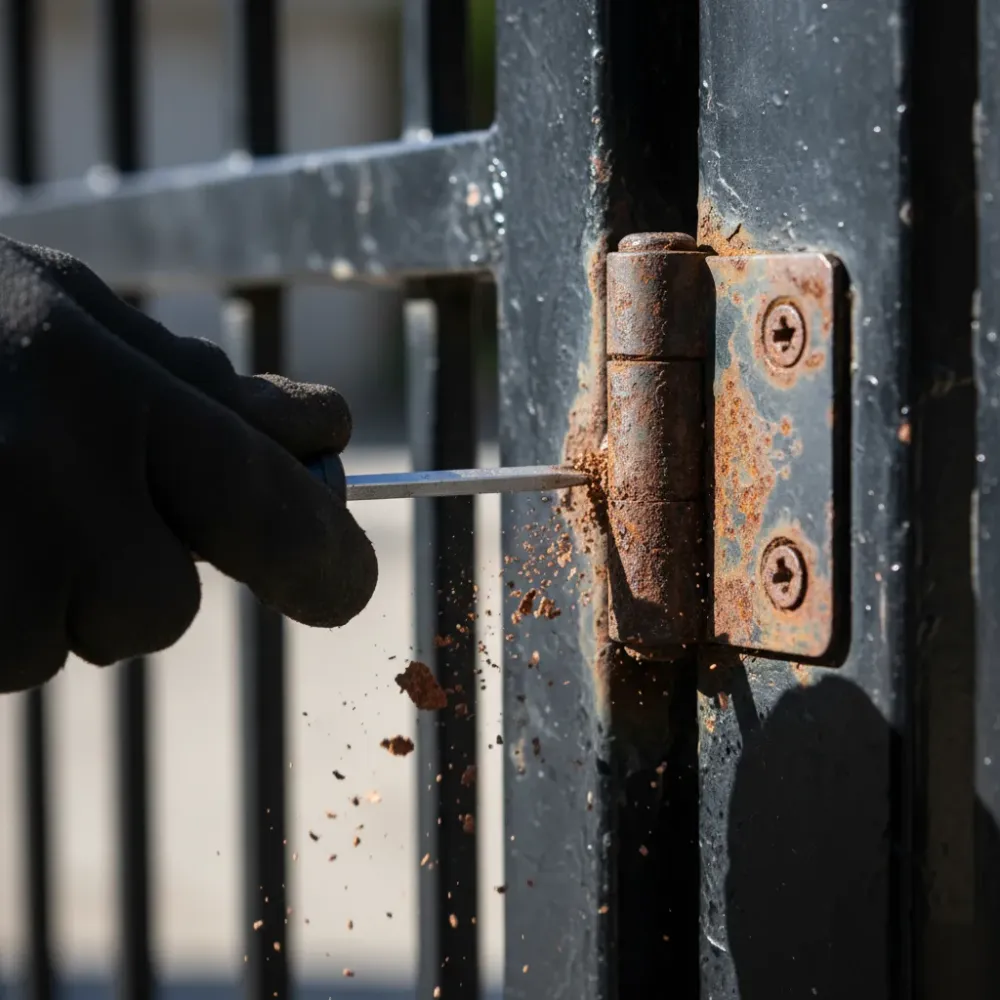
Most swing gate problems don’t start that dramatically, though. Usually, they creep in slow. Maybe you hear a little scraping sound you ignore for a week, or the gate hesitates before it swings. Sometimes it closes fine in the morning but stalls out at night when temperatures drop. We get calls about this every week from homeowners in Hallandale Beach. More often than not, the problem showed warning signs for a while before it got really bad.
Here’s what to watch for:
- Grinding or scraping noises when the gate opens or closes. This metal-on-metal sound often means the hinges are wearing down, or the gate itself has shifted on its post.
- Slow or jerky movement. If the swing isn’t smooth and consistent anymore, it usually signals that the motor or actuator is struggling. The issue could be electrical, or it could be mechanical.
- The gate stops mid-swing and reverses for no reason. This symptom typically points to a sensor issue, or the system might be detecting an obstruction that isn’t actually there.
- Visible sagging. You might notice one side of the gate hanging noticeably lower than the other. This often means the hinge pins are failing, or the post itself is losing its stability.
- Rust or corrosion on moving parts. Living near the Atlantic coast means salt air quickly speeds up this process. Rust and corrosion can seize up moving components surprisingly fast.
That last point, about rust and corrosion, matters a lot here in Hallandale Beach. Properties along the Golden Isles neighborhood, and many others, sit close enough to the Intracoastal Waterway that salt corrosion becomes a real factor. We’ve opened up gate operators that looked perfectly fine on the outside, only to find them completely seized up inside from long-term moisture and salt air damage.
So, what’s the risk if you wait? A swing gate that’s dragging or binding puts extra load on the motor. This added strain can cause the motor to burn out. Now you’re looking at a bigger, more costly repair instead of the simple fix you could’ve handled weeks earlier. And a gate stuck open? That’s a security problem for your property, no question about it.
Here’s a common scenario we see a lot: your gate remote starts working intermittently. You might assume it’s just the battery. You swap it out, and it works for a day, then goes right back to being unreliable. Often, the real problem is the control board losing its programming, or a wiring connection going bad at the operator itself. It’s not the remote at all.
If your swing gate is doing anything it didn’t do six months ago, consider that your signal. Don’t wait for it to stop completely. The repair is almost always easier and faster when you catch the issue early.
Common Swing Gate Failures and What Causes Them
You hear a grinding noise every time the gate opens, or perhaps it stops halfway and just sits there. We get calls like this every week in Hallandale Beach. Usually, the cause is one of a handful of common problems we’ve encountered countless times.
Swing gates fail for real, specific reasons, not some mystery problem. Once you know what to look for, it often starts to make sense.
Here are the most common failures we run into:
- Hinge wear and corrosion. Hallandale Beach sits right on the coast. That salt air, combined with high humidity, really eats away at metal. Hinges corrode faster here than almost anywhere else in Broward County. When these hinges seize up or develop too much play, the entire gate starts to sag and drag, creating more problems.
- Operator motor burnout. The motor that swings your gate open does some heavy lifting. If the gate is binding, misaligned, or struggling due to worn hinges, the motor has to work much harder than it should. Over time, this constant strain causes the motor to burn out. You might even notice a faint electrical smell near the control box when this happens.
- Control board failure. Circuit boards and South Florida humidity don’t mix well. We often see control boards with visible corrosion on their contacts, especially in properties and gated communities near the Golden Isles area. Even one bad relay on the board can prevent your gate from responding to remotes or keypads, making it completely unreliable.
- Misaligned or bent gate arms. It happens more often than people think. Someone might accidentally clip the gate with a bumper, or a delivery truck could nudge it a little too hard. Even a slight bend in the arm means the gate can’t close flush, and the limit switches will think there’s an obstruction, preventing proper operation.
- Broken or stretched chains and belts. Like any mechanical part, these components wear out over time with constant use. A stretched chain can skip teeth on the sprocket, causing the gate to jerk or stall mid-cycle. If your gate has a belt drive, that can fray or snap, leaving your gate stuck.
Nine times out of ten, the problem is one of those five issues we just mentioned. It’s usually not some rare, mysterious electrical gremlin.
What often makes swing gate repair tricky is how one problem can quickly lead to another. For example, a sagging hinge puts extra load on the motor. The motor then works harder, drawing more current, which can cause the control board to overheat. Suddenly, you’ve got three problems instead of just one, all because that original hinge issue wasn’t addressed early. We see this kind of chain reaction constantly on older iron gates around Hallandale Beach, especially on properties built in the early 2000s when many of the gated communities were established.
And here’s something many people don’t think about: trees and landscaping grow. That hedge you planted three years ago might now be pushing against the gate’s swing path. The gate fights this obstruction every cycle, causing the operator to strain. You often don’t notice the issue until the gate simply stops working one morning.
So, if your gate is making new sounds, moving slower, or stopping short of fully open or closed, something on this list is likely the reason. The fix is almost always straightforward once we figure out which part gave out first.
How a Swing Gate Repair Is Performed Step by Step
You’ve called us, and we’ve showed up. So, what actually happens next?
Most folks in Hallandale Beach have never watched a swing gate repair from start to finish, and that’s perfectly understandable. But knowing our process helps you understand why we do what we do, and why trying to cut corners often leads to bigger, more costly problems down the road. Here’s how our team handles a repair once we’re on site.
- Full visual and mechanical inspection. We start by looking at absolutely everything before we touch any components. That includes hinges, gate posts, the operator unit, all wiring connections, and safety sensors. We check the gate’s alignment by watching it move through its full arc. If the gate won’t move at all, we manually release the operator and swing it by hand. This manual check tells us a great deal right away.
- Diagnose the root cause. In our experience, nine times out of ten, the obvious problem isn’t the only problem. A gate dragging on the ground might clearly have a bad hinge, but it could also indicate a leaning post due to years of soil shifting or settlement. We meticulously trace every symptom back to its true source before we even pick up a single tool.
- Secure the gate in a safe position. This step matters more than many people realize. A swing gate is incredibly heavy; some of the aluminum and wrought iron gates we work on near the Golden Isles neighborhood can weigh well over 300 pounds per leaf. We always brace or block the gate securely so that no one gets hurt while our technicians are working on it.
- Remove and replace failed parts. Once the diagnosis is clear and the gate is secure, we proceed to swap out what’s broken. Whether it’s a worn motor gear, a faulty control board, corroded hinges, or a damaged arm, we only use high-quality replacement parts. We test each new part individually as it’s installed before moving on to the next step.
- Realign and adjust. This is a critical part of the process. We carefully set the gate’s travel limits, fine-tune the swing speed, and make sure it closes perfectly flush against the strike post. Even being off by a quarter inch can lead to latch problems and premature wear within a month or so.
- Full cycle testing. After all repairs and adjustments, we run the gate through at least ten complete open-and-close cycles. We thoroughly test the remote controls, the keypad, and any other hardwired access points. Finally, we always verify the safety reversing mechanism by placing an object in the gate’s path, confirming it reverses as it should.
That last step, full cycle testing and safety verification, isn’t optional for us. UL 325 safety standards require gate operators to reverse immediately upon contact or obstruction. We confirm this every time, without exception, for your safety and peace of mind.
The whole repair process typically takes one visit from our team. Sometimes, though, a gate post needs to be reset in concrete, and that naturally adds cure time. But we’ll always tell you upfront if that’s the case, so there are no surprises about the timeline.
And here’s a scenario we see constantly: a homeowner tries to fix the operator themselves, gets it half working, then calls us when the gate finally stops mid-swing during a Hallandale Beach rainstorm. Starting with a proper diagnosis from a professional saves you time, money, and prevents situations like a soaking wet car stuck in your driveway. If your swing gate repair has been put off long enough, give us a call. We’ll walk through every step with you when we arrive on site.
Need help with swing gate repair?
Call now for a free estimate. On Time Garage Door Repair is ready to help.
Keeping Your Swing Gate Working After Repair
So, the repair is done. Your gate swings smoothly, and everything looks good. Now what happens?
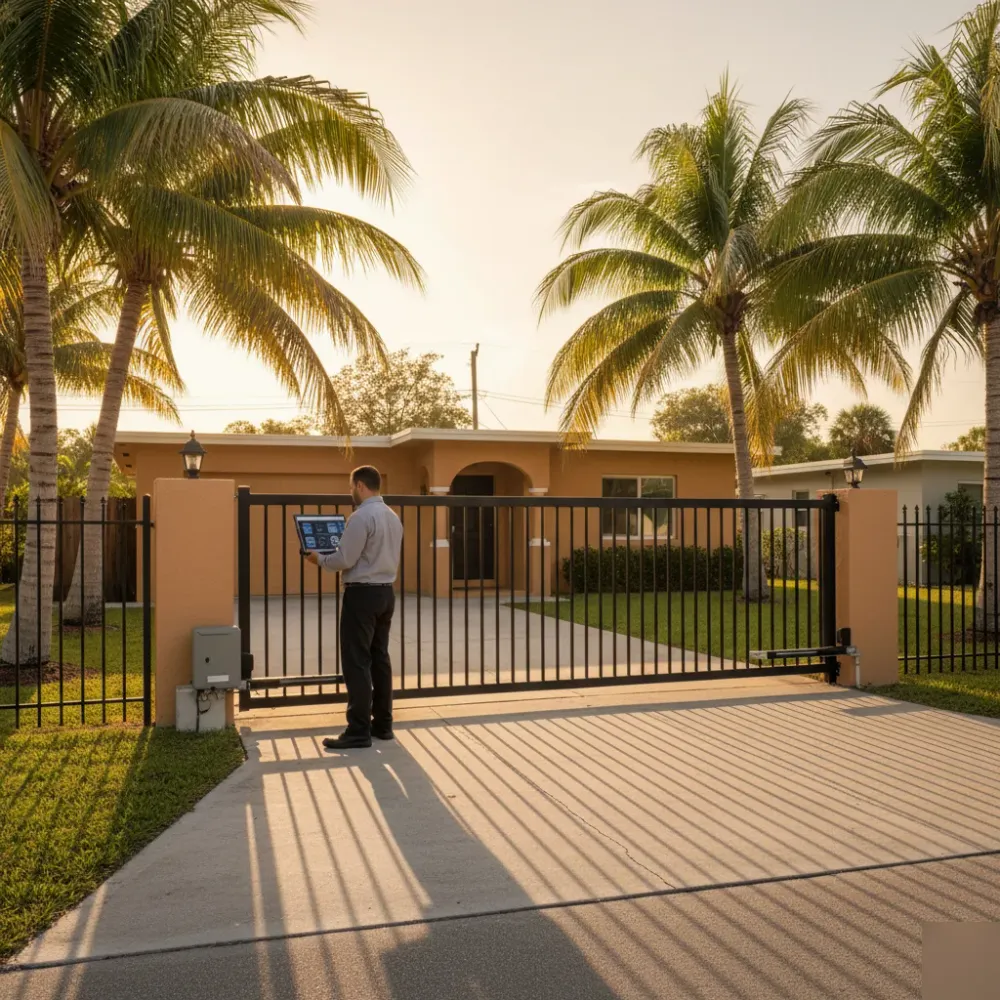
Here’s what we tell every customer in Hallandale Beach after we finish a swing gate repair: the fix only lasts if you keep up with a little ongoing care. We’re not talking about anything difficult, just a few simple habits that can save you from calling us again six months down the road.
Salt air is the big factor here. Living this close to the coast means metal parts corrode much faster than most people expect. According to the Federal Highway Administration, coastal environments can accelerate metal corrosion rates by two to ten times compared to inland areas. That’s a significant difference, and it’s precisely why we see hinges and brackets fail much sooner than they should, especially around the Golden Isles area in Hallandale Beach.
Simple Maintenance You Can Do Yourself
You don’t need specialized tools for most of these maintenance tasks, just a little attention every few weeks.
- Wipe down hinges and other exposed metal hardware with a dry rag, especially after heavy rain or sea spray. This helps remove corrosive salt and moisture.
- Spray a light, non-greasy coat of silicone lubricant on all pivot points, hinges, and any moving parts every two to three months. This keeps things moving freely and protects against rust.
- Regularly check for leaves, twigs, or other debris caught near the base of the gate posts or along the gate’s swing path. Obstructions can cause unnecessary strain on the motor.
- Listen carefully for any new grinding, squeaking, or scraping sounds when the gate opens or closes. New noises are often the first sign that something is developing.
That last point, listening for new noises, matters more than most people think. Nine times out of ten, a sound that gradually appears means something is shifting or wearing out. Catch it early, and it’s usually a quick, inexpensive adjustment. Ignore it, and you could be looking at bent arms or a completely burned-out motor.
And if your gate operates with an automatic opener, remember to keep the photo eyes clean. A dirty or obstructed sensor often causes the gate to stop mid-swing or reverse for no apparent reason. We get calls about this every week. Usually, it’s just pollen, spiderwebs, or road dust from Hallandale Beach Boulevard blocking the safety beam.
When to Call a Pro for a Checkup
Even with consistent good habits, your swing gate still needs a professional check-up at least once a year. We can inspect things you simply can’t see from the outside, like worn gears deep inside the operator, loose wiring connections, or tension settings that can drift over time.
Think of it this way: if you notice your gate hesitates before it starts moving, or it doesn’t close all the way and leaves a gap, those aren’t issues lubricant can fix. Those are signs of internal wear, and catching them during a routine professional visit costs a fraction of what an emergency repair would run.
But don’t wait for something dramatic to happen. The swing gates that last the longest in South Florida are the ones whose owners pay a little attention to them between repairs. Not a lot, just enough consistent care.
Want us to set up a regular maintenance schedule after your repair? Just give us a call, and we’ll keep it simple and straightforward for you.
Frequently Asked Questions
Common questions about swing gate repair services in 301 NE 3rd St. unit 206 33009 Hallandale Beach
How quickly can you get someone out to fix my swing gate in Hallandale Beach?
In most cases, we can get a technician to your property in Hallandale Beach the same day or the next morning. A gate stuck open is a security issue, so we treat it that way. When you call, let us know if the gate is completely non-functional or just acting up. That helps us bring the right parts and get your gate working again on the first visit.
Does the salt air near the Intracoastal really cause that much damage to swing gates?
Yes, it causes more damage than most people expect. Properties near the Intracoastal Waterway and areas like Golden Isles deal with salt air that corrodes metal fast. Hinges, chains, and control board contacts are all vulnerable. We regularly open up gate operators that look fine outside but are completely seized inside from moisture and salt exposure. Routine inspections catch this before it becomes a full motor replacement.
My swing gate stops halfway and reverses — what does that usually mean?
That usually means a sensor is triggering a false obstruction signal. The gate thinks something is in the way, even when nothing is there. It could also be a misaligned limit switch or a bent gate arm that prevents the gate from closing flush. This is one of the most common calls we get in Hallandale Beach. It sounds complicated, but it’s usually a straightforward fix once we identify the exact cause.
Can a sagging gate really burn out the motor?
Yes, and it happens faster than you’d think. When a gate sags due to worn hinges, the motor has to pull extra weight every single cycle. That added strain builds up over time and causes the motor to overheat and burn out. What started as a simple hinge repair turns into a full motor replacement. Fixing the sag early protects the motor and saves you from a much bigger job down the road.
What should I expect when the technician arrives to repair my swing gate?
Your technician will start by watching the gate go through a full cycle to spot exactly where it’s failing. Then they’ll check the hinges, arms, motor, and control board. You’ll get a clear explanation of what’s wrong before any work begins. Most repairs are handled the same visit. If a part needs to be ordered, we’ll secure the gate so your property stays protected while you wait.
Are there any Hallandale Beach rules I should know about before repairing or replacing a swing gate?
Repairs to existing gates generally don’t require a permit in Hallandale Beach. However, if you’re replacing the entire operator or making structural changes to the gate posts, a permit may be needed depending on your property type and HOA rules. Gated communities often have their own guidelines too. We’re familiar with local requirements and can help you figure out what applies to your specific situation before we start any work.
Ready to Get Started?
Call now for a free estimate Call (954) 329-1361 today.

Recent Comments