Call now for a free estimate. Call On Time Garage Door Repair now.
# Garage Door Cables Repair / Replace in Hallandale Beach: Fast, Reliable Service ## Warning Signs Your Garage Door Cables Need Attention You’re on your way to work in the morning when you notice the door is off the tracks. One side is lower than the other. If this has happened 9 times out of 10 to someone, it’s not a track issue. It’s a cable. Most homeowners in the Hallandale Beach area don’t think much about garage door cables unless the door looks off or makes an odd noise. And this is completely fine, you don’t need to inspect them daily! But, you should know what something “wrong” looks like, so you don’t wait and have a completely jammed door because you were waiting too long. These are the things we get the most questions about from local Hallandale Beach residents: – **The door is crooked.** When it partially opens, one side looks lower. This usually means there’s either a broken or a cable that came off the drum.
– **Loud bang in the garage.** A broken cable often produces this noise as the tension snaps. If you’ve just heard this, don’t use the door as a cable under this much tension is dangerous.
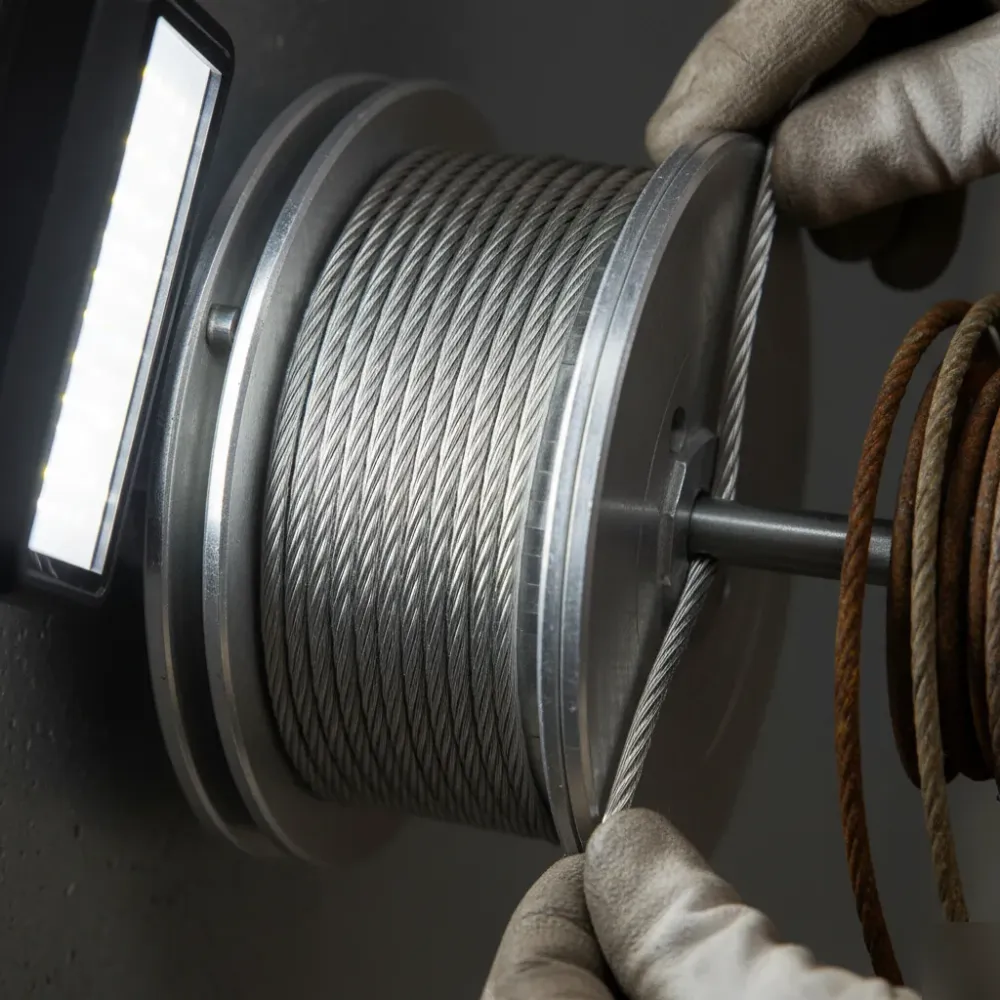
– **Noticeable fraying or loose strands.** On the right side of the door, the left or right side, look at the cable. Is there little pieces sticking out, or is it fuzzy. This means your cable is frayed.
– **Door stutters or jumps as it goes up.** When the tension is equal on each cable, they travel the track smoothly. Any kind of jerking is a warning.
– **There’s some slack in the cable at the bottom bracket.** If one side has slack there, the cable either broke above that point, or came off the top of the door. We get multiple calls a week about cable issues. Someone will first notice something is off with the door and try the garage door opener a few more times and it will become stuck midway. By this point, there will have been more damage done to the track or drum. A five minute inspection of your cable might have avoided this bigger issue. This also isn’t something that most people realize. A fraying cable is often not a sudden break that causes you to have to have a service call. It often slowly breaks down over time, causing the cable on one side to become heavier, which causes more wear on the system. If you see the cable fraying even just a little, you probably shouldn’t just wait on this. Also, salt water can be an issue too. If you’re near the beach in the Hallandale Beach area, you might be having more of a corrosion issue as metal in saltwater will wear out much quicker than normal weather. This often is why a cable might break sooner than expected. It’s just the beach life. Not sure if your cable issue is the problem? It can be. A lot of garage door issues will look similar and could be a spring issue, track issue, or even an opener problem. But, if there’s any sort of crooked door or slack, or cable on the floor, you can probably have it resolved by a cables repair or cables replacement. Attempting to manually lift the door or persistently operating the opener will only exacerbate the situation. ## Repair or Replacement? Deciding on the Course of Action for Your Garage Door Cables What stands out as our most commonly inquired question? “Is it possible to simply repair them, or is it necessary to replace the cables?” If I were to tell you, “It all depends on the findings once we arrive at your home in Hallandale Beach.” Occasionally, a cable may detach from the drum, but the cable itself can remain unharmed. In this scenario, we need to rewind and realign the cable. This qualifies as a repair. We frequently observe this issue in residences located close to Three Islands in Hallandale Beach, particularly because the humidity in those areas can seep into every component. The drum becomes slightly corroded, the cable’s groove is compromised, and the cable disengages. A straightforward fix with no need for replacement parts. When the cable exhibits fraying, kinks, or has been pulled beyond its intended tension, that calls for a replacement. Always. It is unsafe to attempt to fix a steel cable that is already weakened, and we will not mislead you on this matter. ### When Repair Is Acceptable It is possible to repair the garage door cables if there is no structural damage present in the cable at all. Here’s an example of that: – The cable has slipped off the drum and there is no damage present.
– A mounting bracket or cable fitting has come loose, not the cable itself.
– The cable has shifted off its track due to an earlier spring issue, which has now been repaired. If we do so, we’ll run the cable back through its proper route, that its tension is correct, and cycle the door manually a few more times. If the entire process works properly, then you’re good to go. ### When Replacement Is the Only Viable Option In 90% of situations, when a Hallandale Beach resident contacts us, the garage door cable requires replacement. The majority of individuals don’t detect any issues until the garage door looks lopsided or ceases to move completely. By that time, the cable is already ruined. – Fraying present at any point on the length of the cable.
– Rust or corrosion present within the cable strands.
– The cable is broken.
– The cable is excessively stretched, resulting in an abundance of slack. We replace the pair of cables together, not only the one that snapped in half. The other cable is just as old, just as used, and just as exposed to the salt air that’s present in Hallandale Beach. It’s only a matter of time before it snaps too. Installing just one cable results in tension imbalances in the garage door, which leads to much bigger issues with the tracks and the opener system further down the line. So how do you make this call? You don’t have to! That’s what we’re here for. We’ll check out the cables, give you a clear view of what’s wrong with them, and then explain clearly whether repairing will work out or if the cable needs replacing. There is no guesswork involved. Would you like assistance on this? Please reach out to us. ## Ensuring That the Job Was Completed Properly It is not sufficient to just that the cable is now positioned on the drum. Not even close. There are a lot of companies out there that would rather hurry through a garage door cable repair / replace job. What do these folks skip? The testing part. You wouldn’t pull out of a mechanic’s car without testing the brakes, right? Same thing here. Every cable replacement requires a full test before we leave your Hallandale Beach home. This is the test we run after every single cable repair job: 1. Three full door open-and-close cycles (with the wall button). Is the door traveling smoothly from bottom to top and back?
2. Check cable tension on both sides. If they are not even, one cable is doing more work than the other will cause premature wear.
3. Check the cables’ position on the drums. The cables should lay snugly and tightly in the grooves without overlapping at all.
4. Test door in manual mode. Pull the red handle on the opener and move the door by hand. Does the door stay in place at any height you choose? If the door is rising or falling by itself, your springs have the wrong tension.
5. Verify that the door’s safety sensors are working properly. Moving components around in the process of cable replacement can cause sensors to go out of alignment. Make sure the auto-reverse feature functions correctly.
6. Check for damaged tracks and rollers caused by the old cables breaking apart. 9 out of 10 times, your door is better than it has been for quite some time when we complete the job. But the tenth time, that’s why we check these things. Perhaps a roller cracked when the cables snapped. Perhaps a bracket on the bottom of the door fell off. We can fix all this now, so you don’t call us again. A few homeowners near Golden Isles ask: should I test the door again after you leave? Yes. Operate the door from your vehicle. Do a few open-and-close cycles. Listen for unusual sounds. The door should be silent when operated by the new cables. You will hear the motor of the opener and, in some cases, a quiet hum of the springs. This is normal. Another tip many folks forget: observe the door’s movement from inside of the garage, with the lights on. You should see that both sides move in unison. If one side of the door rises faster than the other side even slightly (one inch or more), the door is not balanced. This is something we should catch on our end, but knowing what to look for will give you peace of mind for years to come. We have been working in Hallandale Beach for a while now, and how much a thorough final inspection helps out both homeowners and professional garage door repair companies. It’s the difference between getting a fix that lasts and getting a fix that generates a whole new problem. ## How to Keep Cables in Good Condition in a Coastal Climate It is wonderful to be so close to the beach. Until you realize what salt air does to metals. Cables on a garage door in Hallandale Beach undergo stresses which a garage door cable 10 miles from the coast does not. Here, we change cables that are half the age of those you would expect to find inland, more often than not because of corrosion. You can damage cables in the presence of salt, without ever having to come into direct contact with salt, because it is the humidity that contains the salt which causes this type of damage. It coats any and every piece of metal, including your cables. Over time, corrosion attacks the strands of your cables one at a time. From a few feet away, your cables appear to be okay, but, if you look closely, you will be able to see that there are spots of corrosion and the cables themselves may be frayed or stiff when in operation. So, what can we actually do about this situation? Well, more than you may think. So here are some of our suggestions for homeowners in or near the coastline: – Wipe down your cables with a dry cloth every couple of months to reduce the accumulation of salt
– Use a light coating of silicone-based lubricant to coat your cables (not WD-40) two times a year
– Keep your garage ventilated but try not to leave the door open for hours when humidity levels are high
– Look at the bottom of the cable for attachment points as this is an area of moisture where cable corrosion will begin That last one is very important. When you apply a silicone spray to your cables you are creating a barrier between the metal surface and the salt-laden air. WD-40, on the other hand, is a solvent and not a protectant. We see this mistake quite often. We have a number of homeowners who spray their garage door cables thinking they are helping, when they are actually removing all the protection that may already be present. Garages which are more proximate to the Intracoastal, especially in the Golden Isles, tend to show cable wear more often than those located in other locations. Nine times out of ten when we get a cable call from that part of town, corrosion is the root cause. Not time, not excessive usage, simply the environment. Another aspect which you are probably not thinking of is that your springs and cables work together as a pair. If you allow a cable to corrode enough for fraying to occur, that cable will alter the balance of the system by changing the amount of weight the springs carry. The increased load will then be transferred to the tracks and the opener as well. It is possible for one, unattended cable to shorten the life of an entire garage door system. We recommend a visual check every three months. You do not require any special tools, just look at both cables on either side of your door. If you see the first sign of rust, strands of wire which appear to be loose and even portions of the cable which appear to be thinner than the remainder of the cable, it is time to have them checked. According to the International Door Association, regularly doing this type of visual check of the cables will help to avoid many cable failures. Doing this can help you catch cable problems before a door falls and the cables snap, causing damage and possible injury. The salt and humidity will never go away from the air in the Hallandale Beach area, so just take a little bit of time now and do a little checking. Your cables will stay in top working condition.
Frequently Asked Questions
Common questions about garage door cables repair / replace services in 301 NE 3rd St. unit 206 33009 Hallandale Beach
How quickly can you get to my home in Hallandale Beach for a cable repair?
Most cable calls in Hallandale Beach get same-day service. A broken or snapped cable is not something you want to leave overnight — your door is either stuck open or stuck shut. When you call, let us know if the door is blocking your car in or out. That helps us prioritize. We cover all of Hallandale Beach and can usually give you a arrival window within the hour.
Can salt air near the beach actually damage my garage door cables faster?
Yes, and this is one of the most common reasons we replace cables in Hallandale Beach sooner than expected. Salt air speeds up corrosion inside the cable strands. The metal weakens from the inside out, so the cable can look fine on the outside but already be failing. If you live near the water, your cables may wear out faster than the average lifespan. Regular visual checks help catch this early.
Do you always need to replace both cables, or just the one that broke?
We always replace both cables at the same time. The second cable is the same age, has the same wear, and has been exposed to the same salt air. If one snapped, the other is not far behind. Replacing only one cable creates uneven tension on the door. That imbalance puts extra stress on your tracks and opener, which leads to bigger repairs down the road.
What should I do if I hear a loud bang in my garage and the door won’t move?
Stop using the door immediately. A loud bang almost always means a cable or spring just snapped under high tension. Forcing the opener or trying to lift the door by hand can cause more damage — or hurt you. Leave the door where it is and call for service. Do not try to run the opener again. A technician can safely release the tension and assess what broke.
What happens when the technician arrives to check my garage door cables?
When we arrive, we inspect both cables, the drums, the bottom brackets, and the spring tension. We check for fraying, rust, slack, and alignment. Then we walk you through exactly what we found — repair or replace — before any work starts. You get a clear explanation with no guesswork. Most cable jobs are completed in a single visit, and we test the door through several full cycles before we leave.
Ready to Get Started?
Call now for a free estimate Call (954) 329-1361 today.


Recent Comments