
Fast, reliable garage door and electric gate repair and installation in South Florida — call today, fixed today.
What’s Covered on This Page
- Troubleshooting and Repair: How to Fix an Electric Gate Motor in Hallandale Beach
- Why does my electric gate motor keep reversing even when nothing is blocking it?
- How does Hallandale Beach’s coastal climate affect electric gate motors?
- Can I fix my electric gate motor myself, or should I call a professional?
- What is a common mistake people make when troubleshooting a gate motor?
- What does a clicking sound from my gate motor mean?
- What should I check first when my electric gate motor stops working?
Need how to fix an electric gate motor: troubleshooting and repair guide?
Call now for a free estimate. Call On Time Garage Door Repair now.
Troubleshooting and Repair: How to Fix an Electric Gate Motor in Hallandale Beach
Your gate motor doesn’t stop working ; it gives you signs and signals before breaking down. We receive numerous calls from Hallandale Beach residents with malfunctioning gate motors every single week, but most of them ignore the warning signs.
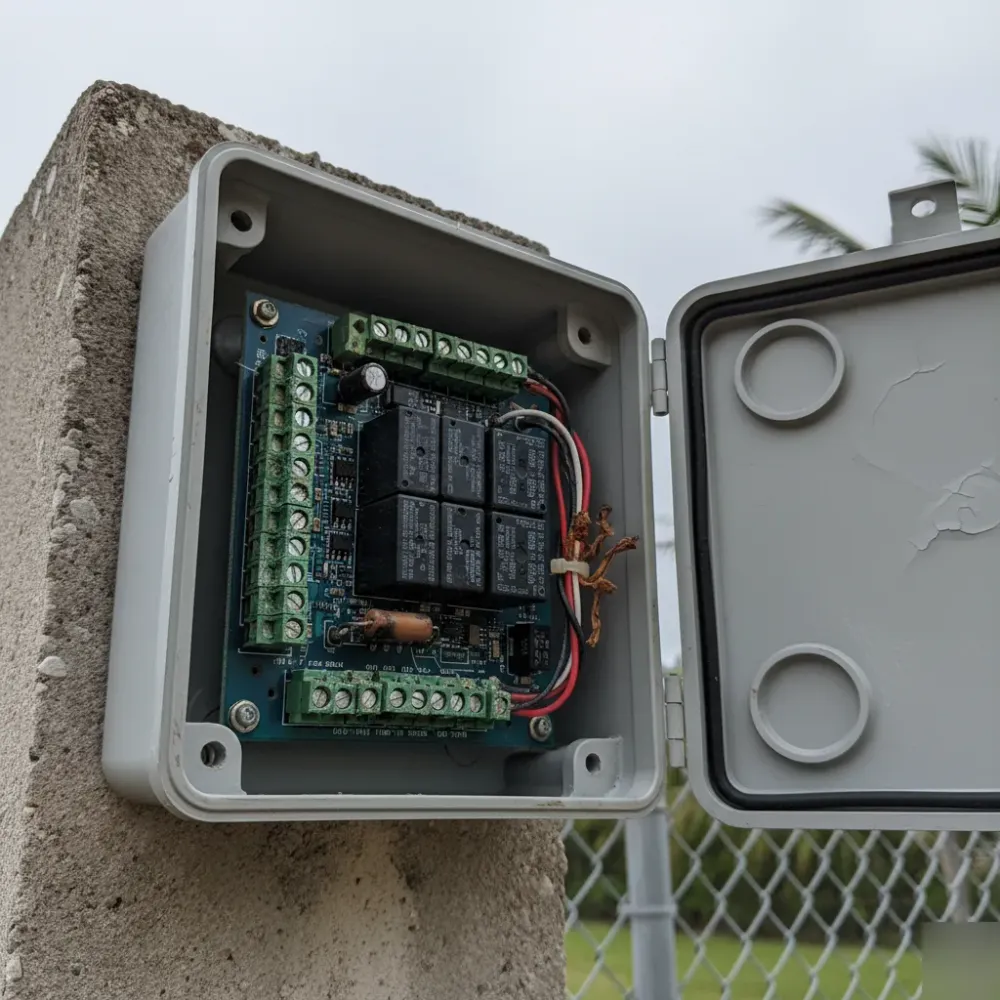
Knowing how your motor works can save you both time and money. Here are some things you should keep an eye out for:
- Sluggish or stuttering operation. Your gate opens and closes smoothly. Suddenly it becomes sluggish, stops briefly, or moves like it’s moving a heavy object.
- Unusual noises, such as grinding or clicking. A normal motor operates quietly, but a failing gate motor creates noises you can hear as you drive your car towards it.
- The gate reverses for no reason. It starts to open, then changes its mind. This often points to a sensor issue or a motor struggling under load.
- The gate opens halfway and stops. Your gate opens halfway, and it won’t go any further regardless of whether you press the remote control.
- Burning smell around the motor unit. This is an indication that internal parts of the motor are overheating.
The warning sign can be one or two warning signs at a time.
Understanding Why Your Motor Response Is Delayed
Most people believe that a slow-moving gate motor is a result of aging. A slow motor response is usually a weak motor capacitor. It is what helps the motor generate the initial torque when you activate the remote or a keypad to open it.
Hot, humid weather in South Florida will cause a gate motor capacitor to fail faster. Capacitors fail faster in humid climates than in dry ones. Capacitors also tend to corrode from excessive salt air off the coast, per the International Association of Certified Home Inspectors.
Listen to Your Gate
Grinding usually signals that there is a metal part that should not be in contact with another piece. A clicking noise means the relay is failing and not making contact with the circuit. A screeching noise means the motor is under extreme stress.
For example, we get a lot of requests for gate motor repairs from a Golden Isles homeowner who is experiencing a clicking sound whenever he or she opens the gate from a remote. After several weeks, the gate motor finally fails to open. A clicking sound may indicate that the relay was already failing.
Don’t wait for your gate to start closing completely.
Why Is the Gate Reversing?
This issue is a common one that most people don’t know what to do with. You hit the button, the gate starts moving, then it reverses like something’s in the way. But nothing’s there.
This could be due to a sensor that is out of place. Sometimes, the motor is simply drawing excessive current, prompting the control board to trigger a protective cutoff. Regardless of the root cause, this won’t self-correct. We’ve witnessed homeowners attempt to circumvent safety mechanisms to force the gate open. It’s a hazardous practice, potentially leading to complete motor burnout or gate track damage. If the gate refuses to close and is reversing, the course of action is to call a technician to assess both the sensor alignment and the motor’s amperage draw. This diagnostic will pinpoint the exact issue.
It’s easy to overlook subtle warning signs that precede a complete failure. Should you observe any of the indicators mentioned earlier, it’s wise not to delay. For more assistance, visit our gate repair services page to see how we can restore functionality.
Step-by-Step Guide to Diagnose a Motor Safely
Before you attempt anything, cut the power. This is a non-negotiable first step. Gate motors operate with electricity, and working on live motors can be deadly. We often receive phone calls from people in Hallandale Beach who are injured because they touched their gate motor without turning the power off at the breaker. This won’t happen if you’re doing things right.
With the power off, you can begin a basic diagnosis. Follow these steps in order to help you determine where the problem is.
- Verify Power Supply. Briefly switch on the breaker and check the motor terminal box using a voltage tester. If no voltage is detected, the electrical supply isn’t reaching the motor at all. Your breaker is likely tripped, there may be a blown fuse, or a wire has come loose and is connecting the gate and control panels. This is the most common electrical problem we diagnose.
- Test your remote and keypad. Start by replacing the batteries in your remote. If you have more than one remote, try another one. Then, try the wall-mounted keypad. If one device functions and the other doesn’t, the problem is isolated to that specific device.
- Check the control board. Open the gate motor casing carefully. On the circuit board, check for signs of burn damage, bulging capacitors, or broken wires. Over time, South Florida humidity can severely damage the circuit boards of electric gate motors. Poor connections can lead to failure of the entire system.
- Listen to the motor. Turn on the power again and press your remote. If the motor makes a humming noise, but the gate isn’t moving, there might be something stuck in the gate or a damaged gear. If you don’t hear any sound at all, you may have a motor that’s failed.
- Test the safety sensors. If your electric gate motor is equipped with photo eye sensors or sensor loops, and one of them is blocked, dirty, or out of alignment, the gate won’t be able to close. If one or both sensor eyes are dirty, use a dry cloth to clean the lens. Then, make sure there’s nothing blocking your sensor’s path to the other sensor eye.
- Look for physical obstructions. Walk around your entire gate track or swing. It’s debris, a little corrosion, or even a loose post. That can shut down the electric gate motor entirely. We’ve even pulled palmetto bugs out of gear housings before.
All told, the six steps outlined above will address nearly 80% of electric gate motor issues we encounter on service calls. (As the International Door Association notes, sensor and power supply troubles make up most residential gate failures.) One thing you should know: A humming motor usually is good news. A humming motor means it has power and wants to go. More often than not the problem is mechanical. When a gate motor does absolutely nothing when you press the remote, that’s a sign of a power or electrical issue. Finally, consider when problems began. Did your gate act up right after a heavy storm? Water damage is likely. Are you living in a home close to the Intracoastal? Corrosion will set into exposed electrical connections at a faster rate due to the salty Florida environment. Last but certainly not least, if you open your gate motor and see anything resembling melted plastic or smell burning, walk away. That’s no fix. The circuit board or motor coil likely will have to be replaced, and that work takes the hand of a trained repair technician with the parts to get it right. What does all of this mean for you? If your troubleshooting diagnosis tells you the problem is simple like a weak remote battery or a switched-off circuit breaker, do it yourself. But if it indicates circuit board damage, a grinding noise, or a completely unresponsive motor, you should call an electric gate repair pro. It’s time for a little maintenance before you have to shell out for a whole new motor. Keep in mind that safety is more important than speed in this instance. Be sure to take your time to do each step properly.
The Most Repairable Electric Gate Motor Problems and How to Address Them
The electric gate motor issues most often found in Hallandale Beach aren’t actually irreparable. In fact, the vast majority of them can be resolved by the homeowner with very little effort – or at the very least a phone call to a repair technician. Many homeowners end up calling us because they’re convinced their entire motor has gone bad. Nine times out of ten, it’s one of the problems listed below. And for those, a gate motor replacement isn’t the solution.
Gate Motor Runs But the Gate Won’t Move
Most common after a large storm or in humid conditions, a humming electric gate motor is the symptom that the motor has power and wants to run – but something in between is causing the gate to remain stationary. The drive gear and/or drive chain likely has been shifted; or on swing gates, the connecting arm may have loosened due to the salt air of the coast. Inspect the physical connection between the motor and the gate: Is there a broken gear tooth? A loose bolt? A drive chain that has come off its track? These are just a few components and a quick solution to any problem you can spot early on.
The Motor Completely Fails To Operate
The first thing to check is simply whether or not power is reaching the motor control board. The most common causes we see are tripped breakers, blown fuses or corroded electrical contacts. In some older communities in Hallandale Beach, for example, the water table causes the underground electrical wiring to erode.
If the control board is receiving electricity but isn’t responding, there may be a component inside the board that has burned out. Sometimes these will show a burn mark or a swollen capacitor. A bad capacitor is one of the most easily fixable problems with electric gate motors as it only takes a few dollars to replace and can be installed within minutes.
The Gate Will Open But Not Close, Or vice versa
When the gate will open but not close (or vice versa) your limit switches are most likely the issue. These are small sensors which signal the motor when to stop. If they move out of position or become too dirty they will falsely signal that the motor is already in the correct position, making it refuse to move in any direction at all.
Cleaning and realigning your limit switches will fix this about 80% of the time. When the gate starts moving and then reverses direction, the issue is almost certainly with your photoelectric sensors which could be blocked or misaligned by leaves, spider webs, lizards or other pests here in South Florida.
A Grinding Or Scraping Noise While Operating
A bad grinding or scraping sound is a sign of friction in your gate system. A few things to check for:
- Dried-out bearings in the motor itself
- A bent portion of the gate track or a roller dragging along the floor
- An object lodged in your gears or motor casing
- A warped gate panel rubbing against the post
Most people put off fixing these types of issues until their gate completely gives out on them. But if you just have a bad grinding noise and the gate still moves you could end up spending hundreds of dollars for a rebuild or even a replacement. Spending five minutes now and again to lubricate and inspect your system will save you thousands of dollars in the long run.
Intermittent Gate Motor Problems
Your gate occasionally operates normally, but sometimes does not. This is often the hardest problem to diagnose and the most annoying.
The culprit is usually a loose wire connection which has worked its way loose through repeated expansion and contraction from the heat and humidity. A weak remote battery can also cause this to happen. In some rare cases, a failing relay in the control board only acts up under certain conditions such as a specific temperature or voltage level.
We always advise customers to observe their problems and note when they occur more frequently. When you give us that information it often helps us diagnose the problem much faster.
Any of these problems are easily repairable once you have identified the true cause. Otherwise, you’ll likely spend a lot of unnecessary money on replacing parts that weren’t broken at all. If you don’t know exactly what is causing your electric gate motor to act up, our electric gate repair team can walk through it with you and get it sorted out quickly.
Frequently Asked Questions
Common questions about how to fix an electric gate motor: troubleshooting and repair guide services in 301 NE 3rd St. unit 206 33009 Hallandale Beach
Why does my electric gate motor keep reversing even when nothing is blocking it?
<h3>Why does my electric gate motor keep reversing even when nothing is blocking it?</h3><p>Your gate is likely reversing because of a misaligned sensor or a motor drawing too much current. When the control board detects too much amperage, it triggers a safety cutoff. This makes the gate reverse as a protective move. A dirty or shifted photo eye sensor can cause the same problem. Do not try to bypass the safety system — that can burn out your motor completely. A technician should check both sensor alignment and motor amperage to find the real cause.</p>
How does Hallandale Beach’s coastal climate affect electric gate motors?
<h3>How does Hallandale Beach’s coastal climate affect electric gate motors?</h3><p>Salt air and high humidity in Hallandale Beach speed up wear on gate motor parts. Capacitors corrode faster near the coast, according to the International Association of Certified Home Inspectors. Circuit boards can also take damage from South Florida’s moisture over time. If your gate motor is installed near the water — like in Golden Isles — you may see problems sooner than inland homeowners. Regular inspections help catch corrosion before it causes a full breakdown.</p>
Can I fix my electric gate motor myself, or should I call a professional?
<h3>Can I fix my electric gate motor myself, or should I call a professional?</h3><p>You can safely handle basic checks yourself, like replacing remote batteries, cleaning sensor lenses, or looking for physical obstructions along the gate track. But anything involving the motor’s wiring, control board, or capacitor should be left to a professional. Gate motors run on electricity and can cause serious injury if handled incorrectly. If your basic checks don’t solve the problem, our <a href=’#’>electric gate repair services</a> page walks you through the next steps.</p>
What is a common mistake people make when troubleshooting a gate motor?
<h3>What is a common mistake people make when troubleshooting a gate motor?</h3><p>The most common mistake is working on a gate motor without cutting the power first. Many Hallandale Beach homeowners have been injured this way. Turning off the breaker before touching anything is a step you cannot skip. Another big mistake is ignoring early warning signs like grinding sounds or slow movement. Waiting too long turns a small repair into a full motor replacement.</p>
What does a clicking sound from my gate motor mean?
<h3>What does a clicking sound from my gate motor mean?</h3><p>A clicking sound usually means the relay inside your motor is failing and not making a good connection with the circuit. This is an early warning sign — not something to ignore. Many homeowners hear the click for weeks before the gate stops working completely. If you catch it early, the repair is usually simpler. Left alone, a bad relay can lead to full motor failure and a much bigger fix.</p>
What should I check first when my electric gate motor stops working?
<h3>What should I check first when my electric gate motor stops working?</h3><p>Start by checking your power supply. Use a voltage tester at the motor terminal box to see if electricity is reaching the unit. A tripped breaker or blown fuse is the most common cause of a gate that suddenly stops. After that, swap out your remote batteries and try a second remote if you have one. These two steps alone solve a large number of gate motor problems before any real repair work is needed.</p>
Ready to Get Started?
Call now for a free estimate Call (954) 329-1361 today.

Recent Comments