Call now for a free estimate. Call On Time Garage Door Repair now.
The Gate Is Operating Slowly
You step into your car and press the button on the remote. You see it move. But it’s slow. It used to swing open in a few seconds. Now, it lags. You’re not alone: this one of the most frequent indicators you need your electric gate repaired, yet many Hallandale Beach residents ignore it for far too long. We receive calls about the issue regularly. A slow-moving gate is not an indication that your system is “aging.” It’s an indication that something isn’t working correctly. Plus, the longer you wait, the more you put your gate at risk of an immediate and complete shutdown. That’s when it’ll be too late for anything but a costly and inconvenient fix. ### The Issue Behind a Slow-Moving Gate There are a variety of reasons an automated gate might lose speed. Some issues are straightforward to resolve. Others will require the help of a professional repair service. We often see the following issues when responding to a slow-gate call:
Worn gears in the motor: Over time, the metal gears grind away. The motor runs harder to generate movement but doesn’t perform as well.
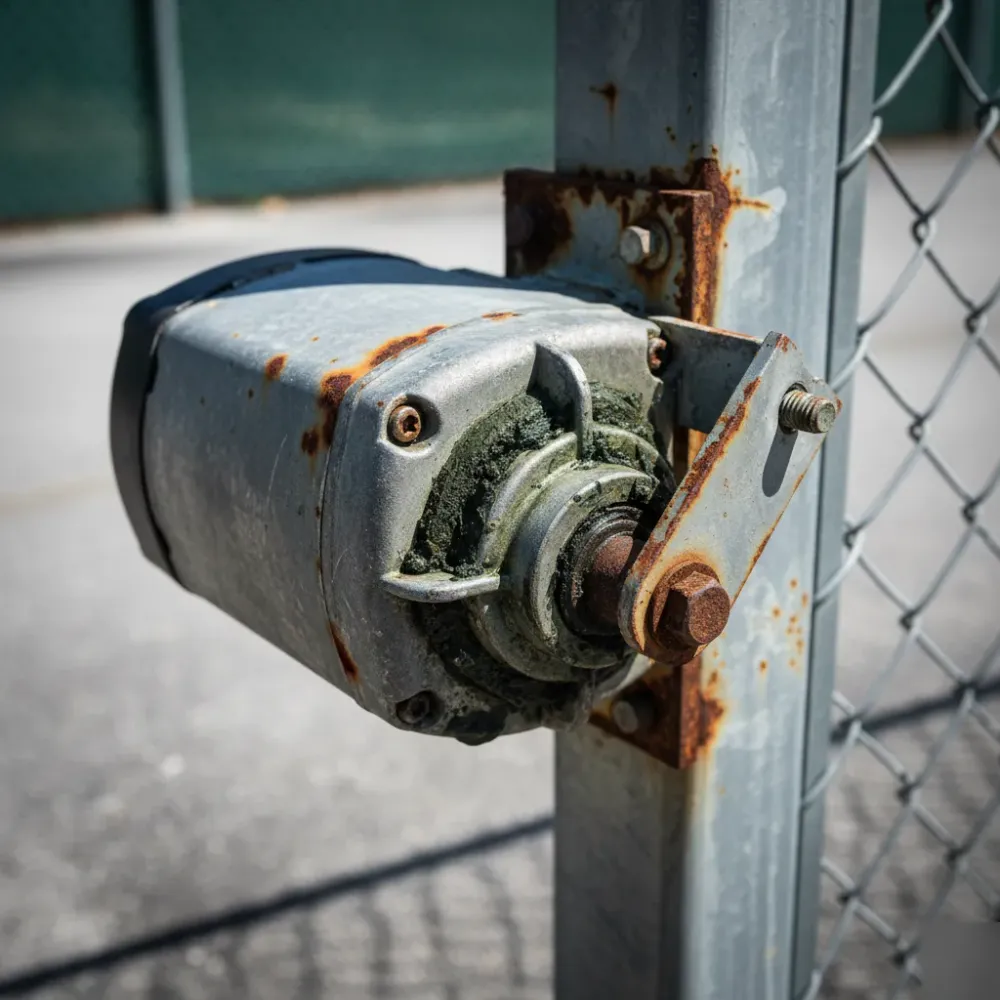
Corroded or dirty rails: Salt air from the coast near Hallandale Beach causes corrosion on the metal rails and rollers more quickly.
Low voltage or other problems with your power supply: If the voltage coming in is weak, your motor will struggle. It’ll move, just barely.
Bad capacitor: The capacitor is a power bank that gives a quick burst of energy. As the power bank weakens, the gate will lag and struggle.
Debris in the rail: Sand, leaves, and rocks can all make their way into your gate system. South Florida backyards fill up easily, and rainstorms are especially hard on the system.
Most homeowners assume the motor’s the culprit. Sometimes, that’s true. More often, it’s one of the above issues. We can usually tell you which issue has cropped up when we get there. ### Slow Gates in Daily Life It’s the morning. You’ve got work. You hit the gate button as you pull away. The gate moves at snail’s pace. You now have to sit there, engine running, for an extra 20 seconds. Not ideal, but is it a big deal? But what happens when you’re supposed to receive a delivery? The delivery driver pulls up, but your gate doesn’t open. They turn around and leave. Or maybe even worse, it happens while it’s pouring rain outside. The gate stalls mid-opening, and now you’re trapped in your driveway. We’ve seen this scenario happen more than once. People who’ve waited a few months with a slow gate will finally find themselves stuck when their system gives out. A gate that takes its sweet time is a clear sign that something is amiss. And it means that now is a perfect time to repair it before it completely shuts down. You should think of it like a Check Engine Light. You can run the car, but why would you? ### The Role of Salt Air in Hallandale Beach Most people don’t realize until it’s too late: living near the ocean means your gate’s parts will corrode faster than if you lived 10 miles inland. The International Association of Certified Home Inspectors notes that salt air speeds up corrosion on mechanical parts outside your home. The chains, railings, motors and other components take a beating as a result of the moisture and salt. We’ve seen gates in communities near the Intracoastal Waterway need rail cleaning twice as much as gates out toward Pembroke Park. That’s coastal life. Corrosion causes friction. Friction slows the gate down. The motor pushes through the friction. A motor pushed through friction dies early. ### How to Know If It’s Getting Worse You don’t need to buy anything. Watch what happens. Track it like this:
Use your phone to time how long your gate takes to open right now.
Write it down.
Do it again in two weeks.
If that number is up by even a few seconds, call for electric gate repair.
Also, listen for a grinding or a constant hum while it cycles. That’s mechanical trouble, too.
A functioning gate usually opens in 12-18 seconds. If you find yourself waiting more than 25 seconds for it to open, and sometimes stopping part of the way, you know it’s not right. Don’t wait for the gate to quit moving altogether. So how do you actually deal with that? If your gate has slowed down, have a professional inspect the motor, track, and electrical connections. A professional diagnosis now will likely keep you from having to replace your entire gate operator at a later date. Our electric gate repair page can give you a better idea of how it all works and how to get started. In the end: a slow gate is an electric gate reaching out for help. Don’t let it ask again.
Gate Won’t Open Fully, Stops or Reverses
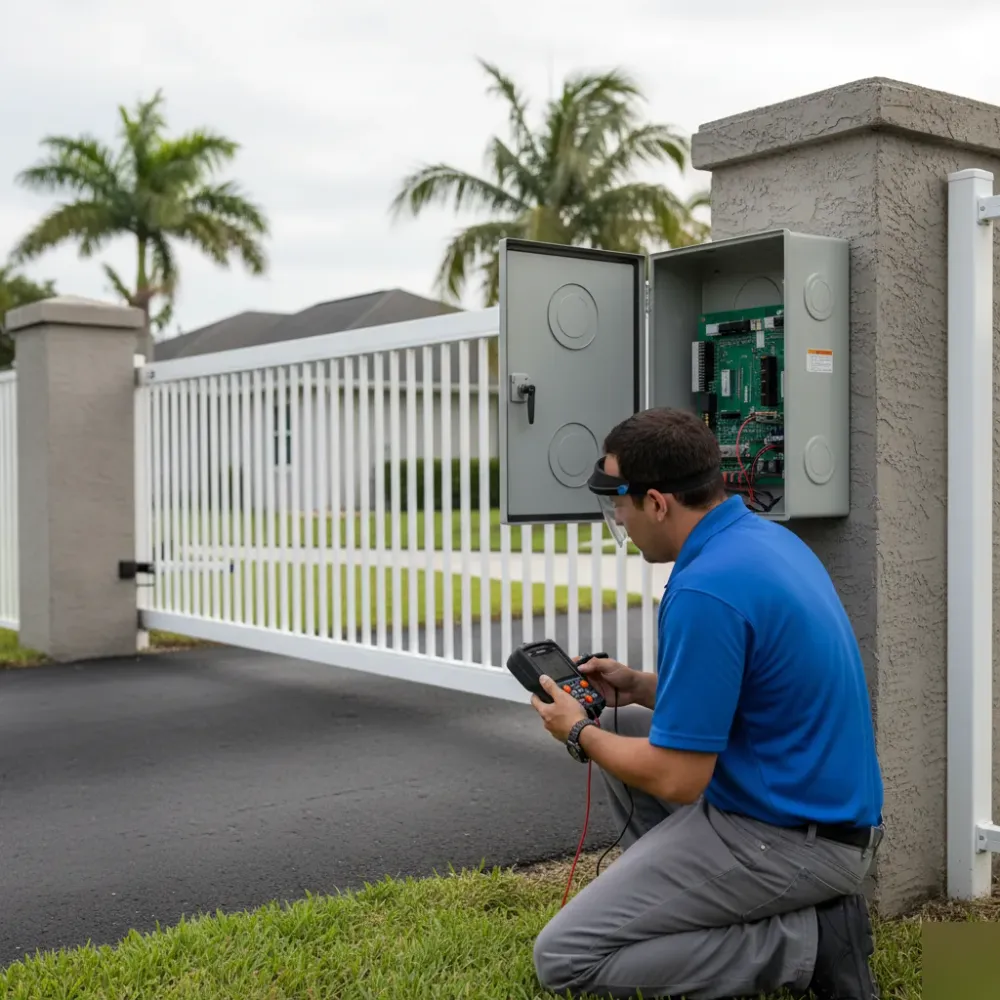
This is a huge issue. Your electric gate starts going and gets part of the way through its normal cycle, and then it abruptly halts. Even worse, the gate might begin moving backward mid-cycle as if it had encountered a blockage. We see reports of this issue regularly in Hallandale Beach, with most people assuming they’re just looking at a minor issue. They’re not. When your electric gate halts or backs up before finishing its cycle, it’s a symptom of an issue with the safety system, the drive mechanism, or track alignment. Leaving it unaddressed does nothing to make the situation less problematic. Leaving it unaddressed makes it more problematic. ### Why It Happens Electric gates use photo-eye sensors and limit switches to understand its position within the open and closed cycle. You could think of the limit switches as gate’s memory, telling the gate motor this is fully open and this is fully closed. When limit switches go out of adjustment or malfunction, the gate is unable to determine its own position, thinks it has met an obstacle and reverses direction to protect itself (and you). Sometimes there are multiple causes behind your electric gate stopping or reversing without opening or closing all the way. Here are the most common ones:
Dirty or misaligned photo-eye sensors may trigger a fake obstruction
Worn limit switches have lost their ability to detect gate being open or closed
Debris, rust, or a warped track may cause the gate to meet resistance
The gate motor may not have enough power to get to its full open or close distance
The chain or belt driving the gate in a slide gate motor system may have lost tension
Any of those can cause your gate to stop or reverse without completing its cycle. But what most people don’t understand until it’s too late is that some of the above may exist at the same time. For example, an electric gate that has to work harder than normal to overcome friction on a misaligned track is more likely to burn out its motor more quickly. The one problem will lead to the other. ### What We See in Hallandale Beach Florida weather takes a toll on electric gates. Salt air eats away at the metal in the track and causes connections to oxidize; humidity does this too; and if your area has the late-afternoon thunderstorms we do during May-October, leaves, sand, and standing water make their way into the channel. In fact, we repaired an electric sliding gate last summer near Diplomat that had been acting funny for a few weeks for the homeowner: it would work fine to open in the morning but would reverse to the halfway point every evening. The afternoon sun had been heating the metal track in the channel enough that it expanded slightly, so the gate became stuck at one specific point and the operator sensed resistance and backed the gate up. It turned out to just be a simple track adjustment and lubrication, but if the homeowner waited another month or so, the gate operator’s gears could have become worn or damaged from the repeated stresses. But it happens a lot. ### The Importance of Safety What’s important to remember about the reversing mechanism on your electric gate is that it’s a safety mechanism. Underwriters Laboratories’ safety standard for gate operators, UL 325, requires that automatic gates reverse when they encounter an obstruction to protect the safety of people, pets, or vehicles to prevent them from being pinned or crushed., if your gate is reversing for no reason, this could either mean that there is a problem with the gate, preventing it from moving through an obstruction safely; or if there is no problem, that there is a problem with the reversing system itself, and that you can’t tell if it will actually reverse when it really needs to (the next time it doesn’t give you a false positive, it could also not give a false negative). This could mean that people and pets are in danger. If children or pets use the driveway in front of the gate, that’s something you don’t really want to gamble on. ### What To Do Now Before calling out a repair technician to look at your electric gate, try doing the following yourself:
Clean off the photo-eye sensors on each side at the bottom of the gate posts and check if the LED indicator lights are steady or flashing. Use a soft dry cloth to clean the sensors, making sure not to use chemical sprays, and see if that resolves the issue.
Check the entire length of the gate track for debris like rocks or other obstructions that could be impeding its movement.
Watch the movement of the gate very closely as it completes a full cycle and take note of the point where it stops or reverses, so that the gate technician can focus there.
Pay attention to any mechanical sounds like clicking, grinding or straining from the gate operator and note when they happen.
Frequently Asked Questions
Common questions about 7 warning signs your electric gate needs repair right away services in 301 NE 3rd St. unit 206 33009 Hallandale Beach
How do I know if my electric gate needs repair or just a reset?
If your gate is slow, stops mid-cycle, or reverses on its own, it needs repair — not just a reset. A reset only clears a temporary glitch. Real warning signs like grinding sounds, sagging, or frequent stalling point to a mechanical or electrical problem. Resetting a gate with a worn motor or damaged track just delays the bigger fix. If the same problem comes back after a reset, that’s your sign to call a professional.
Can I ignore a slow-moving electric gate if it still opens and closes?
No — a slow gate is one of the most common warning signs that something is wrong with your system. Many Hallandale Beach homeowners wait too long on this one. A gate that lags is already working harder than it should. That extra strain wears down the motor faster. What starts as a slow gate can end as a gate that won’t open at all. Our electric gate repair page explains what to look for and how to get help before it shuts down completely.
Does living near the water in Hallandale Beach make electric gate problems worse?
Yes — salt air near the Intracoastal Waterway speeds up corrosion on metal parts like rails, chains, and motors. Gates in coastal Hallandale Beach areas corrode faster than gates just a few miles inland. That corrosion creates friction, which slows the gate and burns out the motor early. If your gate is near the water, you need to check it more often than most homeowners think.
What is a common mistake homeowners make when their electric gate stops working?
The most common mistake is assuming the motor is always the problem. Most homeowners go straight to blaming the motor, but dirty rails, weak power supply, bad capacitors, or debris in the track are often the real cause. Replacing a motor you didn’t need to replace costs more time and money. A proper inspection checks all parts of the system — not just the motor — before any work gets done.
When should I call a professional instead of trying to fix my electric gate myself?
Call a professional any time your gate stops mid-cycle, reverses on its own, makes grinding sounds, or moves slower than usual. These signs point to electrical or mechanical issues that need trained hands. You can clear debris from the track yourself, but adjusting limit switches, replacing capacitors, or fixing corroded rails is not a safe DIY job. Getting it wrong can damage the motor or create a safety risk for your family.
How fast should an electric gate open and close?
A working electric gate should open in about 12 to 18 seconds. If yours takes more than 25 seconds or stops partway through, something is wrong. Use your phone to time it today, then check again in two weeks. If the time goes up even a few seconds, that’s a clear sign your gate needs attention. Catching it early saves you from a full breakdown later.
Ready to Get Started?
Call now for a free estimate Call (954) 329-1361 today.


Recent Comments