
Fast, reliable garage door and electric gate repair and installation in South Florida — call today, fixed today.
What’s Covered on This Page
- Indications You Need Garage Door Repair in Hallandale Beach
- What Do I Get with a Complete Garage Door General Repairs & Maintenance Visit?
- Issues That We Are Able To Repair During The First Visit
- How do I know if my garage door needs repairs or just routine maintenance?
- How does Hallandale Beach’s climate affect my garage door?
- What happens during a general repairs and maintenance visit?
- Is it safe to keep using my garage door if it looks crooked or uneven?
- My garage door reverses on its own and won’t close all the way. What is causing that?
- How often should I schedule general repairs and maintenance for my garage door in Hallandale Beach?
Need general repairs & maintenance?
Call now for a free estimate. Call On Time Garage Door Repair now.
Indications You Need Garage Door Repair in Hallandale Beach
A lot of the people in Hallandale Beach don’t even realize when something is a problem with their garage door until they have something to fix. One day, the door works just fine. The next, it makes strange noises, or it stops halfway up, or it drops like a rock on the ground. These aren’t problems you should just ignore, waiting them out because they’ll just sort themselves out. Every week, we get calls from homeowners that have known about this problem for weeks. It is a common trend that the issue was spotted earlier in the week but the owner was convinced it would resolve. But the problem persists. With general repairs & maintenance, you could have caught these problems early. But you need to know where to look.
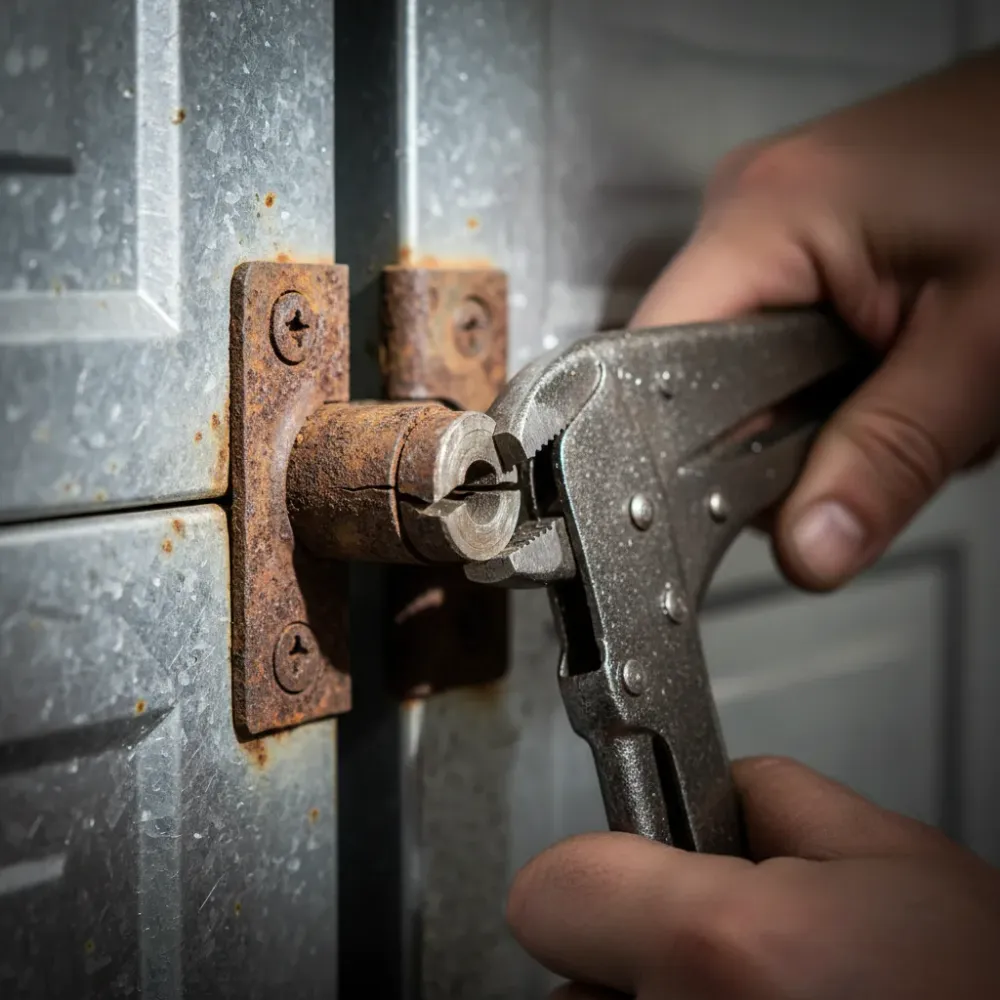
This is what we advise our clients to keep an eye out for:
- Grinding or metal-on-metal noise as the door opens and closes. The metal should not be hitting the metal.
- The door doesn’t move smoothly as it goes up and down; it shudders or jerks on the rail tracks.
- There are gaps between the door panels, or where the bottom weather seals connect to the garage floor.
- Your opener takes too long after you activate the wireless remote or the push button. It should be open or close with a second or two. Anything longer and something in the system is getting caught.
- The door won’t stay up and the door keeps falling to a down position by itself. This is a spring or cable issue. This is an emergency.
It is very often the same issue. Worn out rollers or a hinge that needs grease, or maybe a spring that has lost strength. It is the Florida humidity. In the parts of Hallandale Beach that are near to the Golden Isles neighborhood, where the ocean air is more prevalent. Rust forms easily and the lubricants dry out and the rollers that you expect to get years of use out of wear out quickly. There is often an issue where the owner will notice the door is crooked as it slides up and down. The owner will close the door, thinking it is all good. The fact that the door is not sitting right and is sitting crooked shows an imbalance in the springs or cables and will only get worse over time and one will break. This will only lead to an even bigger problem.
Another thing we hear about is the opener motor. The opener motor is operating but the door barely moves at all. The gears in the opener motor are stripped out. The opener motor hums but nothing happens. It may be that the opener motor is operating properly but the drive chain or belt is off. You don’t need to buy a new opener right now. With general repairs & maintenance, we will be able to identify these issues early. The problem is, it is difficult to tell how serious something is and it is often not immediately obvious. Most problems don’t start off with obvious issues. That subtle tremble. That faint hesitation. A creak, sometimes. The secret is to detect them while they are still quiet and inexpensive.
And finally there is one thing many individuals ignore as well. This is your photo-eye sensors that sit at the base of the door tracks. If the door seems to reverse by itself or won’t close completely unless you hold the wall button down, your photo-eye sensors are out of alignment or just dirty. This will take us only a few minutes to repair, but the longer you ignore it, the less your door is likely to protect your family from intrusion and accidents. According to the U.S. Consumer Product Safety Commission, every year thousands of people are injured by garage doors, many due to lack of care.
To put it simply, if your garage door is making noises it didn’t before, not behaving as it used to, or looking off in some way, it is time for some professional eyes on the door. And problems will not take care of themselves. We have been in the Hallandale Beach garage doors business for so long that the little problems can quickly become very big problems.
What Do I Get with a Complete Garage Door General Repairs & Maintenance Visit?
The phone rings almost on a daily basis and we get questions from our Hallandale Beach clients. “OK, what do I get in the general repairs & maintenance service?” That is an excellent question. Many Hallandale Beach people believe that it simply involves spraying a little lubricant on the rollers and tracks and then we move on to the next one. This is not even close. During a complete general repairs & maintenance visit, we will go through every single step in order. Here is a snapshot of how we take care of your garage door system.
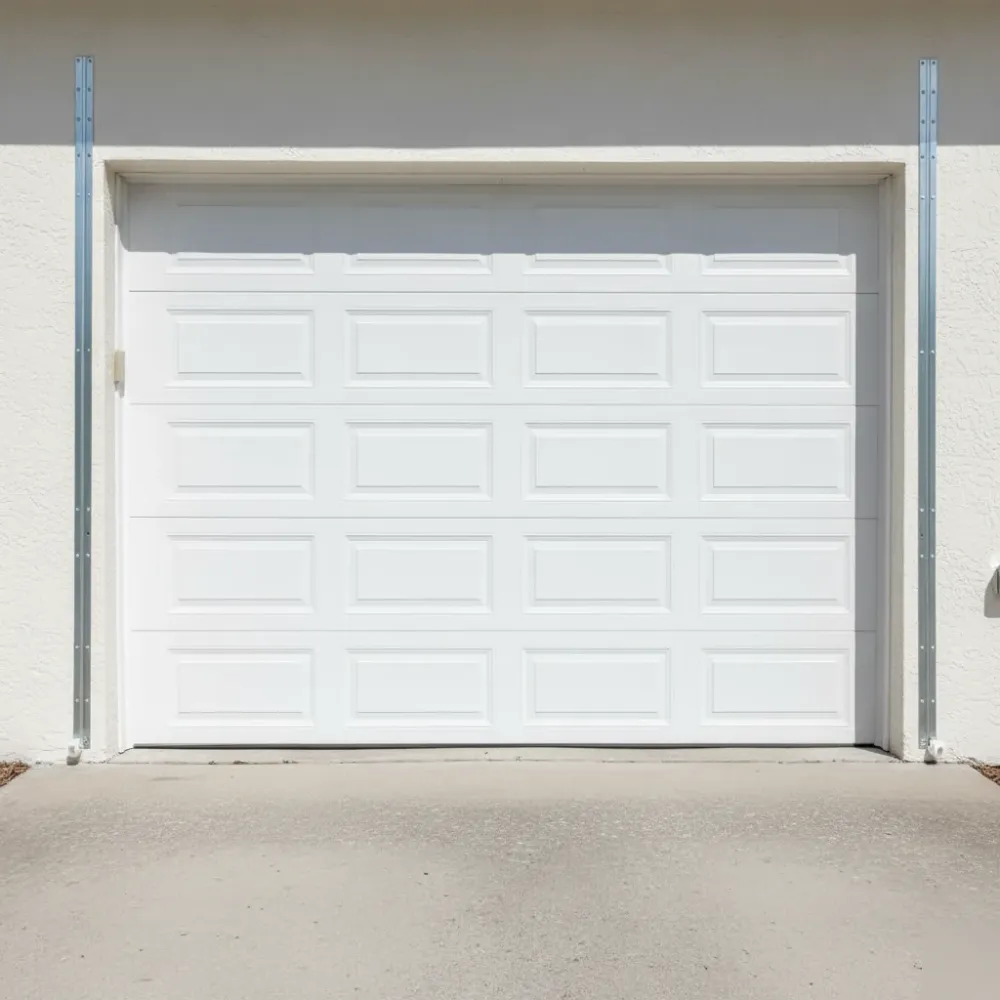
- Complete garage door inspection. We visually inspect every panel looking for dents, cracks, warping, or damage. We have seen the effects of Diplomat area saltwater spray on wood and steel doors.
- Check torsion or extension springs. We test to make sure that your springs provide proper tension and balance for a heavy door. Old, weak springs force your opener to work twice as hard.
- Check cables and drums. Loose cables are one of the most dangerous faults we find in a garage door. If the cable comes off the drum during operation, it can cause damage or injury to anyone in the garage or to people outside.
- Check all rollers and hinges. Damaged or loose rollers are the most likely cause of squeaking or grinding noises. We inspect all of them for wear, even if they don’t look damaged.
- Check alignment on the tracks. Garage door tracks that aren’t in alignment will force your door to bind or jump as it travels. We will measure both vertical and horizontal tracks for alignment.
- Check garage door opener. We run the opener through a full cycle and we listen to hear if the motor is being overstrained, and we also test the auto-reverse safety feature.
- We lubricate every moving part. This includes rollers, hinges, and bearing plates. You need a garage-door-specific lubricant, not generic all-purpose WD-40.
That is the heart of a full repair visit, however there is more. Nine times out of ten, we also discover something small that will soon become something big. A roller fractured in two. A bracket pulling out of the wall. That is not what you will think about while you are driving away from your house with the garage door opening overhead. But it is what you are calling us about at 10 o’clock on a Saturday night.
Safety Tests Most Homeowners Are Unaware Of
Your garage door has two federally mandated safety features. There are the photo-eye sensors at the bottom of the door tracks and an auto-reverse feature. As stated by the U.S. Consumer Product Safety Commission, thousands of people are injured by garage doors every year, and many of these injuries would be avoided by basic maintenance. During every visit, we test both systems. We interrupt the sensor beam to verify that the door stops. We place a board under the door to see that it reverses when the board is touched. You will be amazed at how frequently one of these two features is not working, and this is especially the case in the older homes of the Golden Isles, where the first garage door openers are still in use.
There is also an issue that most people neglect until it is too late. Weatherstripping. That seal along the bottom of the door that keeps the rain, insects, and dirt from entering the garage. In South Florida, it dries out and cracks very rapidly. We examine that seal during each service call, and we tell you when it is time to replace it. Staying on top of these details is exactly the kind of proactive care covered in a thorough home maintenance checklist guide — and it applies just as much to your garage door as it does to the rest of your home.
During each service, we also examine how the door is balanced. You can do that on your own by following these steps. Pull the emergency release to disengage the opener. Manually raise the door to the halfway point. If the door remains in that position without you supporting it, the door balance is in good shape. If the door flies back up or drops, the springs are likely to be the problem. This is a defect that we address on the spot during general repair calls.
Generally, the service call should take about an hour. Perhaps less if the door is in good condition. Perhaps longer if there is an issue that demands immediate repair. Regardless, we will explain to you exactly what state your garage door is in before we depart.
Issues That We Are Able To Repair During The First Visit
What prompted you to call us this morning? Does the garage door refuse to close? Did you hear a grinding noise that was not present yesterday? During 90 percent of the service calls we receive, we have the capability to address the problem on our first appointment to your home. That is exactly why we provide general repair services. There should be no need for you to wait three days for a garage door opener to receive the parts it requires to complete the job or have to make another appointment just to get your garage door to begin operating again.
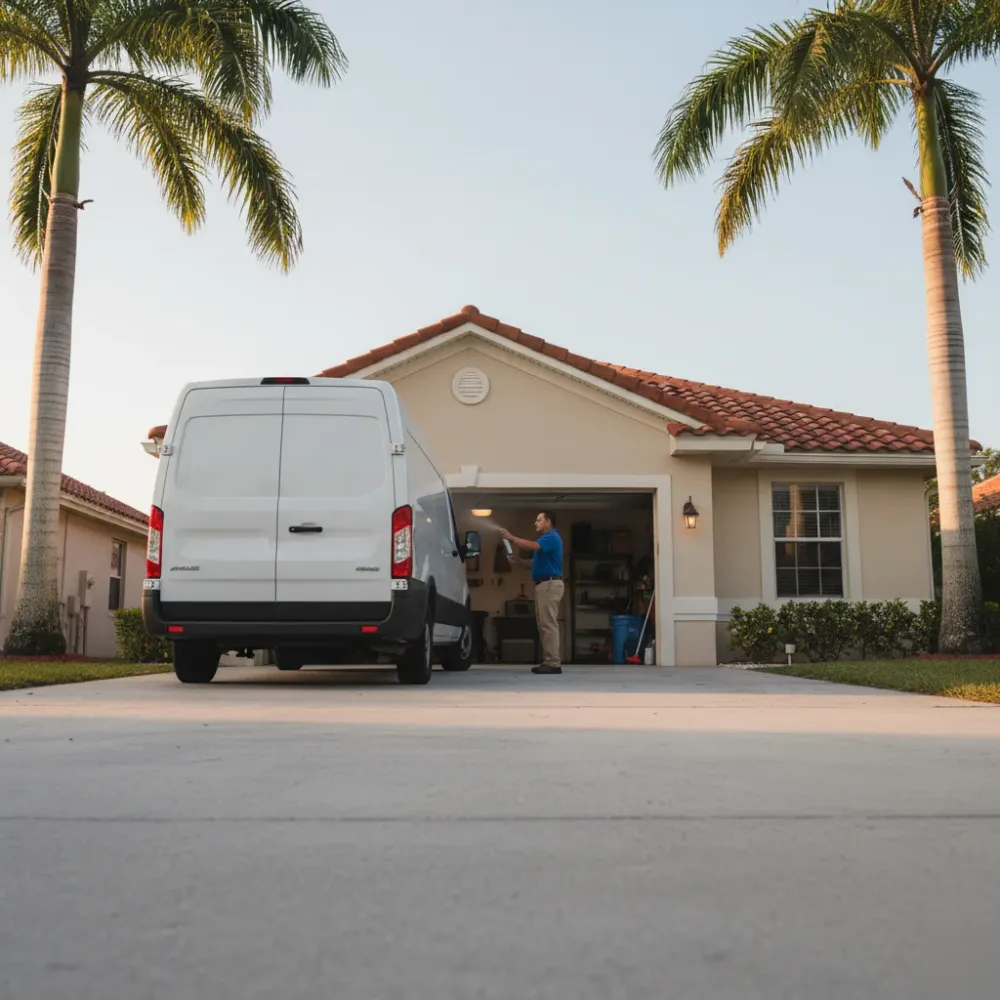
The majority of problems we encounter in the garage doors of homes in Hallandale Beach are problems we have fixed more than a few times before, and we are able to carry those parts on board our trucks. Here is a list of the things we fix on the spot the most frequently:
- Broken springs. The most common issue we get called out to fix is a broken spring. The door might feel like it is too heavy to open on its own, or the door is not going to open at all. We replace both types of garage door springs: torsion and extension. We replace them same-day.
- Worn rollers. That scraping, grinding sound, or squealing noise, almost always means your rollers are at the end of their lives. Whether nylon or steel, we replace them quickly.
- Frayed or snapped cables. If your door seems lopsided, that might be a cable problem. Never ignore cables in this condition; they are unsafe to leave. But we do get them repaired in minutes.
- Bent tracks. Maybe your tracks have been bumped out of alignment over the years, or something ran into the track. The rollers can’t roll straight now so the door may not even make it all the way up. Sometimes we can bend the track back to where it should be, or we replace the section.
- Opener malfunctions. Maybe you push the button on your opener and nothing at all happens. It could be the gears or a circuit board. Maybe you hear the motor running but the door doesn’t budge. It’s possible your opener just needs to be reset or you’re having a bad alignment on a sensor that could be easily corrected.
These are all extremely common repair issues for us; we see them regularly throughout our service area and have seen them a hundred more times in the Golden Isles area alone, as there are thousands of doors from the 1980s and 90s in that community that have worked hard for years and have worn down parts that must now be replaced.
What One Repair Can Lead To
This is one of the things that a homeowner might not expect: sometimes when we get a service call about a noisy door, we get there and the noise is not the most significant concern. It might be loose hinges. It might be a loose bracket. It might be a cracked bracket. It could be a loose weather seal. It could be a lot of things, and we see this a lot. It is actually quite common. What we’ll do is handle your repair request, but we’ll also take the time to point out anything else that might be concerning to you, or anything that may need to be fixed down the road. There’s zero pressure there — just honest advice so that you can decide on your own how you want to go about handling the repair of your door.
We tell people this because often the small issues are just that. They seem small, but in the long run they can be a real concern. When you have a hinge that comes loose, you put extra strain on your motor opener. You lose a weather seal, then you have water or moisture that’s going in and that will rust out your springs even quicker. These little issues can be the precursors to much bigger and much more dangerous problems later on. We’d rather know what your door needs now than you have to call us again in three months or whenever for a more involved issue that could have been prevented if we’d only addressed those loose hinges and broken springs right then and there.
That’s one of the great advantages that having our regular maintenance services offers you. We aren’t just fixing your squeaky door. We’re looking at every aspect of your garage door, from its tracks, to its springs, to its cables, its hardware, to its panels, to the opener itself and the safety sensors. We’ll look at everything in the door, and when the repair call is done we’ll tell you exactly what’s going on and what you might need to keep an eye on.
Most of the time a repair visit from us only takes us an hour, sometimes it’s even just a half hour. We often can get the majority of doors fixed in 15 to 20 minutes, and most door spring repairs for an average residential garage door in Hallandale Beach take us about 45 minutes from start to finish, tops. There’s no need for you to take the entire day off, that’s for sure.
One thing we tell people, though. Do not attempt to repair your garage door or a spring or cable yourself, please. According to the International Door Association, garage door springs are under very high tension and they are extremely dangerous, and they are one of the biggest causes of injury each and every year. It is not worth the risk to try to do this yourself; leave the repairs to us, to your qualified technicians who have been doing this work across South Florida for over a decade. If you are not sure of the status of your garage door and have no idea what you might need, give us a call right away today.
Frequently Asked Questions
Common questions about general repairs & maintenance services in 301 NE 3rd St. unit 206 33009 Hallandale Beach
How do I know if my garage door needs repairs or just routine maintenance?
If your door makes grinding noises, shudders on the tracks, or moves slower than usual, it needs attention now. Routine maintenance catches these problems before they get worse. A door that hesitates or creaks is telling you something. In Hallandale Beach, the humidity speeds up wear on rollers, springs, and hinges. Catching small issues early saves you from a full breakdown later.
How does Hallandale Beach’s climate affect my garage door?
The salt air and humidity in Hallandale Beach are hard on garage door parts. Areas near Golden Isles get the worst of it. Rust forms on springs and tracks faster than you’d expect. Lubricants dry out quickly. Rollers that should last years wear out in months. Regular maintenance keeps everything moving smoothly and stops corrosion before it causes real damage.
What happens during a general repairs and maintenance visit?
We inspect every part of your garage door system from top to bottom. That means checking springs, cables, rollers, hinges, tracks, and your opener. We test the auto-reverse safety feature and lubricate every moving part with the right garage-door lubricant. You get a full picture of what is working, what needs attention, and what can wait. Nothing gets skipped.
Is it safe to keep using my garage door if it looks crooked or uneven?
No, you should stop using a crooked garage door right away. An uneven door usually means a spring or cable is off balance. Using it puts extra stress on the whole system. One side can give out suddenly, which is dangerous for anyone nearby. This is one of the most common calls we get in Hallandale Beach, and it always gets worse the longer you wait.
My garage door reverses on its own and won’t close all the way. What is causing that?
Your photo-eye sensors are most likely dirty or out of alignment. These sensors sit at the base of your door tracks. When they can’t see each other clearly, the door thinks something is blocking it and reverses. This is a quick fix during a maintenance visit. Ignoring it leaves your home less secure and puts your family at risk of accidental door closure injuries.
How often should I schedule general repairs and maintenance for my garage door in Hallandale Beach?
Most Hallandale Beach homeowners should schedule maintenance at least once a year. If your garage door gets heavy daily use, twice a year is smarter. The local humidity and salt air speed up wear on every moving part. Annual service keeps small problems from turning into emergency repairs. It also keeps your opener, springs, and cables working safely for years longer.
Ready to Get Started?
Call now for a free estimate Call (954) 329-1361 today.

Recent Comments