
Fast, reliable garage door and electric gate repair and installation in South Florida — call today, fixed today.
What's Covered on This Page
- How to Tell If Your Garage Door Panel Needs Repair or Full Replacement
- Repair vs. Replacement: Making the Right Call for Your Door
- What Happens During a Panel Repair or Replacement Visit
- Verifying the Repair: Signs Your Panel Job Was Done Correctly
- Protecting Panels from Damage in Coastal and High-Traffic Garages
- Can you repair just one panel, or do I need to replace the whole garage door?
- How does Hallandale Beach's salt air and humidity affect garage door panels?
- How do I know if my panel just needs a cosmetic fix or a full replacement?
- What should I expect when a technician comes out for a panel repair in Hallandale Beach?
- Will a replacement panel match the rest of my garage door?
- What happens if I leave a damaged panel alone and don't fix it?
Need garage door panel repair & replacement?
Call now for a free estimate. Call On Time Garage Door Repair now.
How to Tell If Your Garage Door Panel Needs Repair or Full Replacement
You're backing out of the driveway, and something catches your eye. Maybe it's just a dent. Or a crack along the bottom panel. Perhaps the door looks like it's bowing inward near the middle. Now you're wondering if it's a quick fix or something bigger.
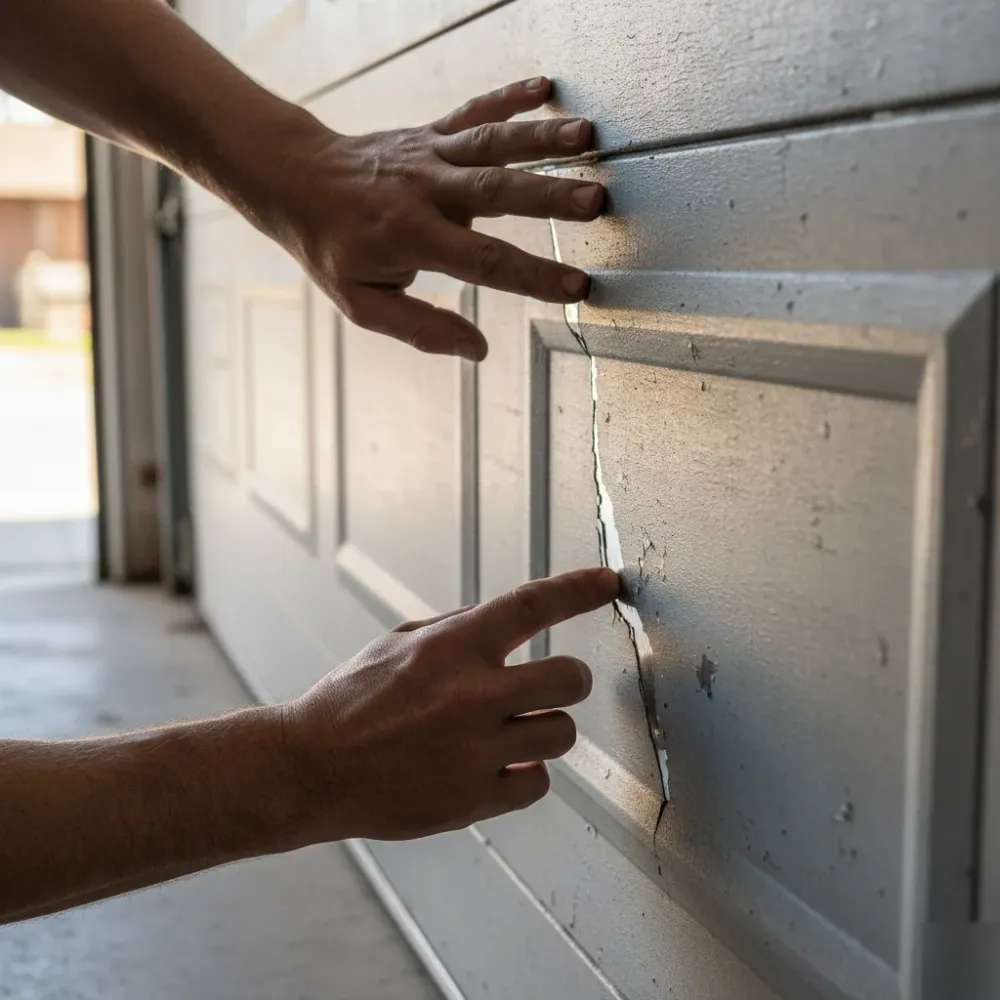
Here's the honest answer: it depends on what you're seeing.
A small dent or surface scratch on a steel panel is usually repairable. We see this constantly in Hallandale Beach, especially after storm season. Wind-blown debris hits doors along Three Islands Boulevard and the neighborhoods near Golden Isles. But once a panel is cracked through, warped badly, or separating at the joints, repair won't hold. That panel needs to come out.
There are a few clear signs that point toward full replacement:
- Cracks that go all the way through the panel material
- Visible bowing or warping that keeps the door from sitting flush
- Rust eating through a steel panel from the inside out
- A panel that's been hit hard enough to shift the track alignment
And then there's the stuff that looks bad but isn't. A cosmetic dent on an otherwise solid panel can be popped out or filled. Paint peeling on its own doesn't mean the panel is failing; it just needs refinishing. We get calls about this every week. Homeowners assume the whole door is done when really it's one panel that needs attention.
One thing most people don't check is how the damaged panel affects the rest of the door. Run your hand along the edges where panels connect. If you feel gaps or notice light coming through, that's a seal problem now too. A warped panel puts stress on the rollers and tracks above and below it. Left alone, one bad panel turns into a door that won't open straight.
Not sure which situation you're dealing with? That's actually pretty common. The difference between repair and replacement isn't always obvious from the outside. We can tell within a few minutes of looking at it. Most of the time, catching it early also saves you from replacing more than one panel down the road.
Repair vs. Replacement: Making the Right Call for Your Door
This is the question we hear more than any other. "Can you just fix this panel, or do I need a whole new one?" Honest answer? It depends on what we find when we show up.
A small dent or crack doesn't always mean you need a brand new panel. We can repair minor cosmetic damage right on site. But there's a line. Once a panel is bent past a certain point, the structural integrity is gone. A bent panel puts stress on your tracks, your rollers, even your opener. That's when repair stops making sense and replacement becomes the smarter move.
Here's what we look at when deciding:
- Depth of the damage. Surface scratches and small dings? Repairable. A deep crease that warps the panel's shape? That's a replacement.
- Panel alignment. If the damaged section is pulling away from the ones above or below it, gaps form. Those gaps let in rain, bugs, and heat. Common problem here in Hallandale Beach with our humidity.
- Rust or rot. Steel panels corrode over time. Wood panels swell and split. If the material itself is breaking down, no repair will hold for long.
- Age of the door. Older doors sometimes use discontinued panel sizes. If we can't source a match, we'll talk you through your options.
Nine times out of ten, a single damaged panel can be swapped without replacing the entire door. That saves you real money.
But sometimes the damage tells a bigger story. We see this a lot near Three Islands, where salt air speeds up corrosion. A homeowner calls about one cracked panel. We get there, and find three panels soft with rust along the bottom edge. At that point, replacing the full door is the better long-term call.
We won't push you toward a bigger job than you need. Our team has been licensed and working in South Florida for years. that trust matters more than any single sale. We'll show you exactly what we see, explain what holds up and what won't, then let you decide.
Not sure which way to go? Give us a call and we'll come take a look.
What Happens During a Panel Repair or Replacement Visit
You don't need to prep anything before we show up. Just make sure we can get to the door and we'll handle the rest.
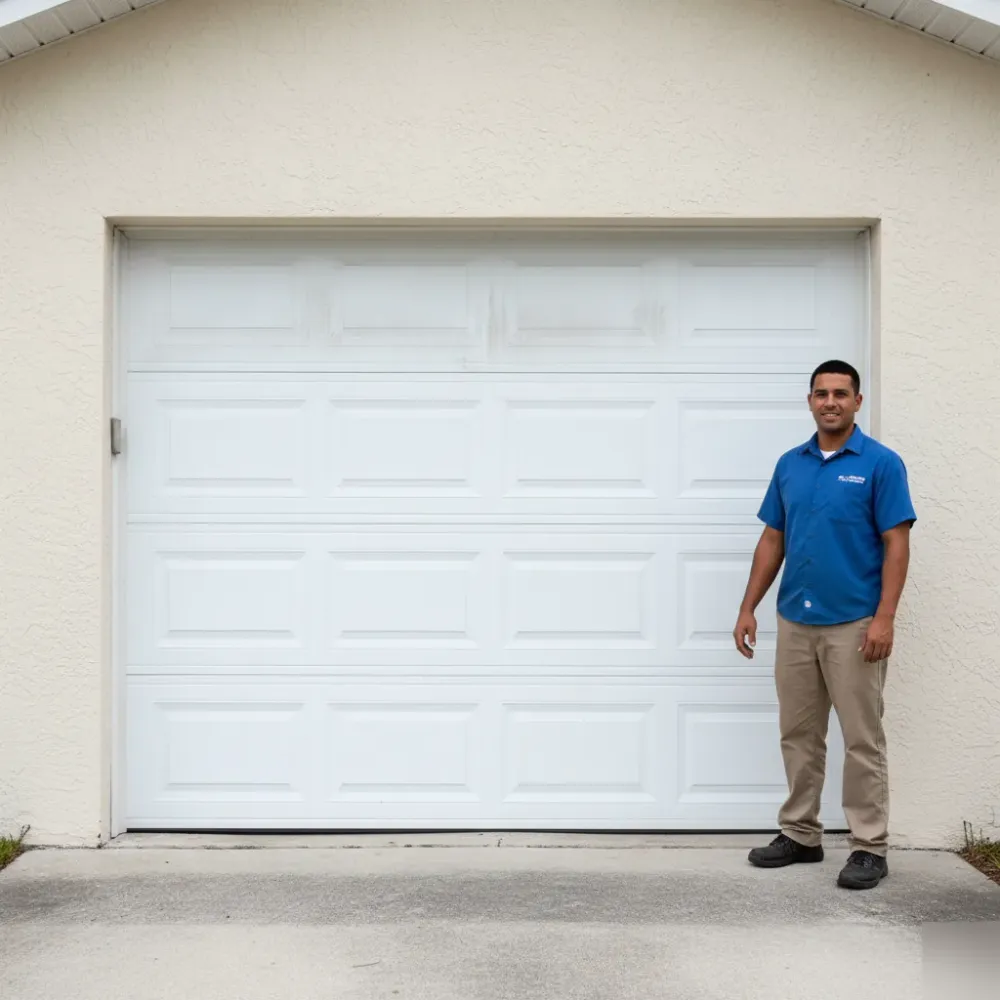
Here's how a typical panel repair or replacement visit goes at your Hallandale Beach home:
- We look at the whole door, not just the damaged panel. Tracks, rollers, hinges, cables. Everything connects. A bent panel can stress parts you'd never think about. We check it all before touching anything.
- We measure the damaged section. Panels aren't one-size-fits-all. We need the exact width, thickness, and style to get the right match. If your door is older, we'll figure out what's still available.
- We disconnect the opener and secure the door. This keeps the door from moving while we work. Springs hold a lot of tension, so safety comes first every time.
- We remove the damaged panel and install the replacement. Hinges get repositioned. Rollers get checked. The new panel slides into the track system. We bolt everything back together.
- We reconnect the opener and test the full cycle. Open, close, open again. We watch for smooth travel, listen for odd noises, and adjust the tension if anything feels off.
Most jobs take about an hour. Sometimes less if it's a single panel on a standard door. We see a lot of two-car garages near the Three Islands area. Wind damage hits one panel hard there, but often leaves the rest fine. That's a quick fix when the replacement panel is in stock.
Nine times out of ten, people are surprised how fast it goes.
But here's the thing most homeowners don't realize. If the tracks got bent when the panel cracked, just swapping the panel won't solve it. That's why the inspection at the start matters so much. We've been licensed and doing this work in South Florida long enough. We spot hidden problems before they turn into bigger ones. If we find something beyond the panel itself, we'll tell you straight up what's going on. No runaround.
Want to know if your panel can be repaired or needs full replacement? Give us a call and we'll walk you through it.
Need help with garage door panel repair & replacement?
Call now for a free estimate. On Time Garage Door Repair is ready to help.
Verifying the Repair: Signs Your Panel Job Was Done Correctly
So, the work's done and the new panel's in place. But how do you actually know the job was done right? We tell every customer in Hallandale Beach the same thing: don't just look at it, test it.
A properly installed panel should sit flush with the panels above and below it. There should be no gaps, no overlap. Run your hand along the seams where the new panel meets the old ones. You shouldn't feel a lip or a ridge. If the panel sticks out even a little, that's a fit problem. It will cause trouble down the road.
Here's what to check after the job is finished:
- Smooth operation. Open and close the door three or four times. It should glide without jerking, sticking, or making new noises.
- Even gaps on both sides. Stand inside the garage and look at the daylight around the edges. The gap should be the same width on the left and right.
- Color and texture match. The new panel should blend in. Not identical down to the last scratch, but close enough that it doesn't look patched together.
- Weatherseal contact. The bottom seal and side seals should press snug against the new panel. Any gaps let in rain, bugs, and that Hallandale Beach humidity.
We see this every week. A homeowner over near Golden Isles calls because a previous company replaced a panel. It looked fine at first. Six months later, the door's binding, the rollers are wearing unevenly, and now they've got a bigger repair on their hands. That happens when panels aren't aligned to the track correctly during install.
One thing most people skip is checking the balance. With the door halfway open, disconnect the opener and let go. A balanced door stays put. If it slides down or shoots up, something's off with the spring tension. The panel weight might not match what was there before.
And don't forget the hardware. Every hinge, roller, and bracket around that new panel should be tight. We hand-check every fastener before we leave a job. Loose hardware causes vibration. Vibration leads to wear, and wear means you're calling somebody again way too soon.
Protecting Panels from Damage in Coastal and High-Traffic Garages
Living this close to the ocean takes a toll on things you'd never expect. We see it constantly in Hallandale Beach. Panels that looked fine two years ago start showing rust spots, bubbling paint, or soft spots along the bottom edge. Salt air simply doesn't care how new your door is.
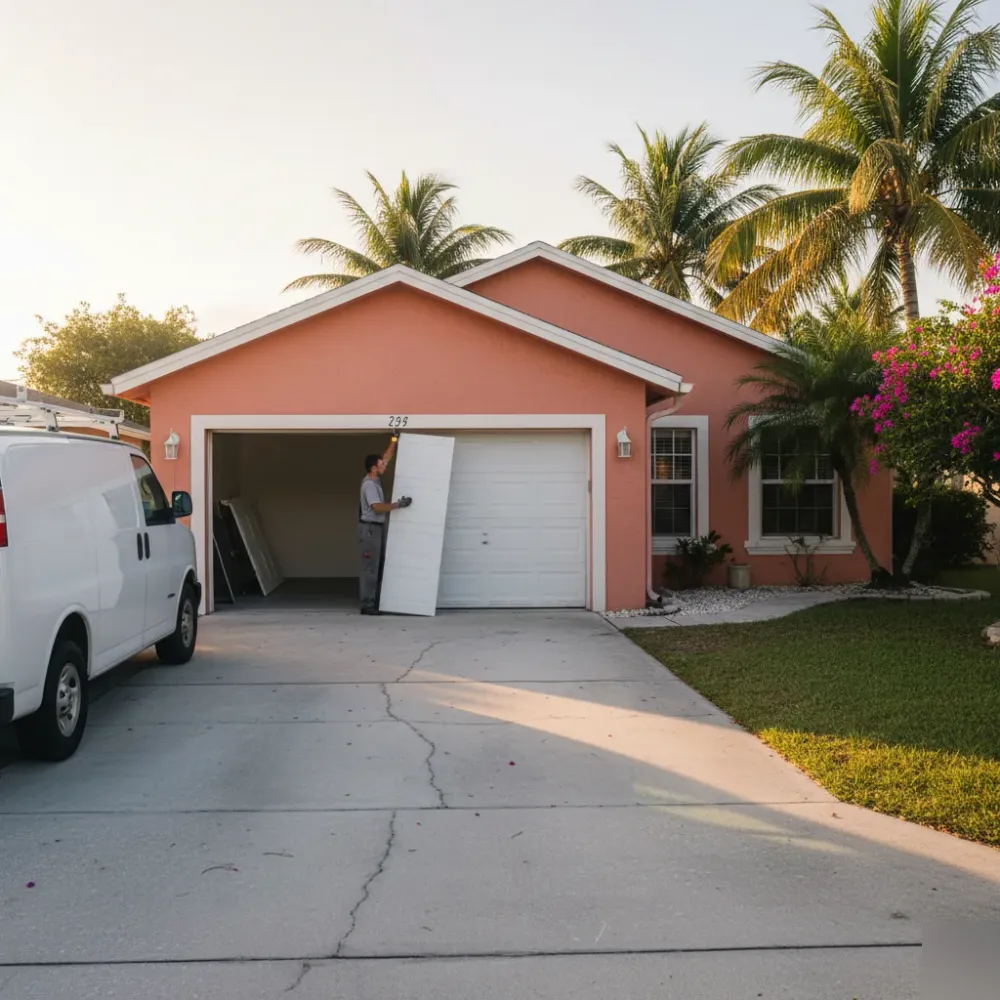
The biggest threat isn't a single storm. It's the daily exposure. Salt-laden humidity works its way into every scratch or chip in your panel's finish. Once that protective layer breaks down, corrosion moves fast. Homes near the Intracoastal or along A1A tend to show damage sooner. This happens more than properties a few blocks inland. That's just the reality of coastal living.
Here's what we tell every homeowner who wants to get ahead of panel problems:
- Rinse your garage door panels with fresh water at least once a month to wash off salt buildup
- Touch up any paint chips or scratches immediately, even small ones
- Check the bottom panel and weatherstripping for signs of moisture damage every few months
- Keep the tracks and panel edges free of sand and debris that can scratch surfaces during operation
High-traffic garages create a different kind of wear. If you're opening and closing your door four, five, six times a day, the panels absorb more vibration and stress at the hinge points. We get calls about this every week from families with multiple drivers. The hinges pull against the panel skin over time. You'll notice dimpling or cracking around those connection points first.
Here's something else most people skip: lubricate your hinges and rollers regularly. When rollers stick or grind, the panels take the hit. A smooth-running door puts less stress on every panel.
If you're in the Golden Isles area, or anywhere with direct ocean exposure, ask us about panel materials that hold up better in salt environments. Some panel options resist corrosion longer than standard steel. A quick garage door inspection and diagnostics visit can tell you exactly where your panels stand right now. This helps before a small issue turns into a full replacement job. Prevention is always cheaper than repair.
Frequently Asked Questions
Common questions about garage door panel repair & replacement services in 301 NE 3rd St. unit 206 33009 Hallandale Beach
Can you repair just one panel, or do I need to replace the whole garage door?
In most cases, yes — one damaged panel can be replaced without touching the rest of the door. We swap out the bad panel, match the style as close as possible, and your door works like normal again. Full door replacement only makes sense when multiple panels are failing or the damage has shifted the track alignment badly. Most single-panel jobs in Hallandale Beach wrap up in about an hour.
How does Hallandale Beach's salt air and humidity affect garage door panels?
Salt air and high humidity speed up rust and corrosion on steel panels faster than you'd expect. We see this a lot near Golden Isles and along the waterfront. A panel that looks fine on the outside can be soft with rust along the bottom edge. That's why we always check the full door when we arrive — not just the panel you called about. Catching corrosion early saves you from replacing more panels later.
How do I know if my panel just needs a cosmetic fix or a full replacement?
A small dent or surface scratch usually means repair. A crack that goes all the way through, visible bowing, or a panel pulling away from the ones above or below it means replacement. Run your hand along the panel edges — if you feel gaps or see light coming through, the seal is already broken. Not sure? We can tell within a few minutes of looking at it in person.
What should I expect when a technician comes out for a panel repair in Hallandale Beach?
You don't need to do anything before we arrive — just make sure we can reach the door. We start by inspecting the full door: tracks, rollers, hinges, and cables. Then we measure the damaged section, disconnect the opener, remove the bad panel, and install the replacement. We reconnect everything and run a full open-and-close test before we leave. Most jobs take about an hour.
Will a replacement panel match the rest of my garage door?
We do our best to match the panel style, color, and material as closely as possible. On newer doors, this is usually straightforward. On older doors, some panel sizes have been discontinued, which makes an exact match harder. We'll tell you upfront what's available and show you your options before any work starts. No surprises.
What happens if I leave a damaged panel alone and don't fix it?
One bad panel puts stress on the rollers and tracks around it. Over time, that stress can bend the track, throw off the door's alignment, and wear out your opener faster. A warped or cracked panel also lets in rain, humidity, and pests — a real problem given Hallandale Beach's wet season. What starts as a one-panel fix can turn into a much bigger repair if you wait too long.
Ready to Get Started?
Call now for a free estimate Call (954) 329-1361 today.

Recent Comments