
Fast, reliable garage door and electric gate repair and installation in South Florida — call today, fixed today.
What's Covered on This Page
- Signs Your Automatic Gate Needs Repair Now
- When You Can Skip the Service Call
- Repair or Replace: Reading the Signs Right
- Storm Season and Salt Air Take a Toll on Hallandale Beach Gates
- What Happens During a Professional Gate Repair Visit
- How fast can someone come look at my gate in Hallandale Beach?
- What happens when the technician gets to my property?
- Why does my gate keep rusting or corroding so fast?
- Can I fix a stuck or slow gate myself before calling?
- How do I know if my gate needs a repair or a full replacement?
- Why did my gate open on its own or reverse without anything blocking it?
Signs Your Automatic Gate Needs Repair Now
You're pulling into your driveway after work. You hit the remote. Nothing. You press it again, the gate shudders halfway open, then stops. That right there is the call we get more than any other.
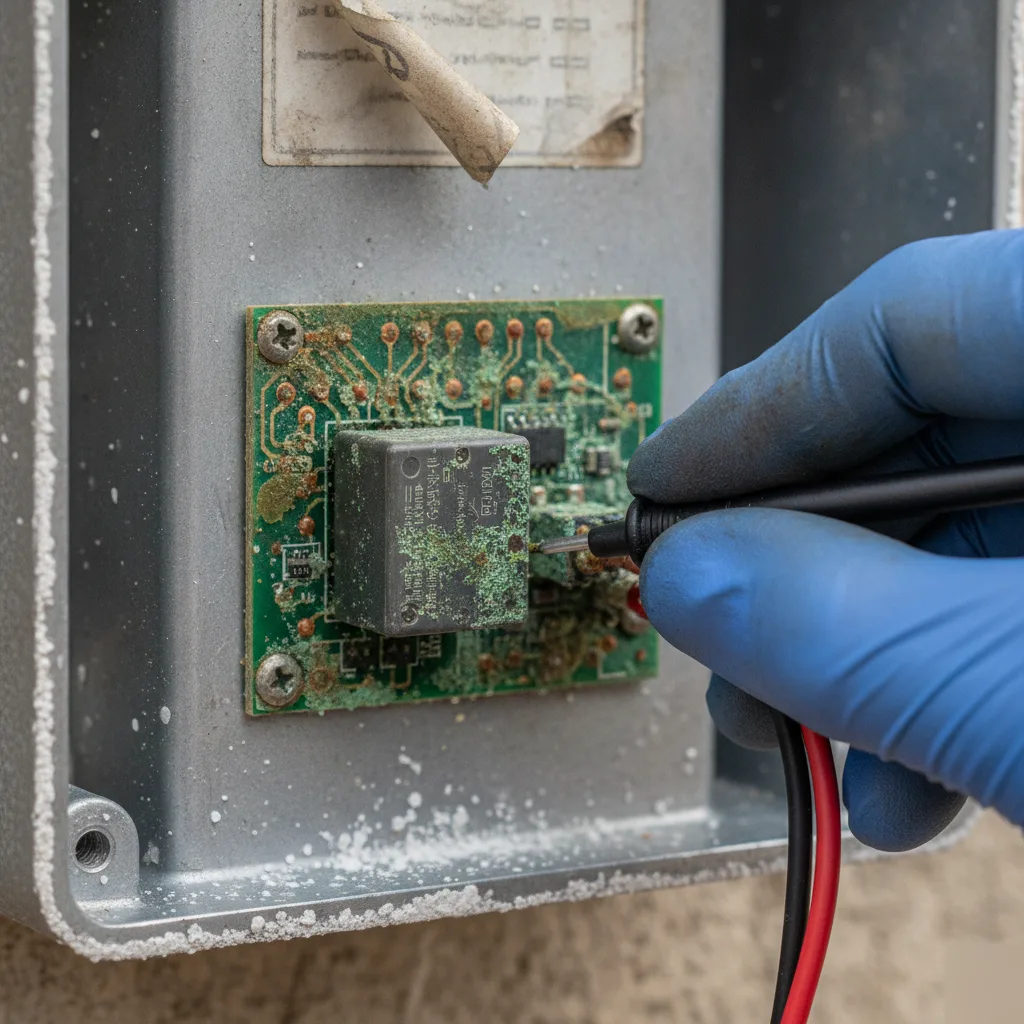
Not every sign is that obvious. Some are easy to brush off. A gate that moves a little slower than last month, or a faint scraping sound you only hear when the house is quiet. These small changes are your gate telling you something is wearing out.
Here's what to watch for before a minor fix turns into a major replacement:
- The gate opens or closes noticeably slower than it used to, or it pauses mid-travel before finishing its cycle.
- You hear grinding, clicking, or squealing from the motor housing or along the track and rollers.
- The gate reverses direction on its own without any obstruction in the path. This usually points to a sensor or limit-switch issue.
- Your remote or keypad works inconsistently, sometimes taking multiple presses to trigger the gate.
- Visible rust or corrosion on hinges, chains, or the operator arm, something we see constantly along Hallandale Beach properties near the Intracoastal where salt exposure accelerates metal wear.
Why does this matter right now? Because a gate that jerks or grinds puts extra strain on its motor and control board every cycle. A $200 roller or chain fix can turn into a full operator replacement if you let it go another few weeks. We see this every week.
And here's one people miss - a gate that seems fine but won't fully latch closed. That's a security problem, not just a mechanical one. Especially in gated communities along Three Islands Boulevard and the condo corridors off Hallandale Beach Boulevard, an unsecured gate defeats the purpose of having one.
If any of these sound familiar, the fix is almost always simpler when you catch it early. Waiting doesn't save money, it just guarantees a bigger bill.
When You Can Skip the Service Call
Not every gate problem needs a technician. Some fixes take five minutes and zero tools.
Your remote stops working. Before you assume the motor died, swap the battery. This is the number one reason people call us, and about half the time a fresh battery solves it. The same goes for keypads that seem unresponsive after a heavy Hallandale Beach rainstorm. Moisture gets into the battery compartment, and the contacts corrode just enough to lose connection. Pop the cover off, clean the terminals with a dry cloth, drop in a new battery. Done.
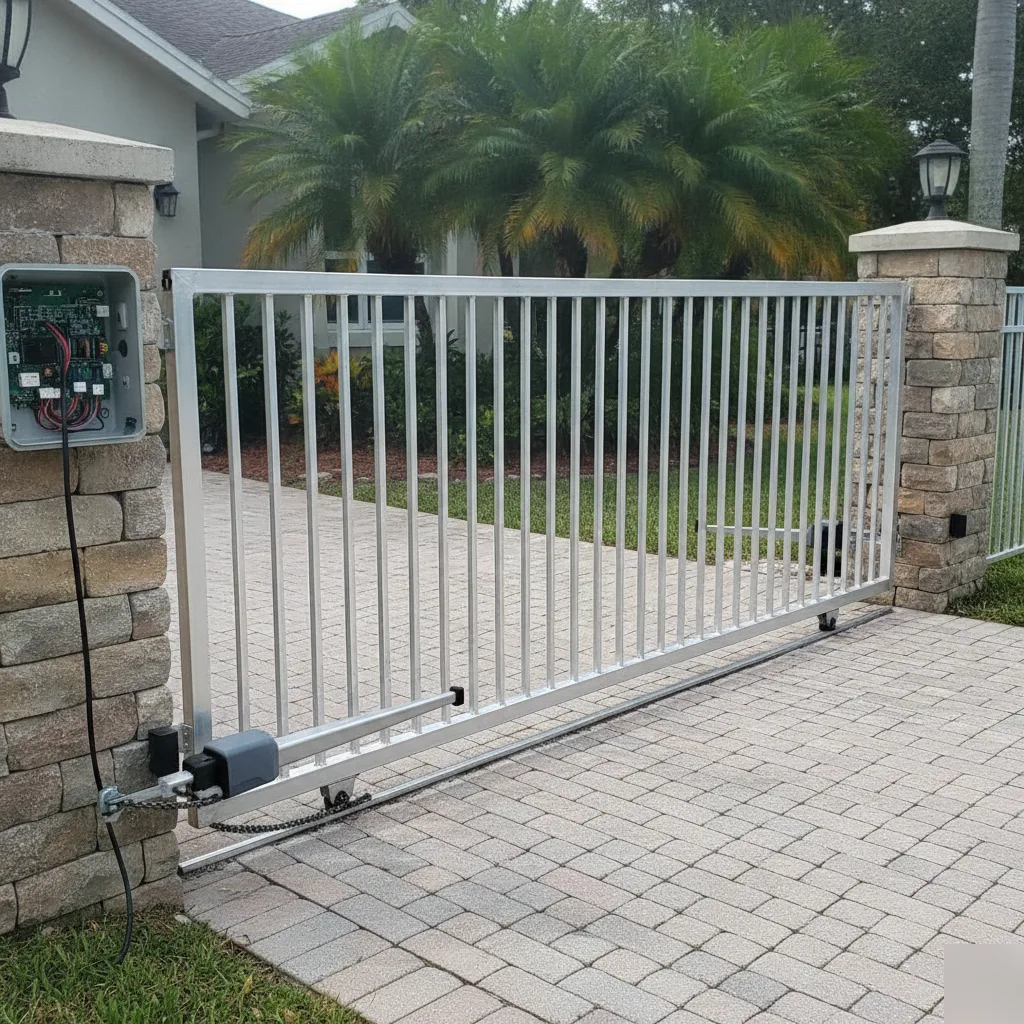
Photo eye sensors are another easy one. These are the small sensors near the bottom of your gate posts that detect obstructions. Leaves, dirt, or a spiderweb across the lens will make the gate refuse to close. Wipe both lenses with a soft rag. If the gate starts working again, you just saved yourself a service call.
Check your track or rail for obvious debris too. A rock, a kid's toy, a palm frond jammed in the roller path. Along properties near Diplomat Parkway where mature landscaping hangs over driveways, we see branches drop into sliding gate tracks constantly. Pull the obstruction out, then try the gate again.
Here's where the line is. If you've done all that and the gate still won't move, something mechanical or electrical is failing. Don't force it. Forcing a jammed gate bends the track, strips gears inside the operator, or snaps a chain. That turns a moderate repair into a big one. Never open the motor housing yourself. Gate operators run on capacitors that hold a charge even when unplugged. That's not a DIY situation.
The rule is simple. Try the battery, clean the sensors, clear the track. If none of that works, it's time for a professional. You can find more detail about our gate and garage door work on our main service page if you want to see the full range of what we handle.
Repair or Replace: Reading the Signs Right
Not every gate problem means you need a new system. Most of the time, a single failed part causes the whole issue. A burned-out control board, a stripped gear inside the operator, a bent track arm. These are fixable. Fixing them costs a fraction of what a full replacement runs.
There's a line. We see homeowners along Hallandale Beach Boulevard pour money into gates that should've been replaced two breakdowns ago. The salt air off the coast accelerates rust on steel frames and corrodes wiring connections faster than most people expect. If your gate's frame is warped, if the posts are shifting in sandy soil, or if the operator has failed three or more times in a year, you're past the repair window.
Here's how we think about it.
A repair makes sense when the gate structure is solid and only one component has failed. Motor gears wear out. Circuit boards fry after a lightning strike, which happens constantly during South Florida's summer storm season. Photo eye sensors get knocked out of alignment. These are straightforward fixes. Your gate goes back to working like it should.
Replacement makes sense when multiple parts are failing at once, the frame itself is compromised, or the system is so outdated that replacement parts aren't available anymore. If someone tells us their gate has needed three service calls in the past twelve months, we're going to have a straight conversation about whether continued repairs are worth it. Sometimes they are. Sometimes they aren't, we'll tell you either way.
One thing that catches people off guard is the operator's age. Gate operators in coastal areas like Hallandale Beach tend to have shorter effective lifespans than what manufacturers quote. The humidity and salt exposure take years off the electronics. So a unit rated for fifteen years might realistically give you ten before repairs start stacking up.
Ask yourself this: does the gate feel like it's fighting itself every time it moves? That grinding, that hesitation - it's telling you something. A single repair can fix a single symptom. If the whole system feels tired, trust what you're seeing.
Need help with Automatic Gate Repair Service?
Call Today For A Free Estimate. On Time Garage Door Repair is ready to help.
Storm Season and Salt Air Take a Toll on Hallandale Beach Gates
Hallandale Beach sits barely a mile from the Atlantic. That proximity is great for property values, it's rough on automatic gates. Salt-laden air doesn't just make things look weathered. It actively corrodes metal hinges, chain drives, and control boards from the inside out.
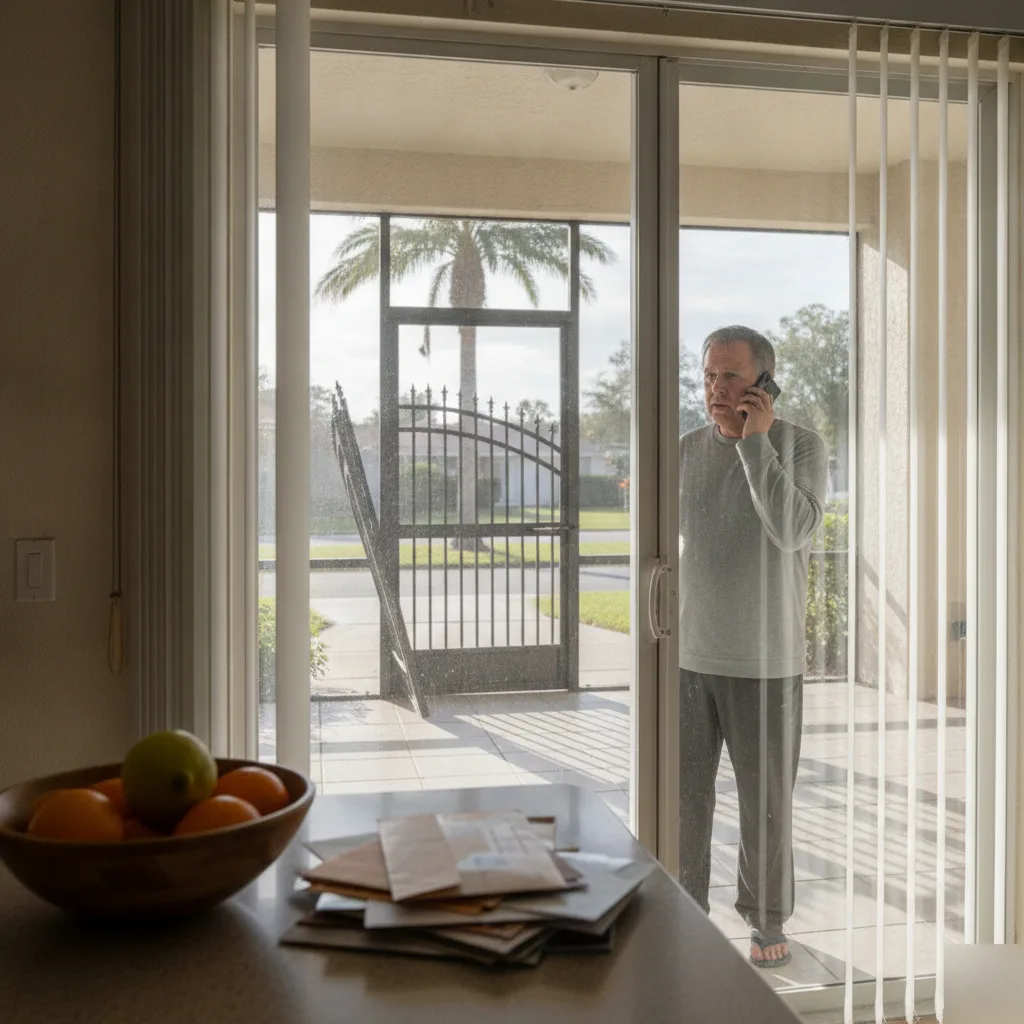
We pull rusted rollers off gates here that would still be running fine ten miles inland. The coastal humidity in Hallandale Beach accelerates oxidation on steel and iron components faster than most homeowners expect. A gate installed along Diplomat Parkway or near the Intracoastal can show serious corrosion in half the time you'd see in a landlocked neighborhood. Once rust reaches the track or the drive mechanism, the whole system starts dragging.
Then there's hurricane season. June through November brings wind gusts that slam gates against their stops, bend swing arms, and knock sensors out of alignment. After a strong storm, we get calls from gated communities along Three Islands Boulevard where gates simply won't close. The wind shifted the gate just enough to throw off the safety sensors or warp a hinge bracket. The gate looks fine from the driveway but it's binding at a point you can't see without pulling the cover.
South Florida's daily afternoon storms add another layer. Repeated exposure to driving rain pushes moisture into control boxes and wiring conduits. Circuit boards corrode. Receiver units short out. A gate that worked perfectly yesterday morning won't respond to the remote by evening. That's not a fluke. That's what happens when electronics sit in a humid enclosure without proper sealing.
What does all this mean for you? Automatic gate repair in Hallandale Beach isn't just about fixing what broke. It's about understanding why it broke. A repair that ignores the salt air factor will fail again. We treat every service call here with that reality in mind, checking seals, inspecting for hidden corrosion, and replacing hardware with materials rated for coastal conditions. Our 4.9-star rating across 447 plus Google reviews comes from getting these details right the first time - not just swapping a part and hoping for the best.
Watch Our Video
See How We Handle Automatic Gate Repair Service in
On Time Garage Door Repair
What Happens During a Professional Gate Repair Visit
You called. We're on the way. Now what? Most folks in Hallandale Beach have never had a gate tech at their property before, so here's exactly how it goes.
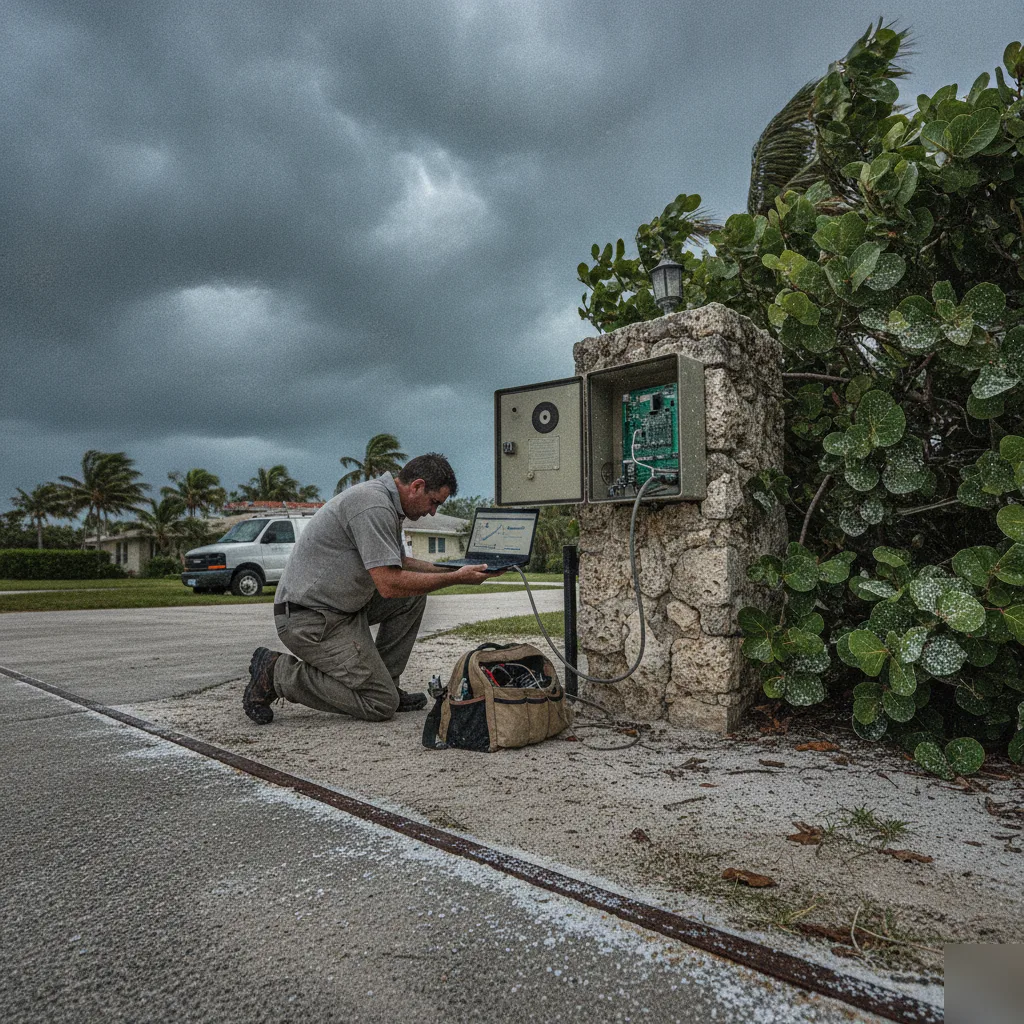
First thing we do is a full visual inspection of the entire system. Not just the part that's acting up. We check the gate panels, the track or swing arm, the operator motor, the control board, wiring connections, safety sensors, and the remote receiver. The obvious symptom isn't always the real problem. A gate that won't close might have a perfectly fine motor but a sensor that's been knocked crooked by a landscaper's edger. We need to see the whole picture before we touch a single bolt.
After the inspection, we'll tell you what we found. Plain language. We'll explain what failed, why it failed, and what it takes to fix it. You get upfront pricing before any work starts. No surprises.
Then the actual repair. Depending on the issue, it could be a 30-minute sensor swap or a half-day operator replacement. We work with major brands like LiftMaster, GTO/Linear, and Viking, so we carry common parts for those systems. Most repairs finish the same day you call. If we need to order a specific board or motor, we'll let you know the timeline right there on the spot.
Before we leave, we run the gate through multiple open-close cycles. We test the remote, the keypad, the safety reverse function. We watch for anything that looks like it could cause trouble next month. A proper automatic gate repair visit isn't just about fixing today's breakdown, it's about making sure you don't need us again in three weeks.
One thing people don't expect - we'll point out wear on parts that still work. Rollers getting flat, chains stretching, hinges corroding from the salt air that rolls in off the Intracoastal along Hallandale Beach Boulevard. You decide whether to address those now or later. But you'll know.
That honesty is a big reason we've built a 4.9-star rating across 447 plus Google reviews. We'd rather tell you what's really going on than sell you something you don't need.
Frequently Asked Questions
Common questions about Automatic Gate Repair Service
How fast can someone come look at my gate in Hallandale Beach?
Most gate issues get a same-day or next-day visit once you call. We ask a few questions upfront about what the gate is doing, stuck open, grinding, or not responding, so the technician arrives ready with the right parts. If your gate won't latch closed, tell us that right away. That's a security issue we treat as a priority, especially for gated communities off Hallandale Beach Boulevard.
What happens when the technician gets to my property?
The technician starts by running your gate through a full open-and-close cycle to watch exactly where it hesitates or fails. Then they check the motor housing, track, rollers, and photo eye sensors before touching anything. You'll get a straight answer about whether you're looking at a simple part repair or something bigger. We'll walk you through what failed and why before starting any work.
Why does my gate keep rusting or corroding so fast?
Salt air off the Intracoastal speeds up rust on hinges, chains, and operator arms faster than inland properties experience. This is one of the most common issues we see on Hallandale Beach gates, especially on steel components that sit exposed to coastal humidity year-round. Regular cleaning helps, but once corrosion reaches the internal gears or wiring connections, those parts usually need replacing rather than cleaning.
Can I fix a stuck or slow gate myself before calling?
Yes, try three things first: swap the remote or keypad battery, wipe down the photo eye sensors near the bottom of the gate posts, and clear any debris from the track. About half our calls turn out to be a dead battery or a dirty sensor lens, especially after a heavy rainstorm. If the gate still won't move after that, stop trying to force it and call a technician before it strips a gear or bends the track.
How do I know if my gate needs a repair or a full replacement?
A repair makes sense when the frame is solid and only one part failed, like a burned-out board or a bent track arm. Replacement makes sense when the operator has failed three or more times in a year, the frame is warped, or posts are shifting in the soil. If you're facing repeat breakdowns, we'll give you a straight read on which option saves you money long-term.
Why did my gate open on its own or reverse without anything blocking it?
This almost always points to a sensor or limit-switch problem, not a mechanical failure. The gate's safety system thinks something is in the way even when the path is clear, so it reverses to protect against hitting an obstruction. It's a fixable issue, but it should be checked soon since it means the safety sensors aren't reading your gate's position correctly.
Ready to Get Started?
Call 9543291361 Today For A Free Estimate.
