
Fast, reliable garage door and electric gate repair and installation in South Florida — call today, fixed today.
What's Covered on This Page
- Signs Your Garage Door Opener Is Failing
- Choosing the Right Opener for Your Garage
- When the Problem Isn't the Opener
- What Professional Installation Includes
- Storm-Ready Openers for Hallandale Beach Garages
- How quickly can someone come out to install a garage door opener in Hallandale Beach?
- What should I expect when the technician arrives to install my opener?
- Why does my garage door opener fail faster in Hallandale Beach than it might elsewhere?
- How do I know if I need a new opener or just a repair?
- My door won't open, but is it really the opener's fault?
- Which type of opener works best for my garage?
Signs Your Garage Door Opener Is Failing
Here's what usually happens. You press the remote one morning and the door hesitates. It may start moving, then stop halfway. You press again, it finishes the cycle, and you forget about it. Two weeks later it won't open at all. We see this every week in Hallandale Beach, especially in older homes along the Golden Isles neighborhood where salt air has been wearing on opener components for years.
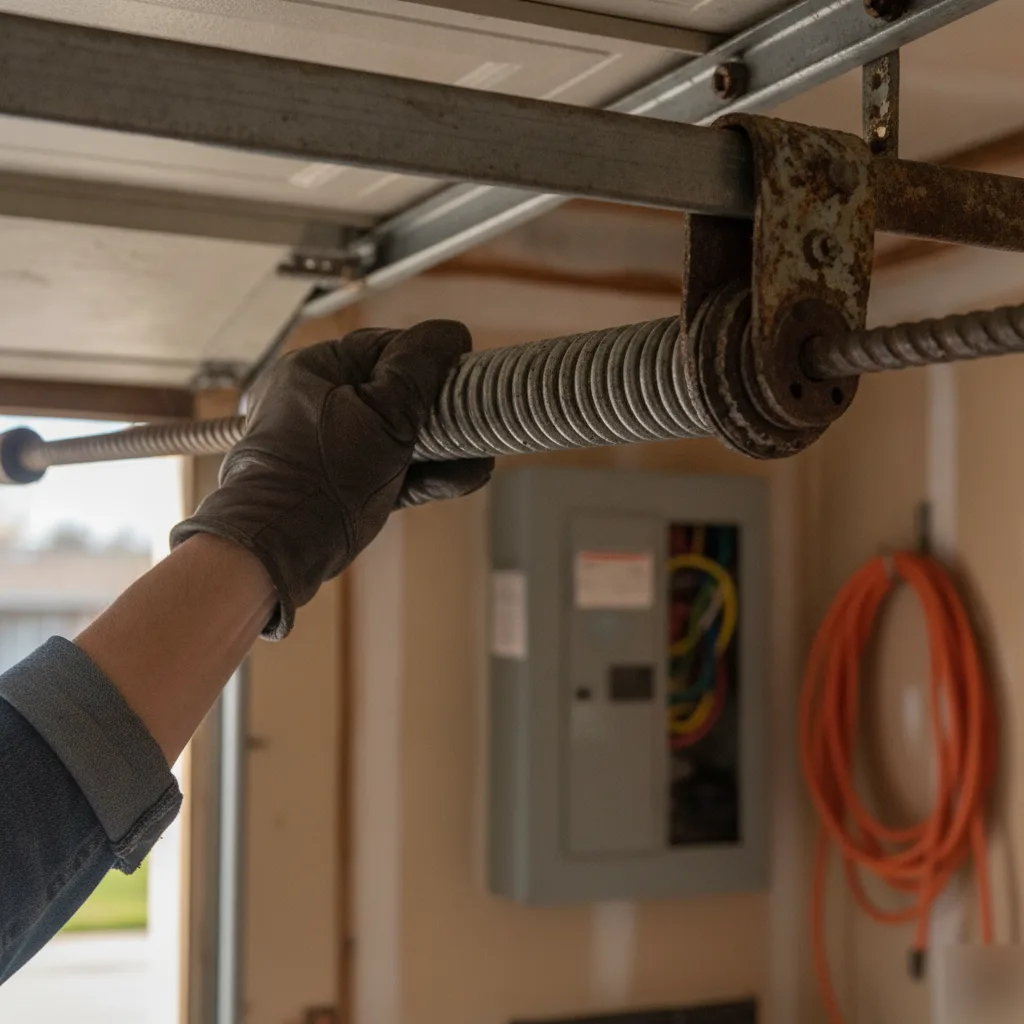
Not every symptom means you need a full replacement. Sometimes a noisy opener just needs lubrication or a minor adjustment. But certain signs point to a motor or logic board that's failing. No amount of tinkering will fix that.
Pay attention to these red flags:
- The motor runs but the door doesn't move. This usually means stripped gears inside the drive unit.
- Your wall button works fine but the remote only responds from three feet away. The receiver board is likely failing.
- The door reverses right after touching the floor, even after you've adjusted the limit switches twice.
- You hear a loud grinding or humming sound that wasn't there six months ago.
- The opener is a chain-drive unit older than 15 to 20 years and it vibrates the whole ceiling when it runs.
South Florida's humidity speeds up this timeline. Moisture corrodes circuit boards and rusts internal chains faster than in drier climates. Power surges that come with summer storms in Hallandale Beach can fry a logic board in one hit.
If you're dealing with two or more of those symptoms at once, a repair won't hold for long. That's when a proper garage door opener installation makes more sense than sinking money into a unit that's already past its useful life. A new opener installed correctly solves the immediate problem. It also prevents the chain reaction of door damage a dying motor causes: cables straining, springs overworking, tracks bending from uneven force.
Not sure if what you're hearing is normal? That's common. Most people have never listened closely to their opener until something changes.
Choosing the Right Opener for Your Garage
Not every opener works in every garage. We see homeowners order a unit online and then call us when it doesn't fit their ceiling, their door weight, or their lifestyle. The right match between your opener and your garage matters more than the price tag on the box.
There are four main drive types you'll run into. Each one has a job it does best.
Chain drive openers are workhorses. They're affordable and strong enough for heavy double doors. The trade-off is noise. If your garage shares a wall with a bedroom, you'll hear it. Belt drive openers run quieter because a rubber belt replaces the metal chain. They cost a bit more. For attached garages where someone sleeps on the other side of the wall, the difference is worth it. Screw drive openers use a threaded steel rod. Fewer moving parts means less maintenance over time. Wall-mount openers skip the ceiling rail entirely. They bolt to the wall beside the door, freeing up overhead space for storage or high-lift tracks.
So how do you pick? Start with your door.
A standard single-car door in a Hallandale Beach townhome near Diplomat Parkway usually weighs around 130 to 150 pounds. A half-horsepower opener handles that fine. Double-wide doors on homes west of US-1 can push 250 pounds or more. They need three-quarters to a full horsepower. Matching motor power to door weight keeps the opener from burning out early in South Florida's heat.
Ceiling clearance is the other factor people forget. Older Hallandale Beach homes built in the 1960s and 1970s sometimes have low garage ceilings with exposed trusses. A standard rail-mounted opener won't fit without modifications. A wall-mount unit earns its keep here.
Salt air matters too. Coastal humidity accelerates corrosion on exposed metal parts. We always recommend openers with DC motors and corrosion-resistant hardware for garages within a few miles of the beach. The opener that failed early near the coast had a chain drive with no rust protection. It couldn't handle the environment.
If you're not sure what fits your setup, that's the most common starting point for our calls. We look at your door size, weight, ceiling height, and where the garage sits relative to living spaces before recommending anything.
When the Problem Isn't the Opener
Here's something we see almost every day. A homeowner calls us convinced the opener is shot. The door won't go up, the motor hums or clicks, and they're ready to replace the whole unit. But the opener itself is fine.
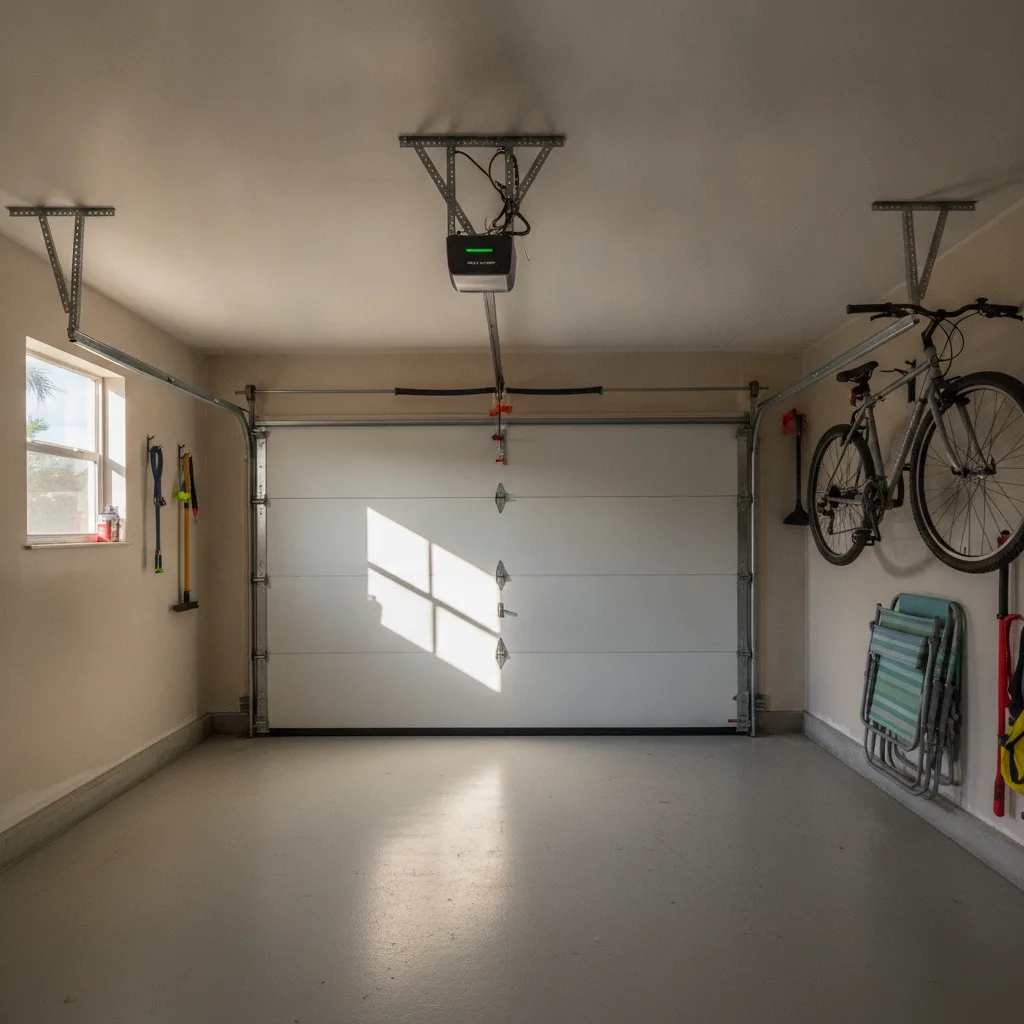
The real culprit is usually somewhere else in the system. A broken torsion spring is the most common one. Your opener motor isn't strong enough to lift a garage door on its own. Springs do the heavy lifting. When a spring snaps, the motor strains, makes noise, and quits. That doesn't mean the opener failed. It means the spring did. We handle broken spring repair separately, and it's a fraction of the cost of a full opener swap.
Tracks cause problems too. Hallandale Beach homes built during the 1970s and 1980s development boom along East Hallandale Beach Boulevard often have original steel tracks that have shifted or corroded from decades of salt air exposure. A door that's off-track will bind up and stall the opener. Repairing the opener won't fix a track issue.
Safety sensors are another one. Those small photo-eye units near the floor get bumped, get dirty, or lose alignment. When they can't see each other, the door reverses or refuses to close. That's a ten-minute fix. Sometimes the issue is just wiring. Corroded connections at the wall button or frayed low-voltage wire between the sensor and the motor unit. South Florida humidity damages exposed wiring over time.
So how do you know when it is the opener? If the motor runs but the drive gear is stripped, you'll hear grinding with no movement. If the circuit board is fried, nothing responds at all - no lights, no sound, no reaction to the remote or wall button. Those are real opener failures.
We'll always diagnose before we recommend. If your opener just needs a sensor realignment or a cable repair, we'll tell you that. We're not going to sell you a new opener you don't need. That's not how we've earned a 4.9 star rating across 447 plus Google reviews. When the opener truly is done, you'll know exactly why before we start the work.
Need help with Garage Door Opener Installation Service?
Call Today For A Free Estimate. On Time Garage Door Repair is ready to help.
What Professional Installation Includes
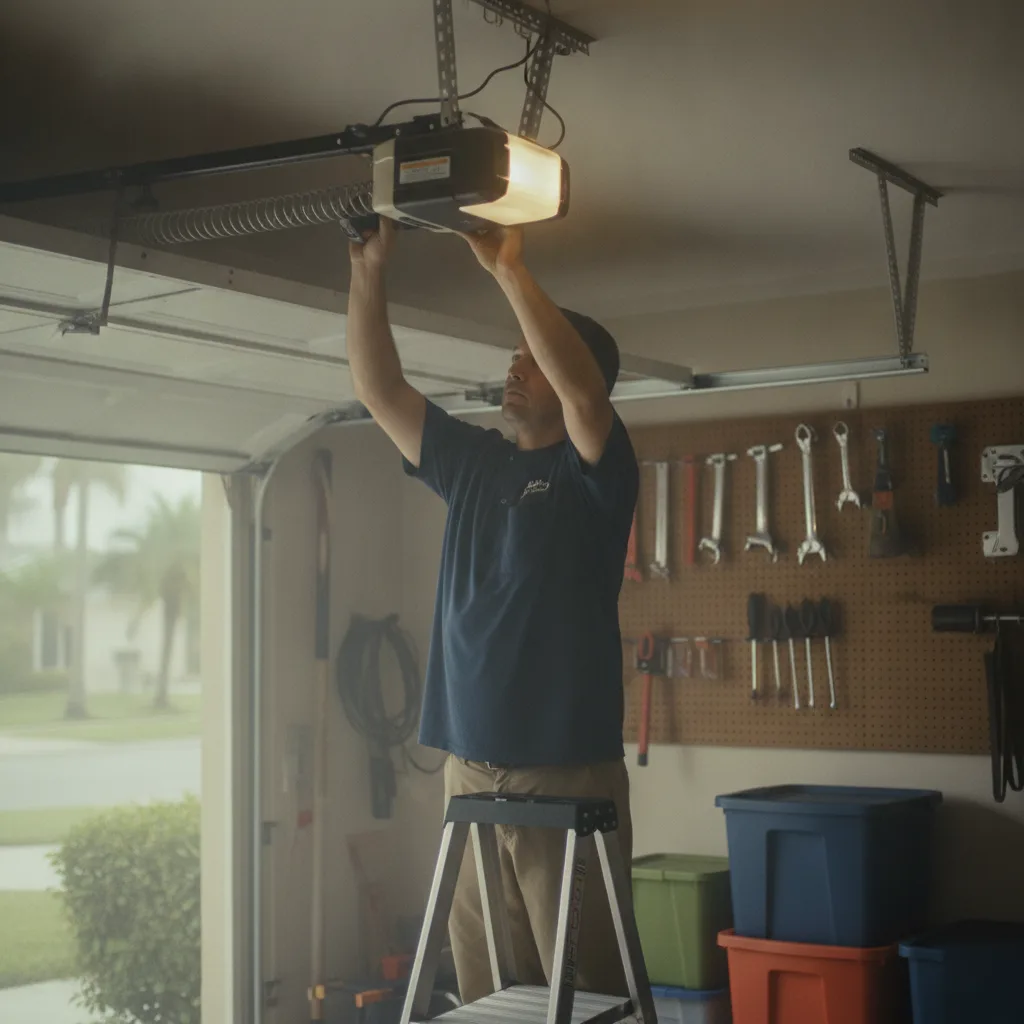
A lot of people think installing a garage door opener is just bolting a motor to the ceiling. It's not. The opener has to match your door's weight, your ceiling height, and the way your garage is wired. Get any of those wrong and you're looking at a unit that burns out early or a door that doesn't seal right.
Here's what a proper installation looks like from start to finish when our team handles it.
- We measure the door and weigh it. A single-car steel door and a double-car insulated door need very different drive systems. Skipping this step is the number one reason openers fail early.
- We check the existing wiring and outlet placement. Many homes in Hallandale Beach built before 2000 have garage outlets on shared circuits. We confirm the power supply can handle the new unit without tripping breakers.
- We remove the old opener, rail, and mounting hardware. Nothing gets reused unless it's in solid shape.
- We install the new rail assembly, motor unit, and bracket system. Every fastener gets torqued to spec. The rail has to be perfectly aligned with the door's center, not eyeballed.
- We program the opener, pair remotes, and set travel limits so the door stops exactly where it should at the floor and at full open.
- We test the safety reversal system. Federal law requires the door to reverse when it contacts an object. We verify this with a block test on every install.
That last step matters more than people realize. When we get a callback on someone else's install, the safety sensors were never adjusted right. The photo eyes sit crooked or the force settings are maxed out. That's dangerous, especially in a home with kids or pets.
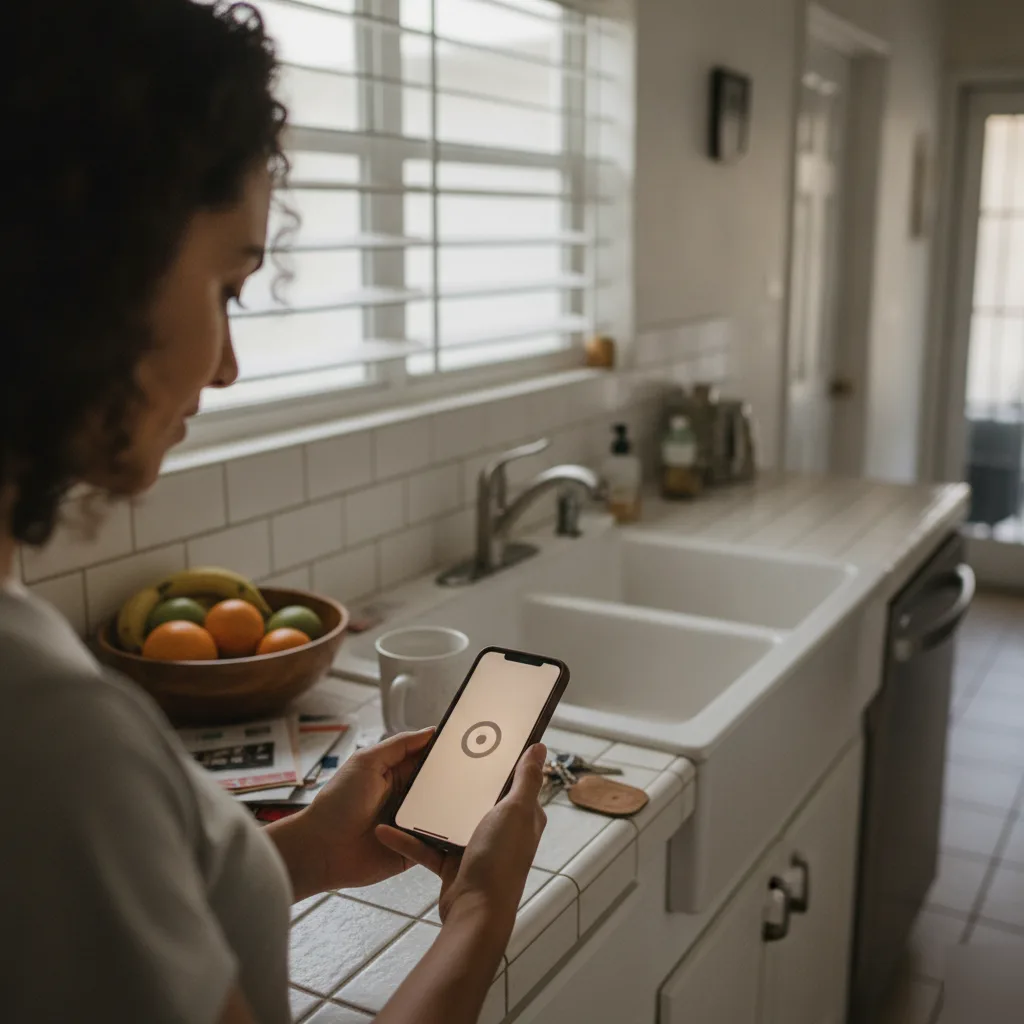
If you're upgrading to a smart garage door opener installation or a WiFi garage door opener installation, there's an extra step. We connect the unit to your home network and walk you through the app on your phone before we leave. You should be able to open and close your door from anywhere before we pack up the truck.
The whole job usually takes two to three hours. But we don't rush it. We test it until everything runs quiet and smooth. That's the difference between a proper install and a quick swap.
Watch Our Video
See How We Handle Garage Door Opener Installation Service in
On Time Garage Door Repair
Storm-Ready Openers for Hallandale Beach Garages
Hallandale Beach sits right in the Broward County coastal wind zone. It changes what kind of opener belongs on your garage door and how it needs to be mounted.
We see it after every serious storm season. An opener that worked fine for years suddenly can't hold a wind-loaded door. The motor strains, the rail bows, the door lifts off the tracks. The opener was never rated for the forces a hurricane-impact or wind-rated door puts on the drive system. A lot of homes along the U.S. 1 corridor in Hallandale Beach were built in the 1970s and 1980s. They were then retrofitted with heavier wind-rated doors to meet updated Florida Building Code requirements. But nobody upgraded the opener to match. That mismatch is a problem waiting for the next named storm.
A wind-rated garage door can weigh 30 to 50 percent more than a standard panel door. Your opener has to handle that extra load every cycle. Not just during a hurricane, every day. If the motor is undersized, it overheats. If the rail mounting isn't reinforced into solid framing, vibration loosens the hardware over months. If the opener lacks battery backup, you lose access to your garage the moment power drops. In South Florida, that can happen hours before a storm even makes landfall.
So what does a storm-ready installation look like? It starts with matching horsepower to door weight and size. A two-car garage with a wind-rated door usually needs a minimum of three-quarter horsepower, sometimes a full one-horsepower unit. We anchor the mounting bracket and rail into engineered header framing, not just drywall or thin trim boards. Battery backup is standard on every unit we install. We test the force settings with the door fully closed and under simulated resistance to confirm the opener won't stall under load.
Hallandale Beach homeowners in neighborhoods like Foster Road and Golden Isles often have single-story CBS block construction with attached garages. Those garages take direct wind pressure on the door face. A properly installed opener keeps that door locked down tight when the power goes out. The battery keeps the lock engaged, and the reinforced mount keeps everything connected to the structure.
Cutting corners on opener installation here isn't just inconvenient. It's a structural risk. The right opener, mounted correctly, turns your garage door from a weak point into one of the strongest closures on your home.
Frequently Asked Questions
Common questions about Garage Door Opener Installation Service
How quickly can someone come out to install a garage door opener in Hallandale Beach?
Most garage door opener installations in Hallandale Beach can be scheduled within a day or two of your call. We cover the whole city, from older homes near Golden Isles to newer construction west of US-1. If your current opener has already failed and you're locked out, tell us that when you call. Same-day service is often possible for households stuck without garage access, especially when the issue is clearly the motor or logic board and not a spring or track problem.
What should I expect when the technician arrives to install my opener?
The technician starts by checking your door weight, ceiling clearance, and current setup before touching anything. This matters because a standard single-car door in a Hallandale Beach townhome usually weighs around 130 to 150 pounds, while double-wide doors can push past 250 pounds. Getting the motor size right up front prevents an opener that burns out early. After the assessment, the technician removes the old unit, mounts the new one, programs the remotes, and tests the safety reversal before leaving.
Why does my garage door opener fail faster in Hallandale Beach than it might elsewhere?
Salt air and humidity are the main reasons openers wear out faster here than in drier climates. Moisture corrodes circuit boards and rusts internal chains, which speeds up failure in homes near the coast, including older properties along Golden Isles. Summer storm season adds another risk, since power surges can fry a logic board in a single hit. This is why we recommend openers with DC motors and corrosion-resistant hardware for garages within a few miles of the beach.
How do I know if I need a new opener or just a repair?
If you're seeing two or more warning signs at once, like grinding noise, a remote that only works up close, or a door that reverses after touching the floor, a repair usually won't hold for long. A single symptom, like a noisy motor, often just needs lubrication or an adjustment. Chain-drive units older than 15 to 20 years that vibrate the whole ceiling when running are typically past the point where repair makes sense.
My door won't open, but is it really the opener's fault?
Not always. A broken torsion spring is the most common reason a door won't open, and it has nothing to do with the opener motor. Your springs do the heavy lifting, and when one snaps, the motor strains and hums but can't lift the door. Corroded tracks and misaligned safety sensors cause similar symptoms in Hallandale Beach homes built during the 1970s and 1980s. We check the whole system first so you're not paying for a new opener when the real fix is much smaller.
Which type of opener works best for my garage?
The right opener depends on your door weight, ceiling height, and whether living space sits next to the garage. Belt drive openers run quieter and suit attached garages where someone sleeps nearby, while chain drives handle heavy double doors at a lower cost but with more noise. Older Hallandale Beach homes with low ceilings and exposed trusses often do better with a wall-mount unit instead of a standard rail-mounted opener. We look at your specific setup before recommending a drive type.
Ready to Get Started?
Call 9543291361 Today For A Free Estimate.
