
Fast, reliable garage door and electric gate repair and installation in South Florida — call today, fixed today.
What's Covered on This Page
- Signs Your Garage Door Rollers Are Failing
- Nylon vs. Steel Rollers: Choosing the Right Fit for Coastal Homes
- When Lubrication Beats Roller Replacement
- What Happens During a Roller Replacement Visit in Hallandale Beach
- Roller Replacement Often Reveals Track, Hinge, and Cable Wear
- How fast can you get to my home in Hallandale Beach for a roller problem?
- What happens when the technician arrives to replace my rollers?
- Why do garage door rollers wear out faster in Hallandale Beach?
- Do I need new rollers, or will lubrication fix the noise?
- Should I pick nylon or steel rollers for my garage door?
- Can a bad roller cause damage to other garage door parts?
Signs Your Garage Door Rollers Are Failing
You probably weren't thinking about rollers until something changed. Maybe the door started grinding on the way up, or it shudders halfway through the cycle like it's about to give out. Either way, that's usually a roller problem.
Here's what to look for.
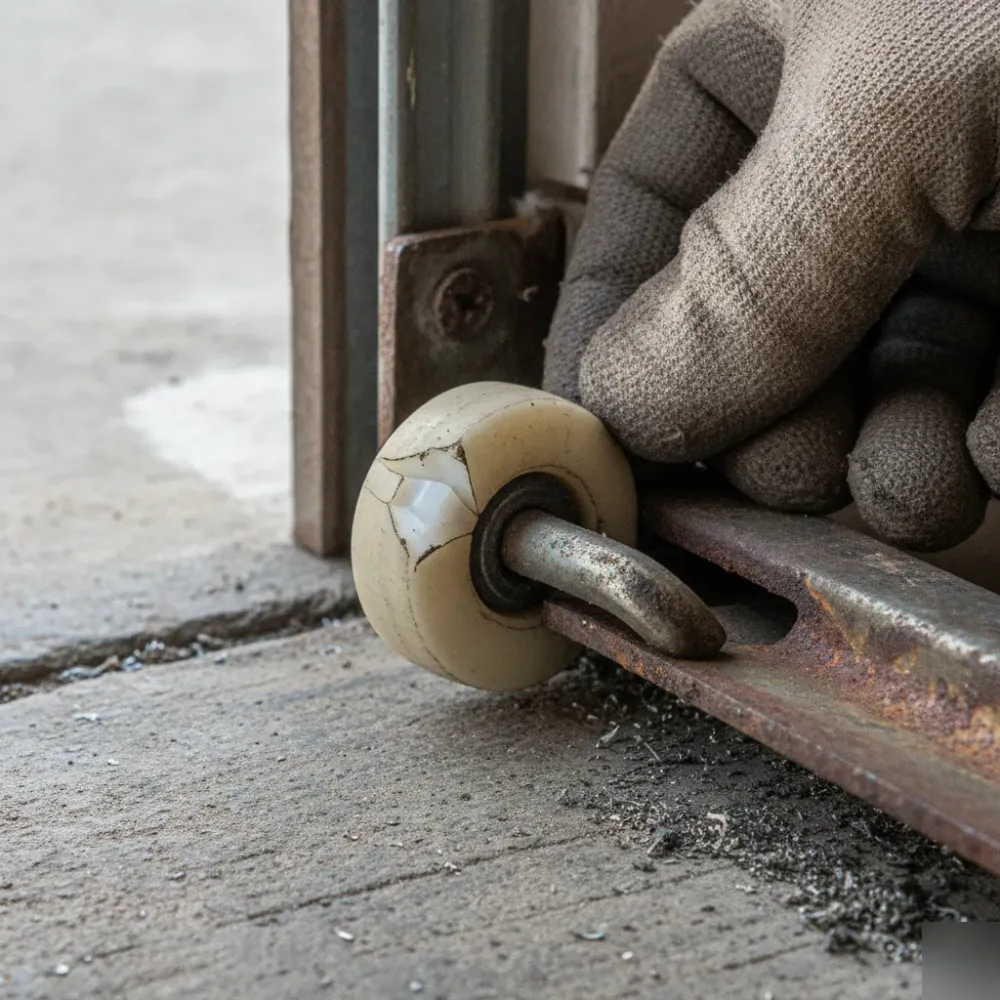
Noise shows up first. Healthy nylon rollers run almost silent, and steel rollers just hum a little. Once either type starts failing, you'll hear a loud scraping or popping that echoes through the garage. It's not subtle, your neighbors might even hear it. That sound usually means the roller wheel is cracked or chipped, or the bearing inside has seized.
Next, the door starts moving wrong. Instead of gliding smoothly, it jerks or vibrates, and one side can lag behind the other, throwing the whole door slightly out of balance. We see this constantly in Hallandale Beach, where salt air and year-round humidity speed up bearing corrosion on steel rollers faster than most homeowners expect.
A quick visual check tells you a lot. Pull the emergency release so the door disconnects from the opener, then look at each roller sitting in the track. Cracked nylon wheels are easy to spot, they'll have chunks missing. Steel rollers show rust or flat spots. Give one a gentle wobble with your hand, and if it has play or barely spins, it's done.
Here's the one people miss: the door feeling heavier than usual when you lift it manually. Worn rollers create friction the opener has to fight through, and that extra strain shortens the opener's life too. What started as a roller issue quietly turns into two problems.
Not sure if what you're hearing is rollers or something else? That's a common question, since cables, springs, and tracks can all make their own noise. Roller trouble sounds distinct though, a rhythmic grinding that follows each panel through the track. Springs tend to let out one loud snap or squeal. Tracks create a scraping sound that stays fixed in one spot.
If you're noticing any combination of these signs, don't wait for the door to jump the track. Replacing a roller now is a straightforward fix. A door that's derailed because a roller shattered is a much bigger job, with a much bigger bill.
Nylon vs. Steel Rollers: Choosing the Right Fit for Coastal Homes
Most homeowners don't realize they actually have a choice here. When a tech tells you your rollers need replacing, the follow-up question should be: nylon or steel? Both get the job done, but they get there differently, and where your home sits matters more than you'd think.
Steel rollers use ball bearings packed inside a metal wheel. They're tough and handle heavy doors without complaint. The catch is corrosion, and that's a real issue in Hallandale Beach, where salt air rolls in off the Atlantic all year long. Homes east of US-1 near the Diplomat area sit less than a mile from the water. We've pulled steel rollers out of those garages covered in rust after just a couple of years. Once the bearings seize, the door starts binding, and you're suddenly looking at a garage door off-track repair on top of the roller replacement you already needed.
Nylon rollers don't corrode. Full stop.
They also run quieter. If your garage shares a wall with a bedroom or living room, that's worth something. Nylon rollers with sealed bearings slide through the track without the metal-on-metal grind that can wake a household at six in the morning. More often than not, when someone tells us their door has gotten louder over the past few months, worn steel rollers turn out to be the culprit.
So does steel ever still make sense? Sure, for heavy commercial doors or oversized two-car setups that need the extra load capacity 13-ball-bearing steel rollers provide. If your door tips the scale at over 300 pounds, a coated steel roller can be the right call. But for the standard single and double residential doors common across Hallandale Beach's condo communities along Three Islands Boulevard and the townhomes off Hallandale Beach Boulevard, nylon is almost always the better long-term investment.
Here's what to weigh when you're choosing:
- Proximity to the coast: homes within two miles of the shore benefit most from nylon's resistance to corrosion.
- Door weight: standard residential doors under 300 pounds pair well with nylon rollers rated for 10,000-plus cycles.
- Noise sensitivity: nylon cuts operating noise by roughly half compared to bare steel.
- Budget timeline: nylon costs a bit more upfront but tends to outlast steel in salt-air environments, meaning fewer repeat visits for roller replacement down the road.
We carry both options on every service call, and we'll tell you plainly which one your door actually needs, not just which one costs more.
When Lubrication Beats Roller Replacement
Not every noisy garage door needs new rollers. Sometimes a six-dollar can of white lithium grease solves the whole problem in about ten minutes.
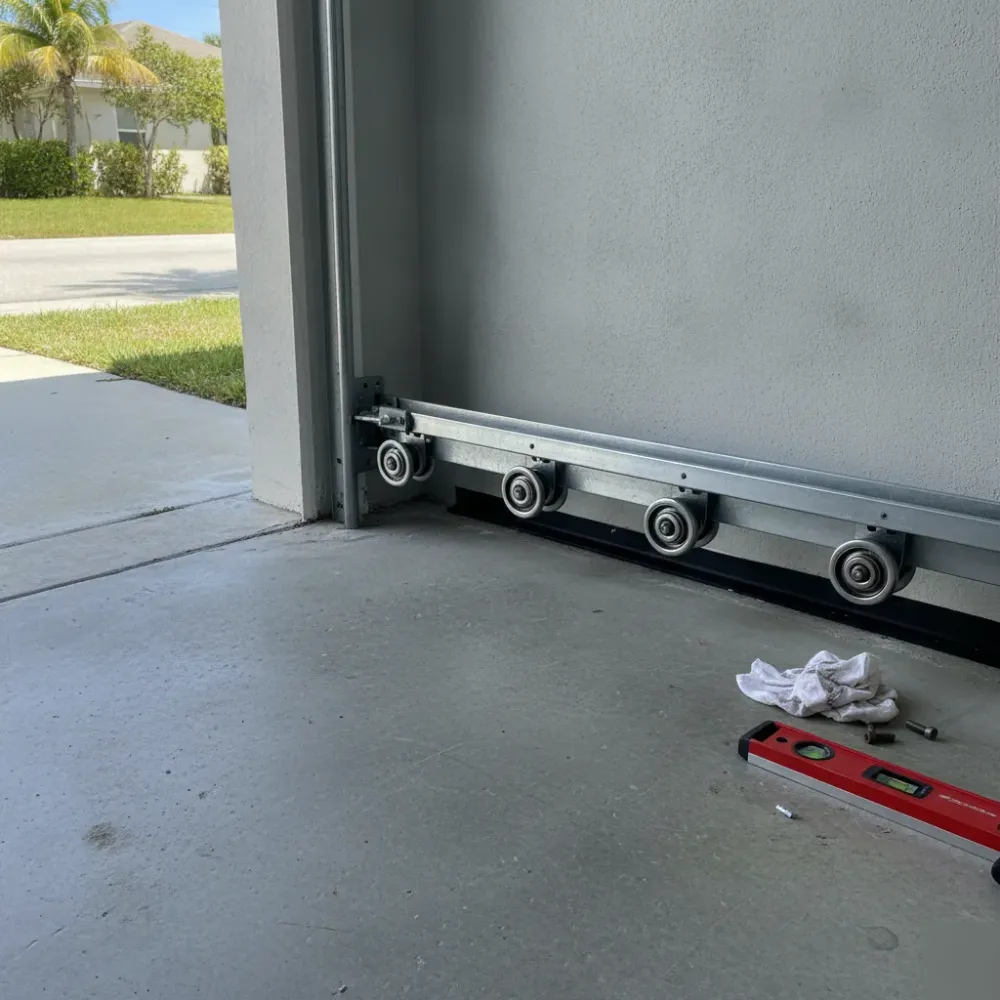
Here's how to tell which situation you're in. Spin each roller by hand. If it turns freely and the stem isn't wobbling loose in the bracket, the hardware itself is probably fine. What you're hearing is likely just metal-on-metal friction from bearings that dried out, or grit that's worked its way into the track. South Florida's salt air makes this worse and faster, especially in Hallandale Beach, where ocean humidity can leave a thin film of corrosion on garage hardware in just a few months. A thorough cleaning plus fresh lubricant usually brings the quiet right back.
We run into this constantly. A homeowner calls convinced their rollers are done for. We show up, spin each one by hand, and find them all in solid shape. The actual problem is just neglected maintenance. In coastal climates, rollers need lubrication roughly every six months, and skipping that a couple of times in a row is usually when the grinding starts.
So when is lubrication really enough? When the roller surface is smooth, without chips or flat spots. When the stem isn't bent. When the tracks run straight and the rollers sit inside them properly. If all three hold up, grab a silicone-based or lithium spray, work it into each roller and hinge pivot, then run the door up and down a few times to spread it evenly. Skip WD-40 here, since it's a solvent rather than a real lubricant, and it dries out quickly while pulling in dust.
That said, be honest about what you're actually seeing. If a roller wobbles side to side or shows visible cracks in the wheel, no amount of grease will fix that. A cracked nylon roller will eventually split apart inside the track and jam the door mid-cycle. A steel roller with a worn bearing just gets louder over time, no matter how much lubricant you apply. Those need replacing, not maintaining.
The bottom line is simple. If the rollers look good and spin clean, lubricate them and keep your money. If they fail that quick hand test, call someone before a small issue turns into a door that won't move at all.
Have questions? We're happy to help.
Call Today For A Free Estimate. On Time Garage Door Repair is ready to help.
What Happens During a Roller Replacement Visit in Hallandale Beach
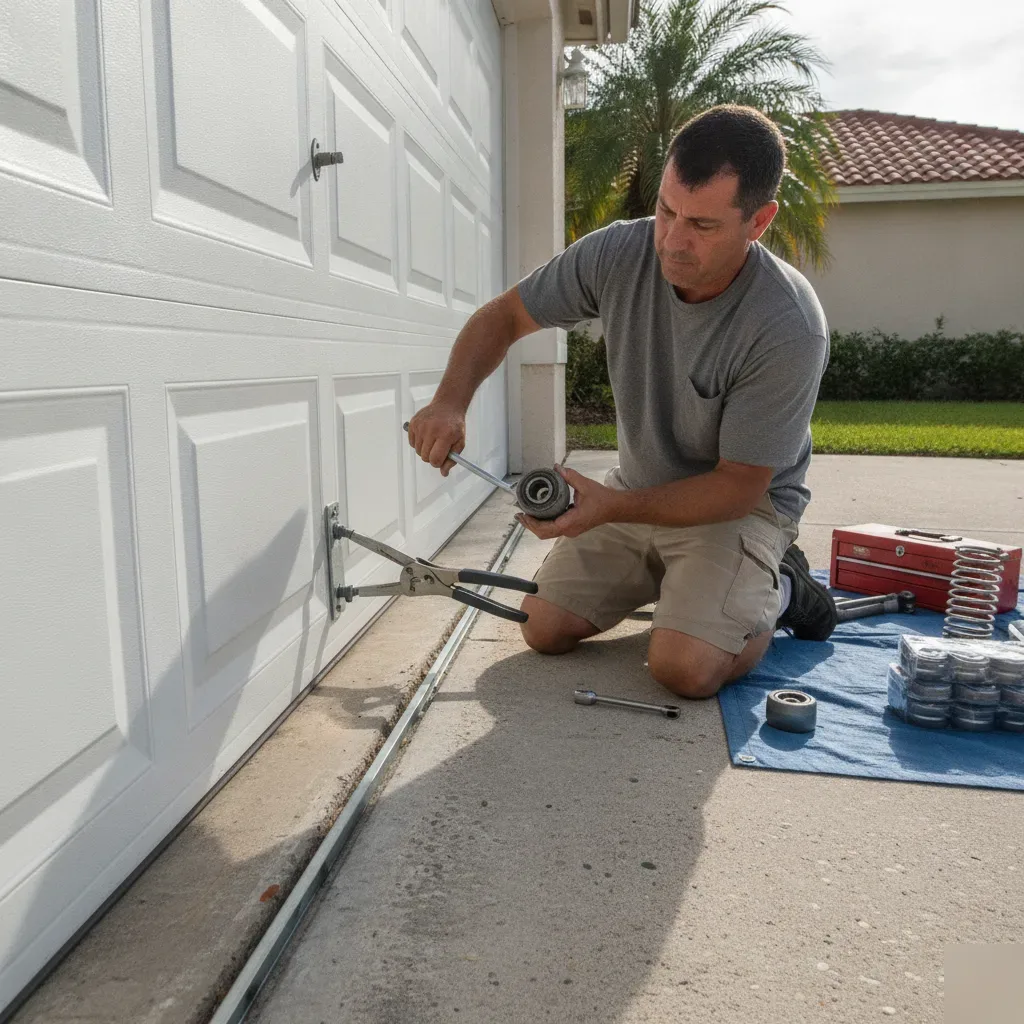
Most homeowners have never actually watched a roller replacement happen, and that's perfectly normal. Here's exactly what to expect when we arrive, so nothing catches you off guard.
For a standard residential door, the whole visit usually wraps up in 45 minutes to an hour. Homes along Hallandale Beach Boulevard and in the Golden Isles area tend to have two-car garages with heavier steel or aluminum doors, so those jobs can run a bit longer. Either way, the process itself doesn't change.
- We start with a full visual inspection, checking every roller, not just the noisy ones, along with the tracks, hinges, and brackets holding it all together. Worn rollers rarely act alone; they tend to put stress on everything around them.
- Next, we secure the door in the open position. This isn't optional. The torsion spring system holds real tension, and the door has to stay locked in place while we're working on the rollers.
- Old rollers come out one section at a time. We loosen the hinge bracket, slide out the worn roller, and set the new one in place, matched to the exact stem length and wheel diameter your door requires.
- Once every roller is swapped, we run the door through several full open-and-close cycles, listening for smooth movement and watching for any wobble or binding in the tracks.
- Final touches come last: track alignment, lubricating the new rollers and hinges, and a quick check on the opener's force settings.
You won't need to clear out the whole garage. Just leave about three feet of space on each side of the door so we can work safely. If your car's parked inside, we'll simply ask you to pull it out first.
In most cases, we finish the job in a single visit. Our trucks carry the most common roller sizes and types, which matters here in Hallandale Beach, where plenty of homes built in the 1970s and 1980s near Three Islands use standard 2-inch nylon or steel rollers we always keep on hand. No waiting around for parts, no need to schedule a second appointment.
Here's what really separates a proper repair from a quick fix, though: we don't just replace the rollers that are squeaking. If four of them are worn out, the other eight probably aren't far behind. Replacing the full set at once keeps the door balanced and saves you from calling us again in a few months.
Watch Our Video
See How We Handle Garage Door Roller Replacement Service in
On Time Garage Door Repair
Roller Replacement Often Reveals Track, Hinge, and Cable Wear
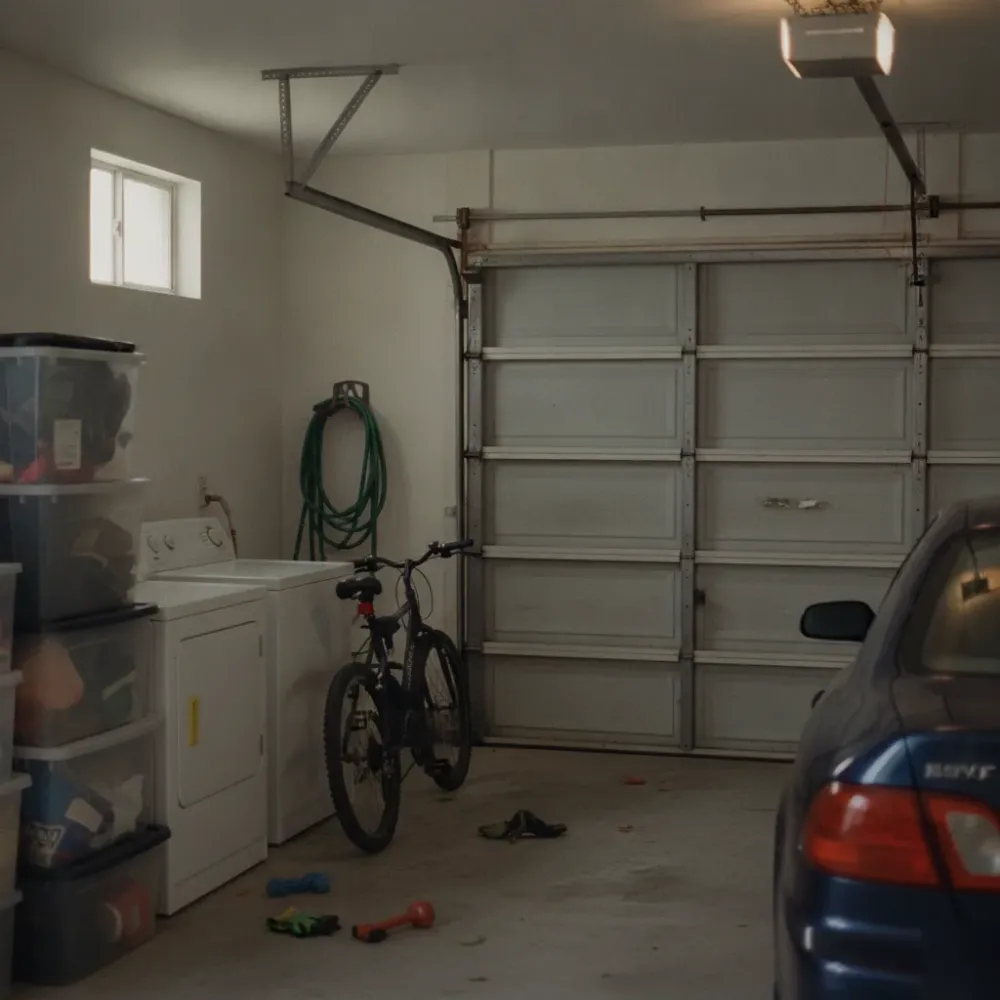
Here's something we run into every week. A customer calls about noisy rollers, we open the door up, and the rollers aren't the only issue. Worn rollers put extra strain on everything nearby - tracks bend, hinges loosen, cables start to fray. By the time most people notice that grinding sound, something else has usually already begun to fail.
That's not an upsell. It's just how these systems wear.
Every roller sits inside a track and connects to a hinge. Once a roller cracks or its bearing gives out, it stops gliding and starts dragging. That drag pulls the hinge out of alignment and scores the inside of the track. In Hallandale Beach, where a lot of homes along the barrier island corridors sit within a mile of the ocean, salt air speeds up corrosion on metal hinges and cable strands - so damage tends to stack up faster here than it would farther inland.
We always check the full system when we replace rollers. Not because we're looking for extra work, but because putting new rollers on a bent track just wastes your money - they'll wear out again within months. Frayed cables get the same treatment. A cable under high tension with visible wear is a safety issue, not something to put off until next year.
Most of the time, whatever extra wear we find is minor - a hinge that needs tightening, a small track adjustment. Sometimes the cables are fine and the tracks are straight, and new rollers really are all you need. But there's no way to know that without someone checking. Skip that step, and a simple roller job can turn into an off-track repair two months down the line.
So if we call partway through the job and mention the track needs attention or a cable looks rough, that's us trying to save you a second visit. We'd rather handle it all in one trip.
Frequently Asked Questions
Common questions about Garage Door Roller Replacement Service
How fast can you get to my home in Hallandale Beach for a roller problem?
We schedule most roller calls within the same day or the next morning, depending on how many stops are ahead of yours. A grinding or shaking door usually gets bumped up in priority since it can jump the track if left alone. When you call, tell us what noise you're hearing and whether the door still opens. That detail helps us bring the right rollers on the first visit.
What happens when the technician arrives to replace my rollers?
The technician starts by pulling the emergency release and checking every roller by hand, not just the noisy one. Doors often have one or two bad rollers plus a few that are close behind. We test the track alignment and door balance too, since a worn roller can throw both off. You'll get a clear answer on the spot about what needs replacing and what can wait.
Why do garage door rollers wear out faster in Hallandale Beach?
Salt air off the Atlantic speeds up corrosion on steel roller bearings, especially in homes east of US-1 near the Diplomat area. We've opened up garages less than a mile from the water and found rust eating through rollers in just a couple of years. Nylon rollers avoid this problem entirely since they don't corrode. If your home sits close to the coast, that's worth asking about before your next repair.
Do I need new rollers, or will lubrication fix the noise?
Spin each roller by hand first. If it turns freely with no wobble, a fresh coat of white lithium grease often clears up the noise in about ten minutes. If the roller has play, cracks, or won't spin, lubrication won't help and it needs replacing. South Florida humidity dries out lubricant faster than most places, so a squeaky door doesn't always mean broken hardware.
Should I pick nylon or steel rollers for my garage door?
Nylon is the better choice for most homes in Hallandale Beach because it resists salt-air corrosion and runs quieter than steel. Steel still makes sense for heavier commercial doors or oversized two-car setups over 300 pounds. For standard residential doors common across local condo communities and townhomes, nylon rollers rated for high cycle counts tend to outlast steel and mean fewer repeat visits down the road.
Can a bad roller cause damage to other garage door parts?
Yes, a worn roller creates extra friction that forces the opener to work harder every time the door cycles. Over time that added strain shortens the opener's lifespan, turning one small roller issue into two repair jobs. Left long enough, a cracked roller can also let the door slip off the track entirely, which is a much bigger fix than swapping a roller early.
Ready to Get Started?
Call 9547152716 Today For A Free Estimate.
