
Fast, reliable garage door and electric gate repair and installation in South Florida — call today, fixed today.
Licensed & Insured
Same-Day Service Available
Locally Owned & Operated
Residential & Commercial Experts
What’s Covered on This Page
- Safety Sensors Are Designed to Stop Your Gate, Not Break It
- How Coastal Air Speeds Up Gate Problems in Hallandale Beach
- Remote and Keypad Issues: Programming Problems vs Hardware Failure
- How can I tell if my gate problem is a sensor issue or a control board issue?
- When should I call a professional instead of trying to fix my gate myself?
- Is it true that only metal gates suffer from coastal salt damage?
- Why do gates near the water in Hallandale Beach break down faster than gates further inland?
- Can summer storms cause electric gate failures?
- Does a gate that stops and starts a lot need repair even if it still eventually closes?
Need Common Electric Gate Problems in 2026 and How to Fix Them?
Call Today For A Free Estimate
Safety Sensors Are Designed to Stop Your Gate, Not Break It
Your electric gate has safety sensors for one reason. They keep people, pets, and cars from getting crushed. When those sensors fail, your gate starts acting strange.
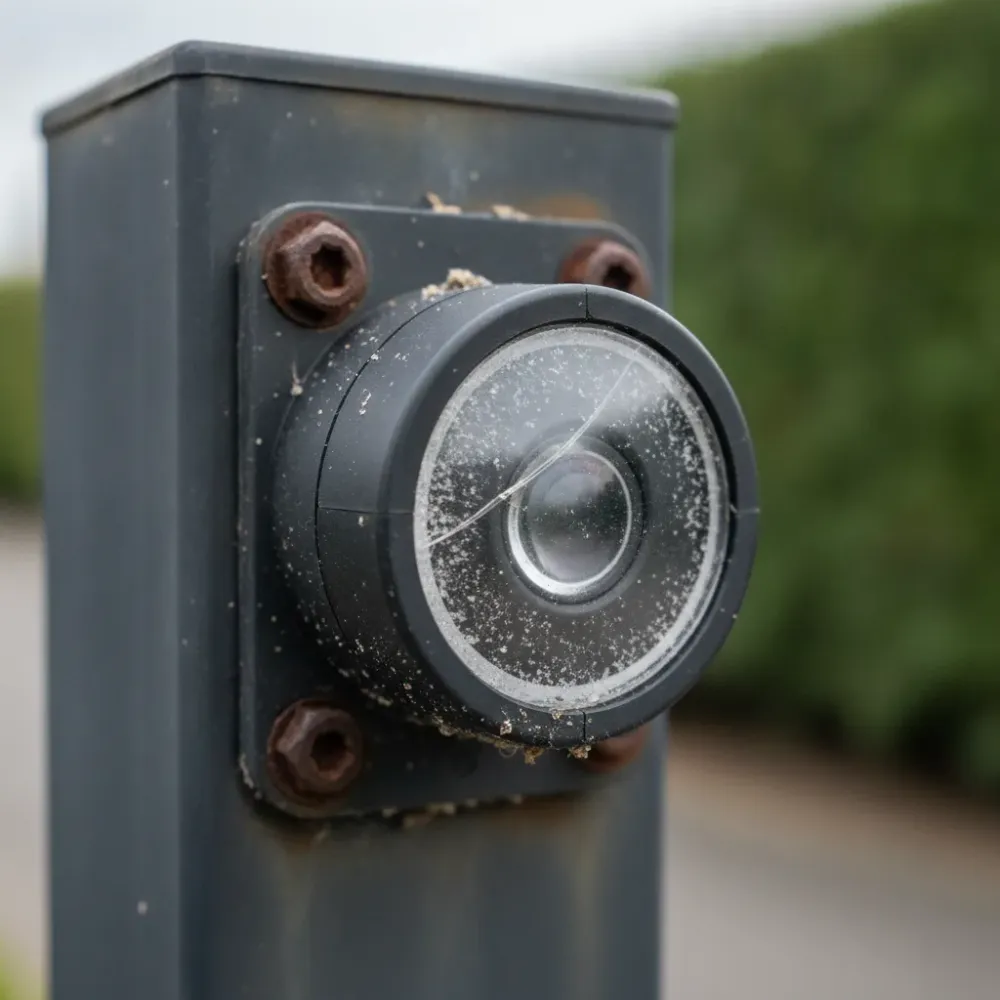
We get calls about this every week in Hallandale Beach. The gate stops halfway. It reverses for no reason. Or it won’t close at all. Nine times out of ten, the sensors are the problem.
How Safety Sensors Work
Most electric gates use photoelectric sensors. These are small devices mounted on each side of the gate opening. One sends an invisible beam of light, the other receives it. When something breaks that beam, the gate stops or reverses. Simple idea, but a lot can go wrong with it.
The sensors talk to your gate’s control board. If the board doesn’t get a clean signal, it assumes something is in the way. So the gate won’t move. That’s the safety feature doing its job. The trouble starts when the signal gets blocked by something that isn’t there.
What Causes Sensor Problems
Here’s what we find during most service calls related to sensor issues:
- Dirt, spiderwebs, or salt buildup covering the sensor lens
- Sensors knocked out of alignment by a bump or vibration
- Water damage from heavy rain or sprinkler overspray
- Corroded wiring connections at the sensor base
- Sun glare hitting the receiver at certain times of day
That last one surprises people. In South Florida, the afternoon sun can hit a sensor at just the right angle and blind it. Your gate thinks the beam is broken. It refuses to close. We see this a lot on west-facing gates near Golden Isles and along A1A where there’s minimal shade.
Quick Fixes You Can Try
Before you call anyone, try these steps:
- Wipe both sensor lenses with a soft cloth. Use a little glass cleaner if they’re grimy.
- Check that both sensors are pointed directly at each other. Most have a small LED light that turns solid green when aligned.
- Look for anything blocking the beam path. Overgrown hedges, a trash can, even a garden hose draped nearby.
- Inspect the wires running to each sensor. Look for fraying, chew marks, or loose connections.
- If sun glare is the issue, a small shade hood over the receiver sensor can fix it permanently.
Most people don’t realize a two-minute wipe-down solves the problem. But if the LED on your sensor keeps blinking or won’t light up at all, the sensor itself might be dead. That’s when you need a pro.
When It’s More Than the Sensors
Sometimes what looks like a sensor problem is a control board issue. The board receives the sensor signal and decides what to do. A fried board can misread a perfectly good sensor. We’ve seen this happen after power surges, which are common during Hallandale Beach storm season from June through November.
And here’s something worth knowing. If your gate has been acting up for a while, the repeated stopping and starting can stress other parts. Springs wear faster. Cables stretch. Tracks shift. One problem becomes three if you wait too long.
If you’ve cleaned your sensors and checked alignment but the gate still won’t cooperate, it’s time to have the whole system looked at. Our electric gate repair team can diagnose whether it’s a sensor swap or something deeper going on with your control board and wiring.
Don’t override your sensors to force the gate closed. That’s how accidents happen. The sensors exist for a reason. They just need to work right.
How Coastal Air Speeds Up Gate Problems in Hallandale Beach
Salt air is rough on metal. That’s not opinion, it’s just what happens when you live steps from the Atlantic. And in Hallandale Beach, most electric gate systems sit outside 24/7 with no break from the moisture, salt spray, and heat that roll in off the coast.
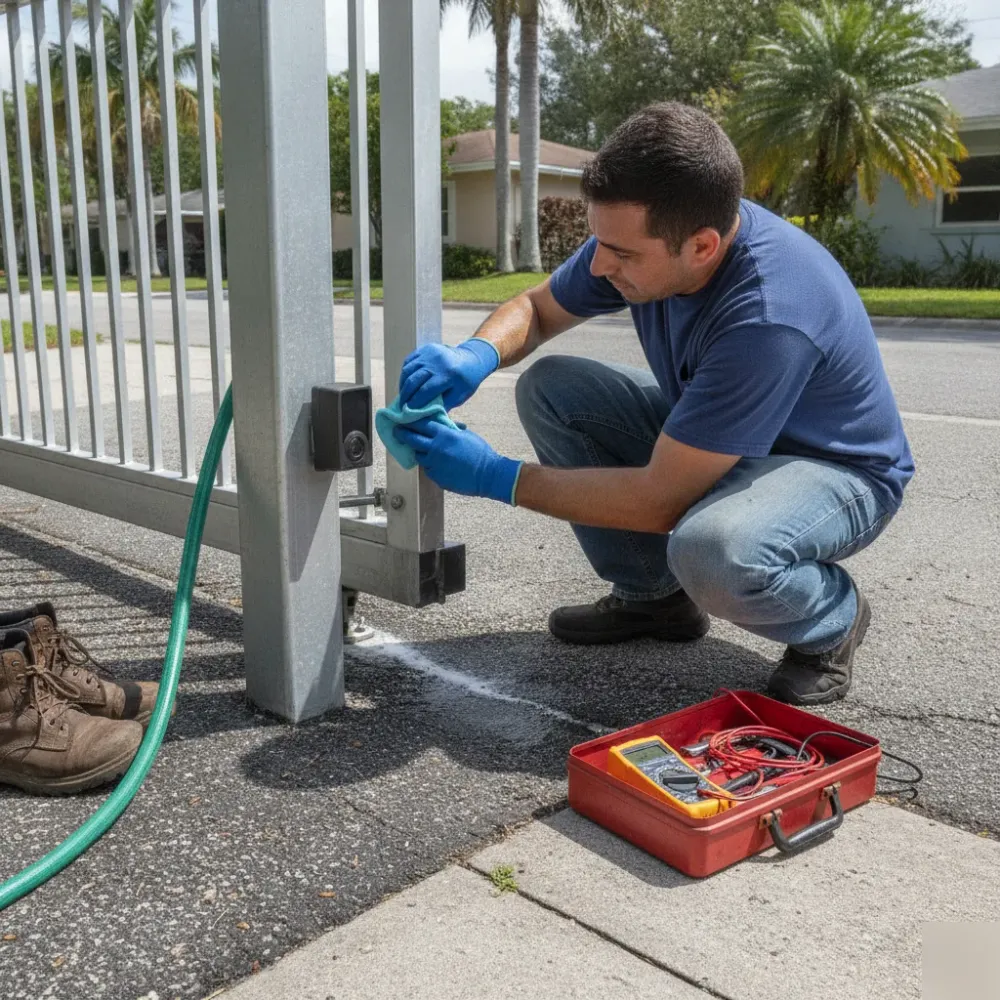
We see the damage constantly.
A gate that might last ten years in a dry inland climate starts showing rust and corrosion in three or four years here. The hinges seize up. The track collects a film of salt residue that acts like sandpaper on the rollers. Wiring connections corrode from the inside out, and you don’t notice until the gate just stops one morning. Hallandale Beach’s salt air and high humidity can promote corrosion on exposed metal and electrical connections. The first signs may include residue, discoloration, rough travel, or intermittent operation, all of which warrant inspection for environmental exposure as well as mechanical faults.
Here’s what that looks like in real life. A homeowner near Golden Isles calls because their sliding gate keeps stalling halfway open. Everything looks fine at first glance. But when you pull the motor cover off, the internal contacts are green with corrosion. The gate’s circuit board has moisture damage along the edges. That’s not a mechanical failure. That’s the ocean doing its thing over time.
The Parts That Suffer Most
Not every component breaks down at the same rate. Some parts take the hit faster than others in our South Florida climate:
- Gate tracks and rollers collect salt buildup that causes grinding and misalignment
- Steel chains and cables rust faster, weakening their load capacity before you can see it
- Control boards and wiring terminals corrode at connection points, causing intermittent failures
- Photoelectric sensors fog or pit from salt exposure, making the gate think something’s blocking it
Most people don’t realize the sensor issue until they’re standing in their driveway watching the gate reverse for no reason. That’s a classic coastal problem we fix regularly.
Humidity Makes Everything Worse
Salt air alone is bad enough. But Hallandale Beach averages around 75% relative humidity year-round. That constant moisture sits on every metal surface, every wire connection, every bolt. It doesn’t dry out the way it would in Arizona or even Orlando. The combination of salt and humidity creates a corrosion cycle that just doesn’t stop.
And summer afternoon storms? They dump fresh water on top of the salt residue. That mix speeds up oxidation even more. We’ve pulled gate operators apart after a heavy rain season and found rust inside sealed housings. Water finds a way in, it always does down here.
So what can you do about it? Preventive maintenance matters more in coastal areas than anywhere else. Flushing tracks with fresh water monthly helps clear salt deposits. Applying a corrosion inhibitor to exposed metal parts twice a year buys you real time. Having a professional inspect the electrical connections annually catches problems before they strand you outside your own property.
If your electric gate is already acting up, the coastal environment probably played a role. Ignoring small signs like a gate that hesitates or makes new noises leads to bigger repairs fast. Our electric gate repair team knows exactly what South Florida conditions do to these systems and how to get ahead of the damage.
The ocean view is worth it. But your gate hardware needs extra attention to survive it.
Remote and Keypad Issues: Programming Problems vs Hardware Failure
Your gate won’t respond to the remote. You punch in your code and nothing happens. Before you assume the whole system is shot, take a breath. Most remote and keypad issues fall into two categories. One is easy to fix. The other needs a pro.
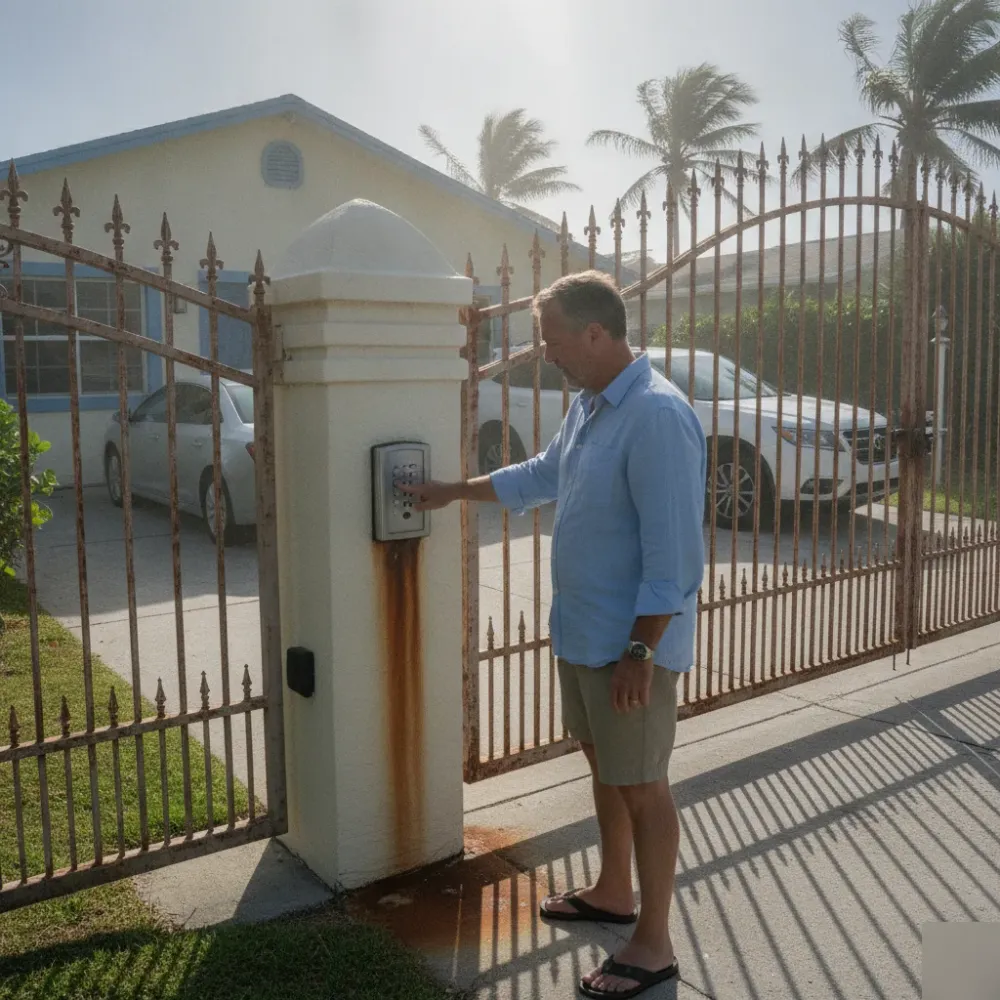
Programming problems are the most common reason we get calls about electric gate remotes and keypads in Hallandale Beach. And most of them don’t even require a service visit. Here’s what usually goes wrong on the programming side:
- A power surge or outage wiped the receiver’s memory, erasing all saved remote codes
- Someone accidentally reset the control board during routine maintenance
- The remote was never synced properly after a battery swap
- A new keypad code was entered but the old one was deleted in the process
We see this mistake all the time. A homeowner changes the battery in their remote, then can’t get the gate to open. They think the remote is broken. Really, some remotes lose their programming when the battery dies. A quick re-sync with the receiver fixes it in minutes.
When It’s Hardware
Hardware failure looks different. The buttons feel mushy or don’t click. The keypad screen is blank even with fresh batteries. You notice corrosion on the circuit board or water damage inside the housing. South Florida humidity is brutal on outdoor electronics, especially keypads mounted near the coast in areas like Golden Isles or along A1A.
But here’s the thing most people don’t realize. A keypad can look fine on the outside and still be failing internally. Salt air corrodes tiny solder points on the circuit board. The damage is invisible until the unit stops working completely.
So how do you tell the difference between a programming glitch and a dead unit? Try this simple process:
- Replace the battery in your remote with a brand-new one from a sealed package
- Stand within 15 feet of the gate receiver and press the button
- Check if the small LED light on the remote blinks when pressed
- If it blinks but the gate doesn’t move, the issue is likely programming or the receiver
- If it doesn’t blink at all with a fresh battery, the remote hardware has failed
For keypads, the test is even simpler. If the backlight won’t turn on and the batteries are good, you’re looking at a hardware problem.
One thing worth mentioning. We’ve had clients in Hallandale Beach replace three or four remotes thinking each one was defective. Turns out their receiver antenna wire had snapped inside the control box. Every remote worked fine, the gate just couldn’t hear the signal. That’s a quick fix once you know where to look.
If you’ve ruled out simple fixes and your gate still won’t respond to remotes or keypad codes, our garage door remote and keypad programming service covers the full diagnosis. We check the remote, the receiver, the antenna, and the wiring. No guessing.
Don’t let a $3 battery problem turn into a $300 panic call. Test the basics first. And if the basics don’t solve it, that’s when you call someone who deals with these systems every day.
Frequently Asked Questions
Common questions about Common Electric Gate Problems in 2026 and How to Fix Them in FL
How can I tell if my gate problem is a sensor issue or a control board issue?
Start by checking the sensor LED light on each side of your gate. If both lights glow solid green but the gate still won’t move, the control board is likely the problem, not the sensor. A bad sensor usually shows a blinking or dead LED. Boards fail more often after power surges, which happen a lot during Hallandale Beach storm season. If cleaning and aligning the sensors doesn’t fix it, the board probably needs a look.
When should I call a professional instead of trying to fix my gate myself?
Call a professional once you’ve wiped the sensors, checked alignment, and cleared the beam path but the gate still won’t cooperate. At that point, you’re likely dealing with wiring corrosion, a damaged board, or worn mechanical parts that need tools and testing equipment. Trying to force a gate closed by overriding the sensors is never the answer. That’s how fingers, pets, and cars get hurt. Our electric gate repair team can pinpoint the real cause fast.
Is it true that only metal gates suffer from coastal salt damage?
No, that’s a common misconception. Salt air and humidity damage wiring, control boards, and electronic sensors just as much as metal hinges and tracks. Many homeowners think a vinyl or aluminum gate is safe from coastal wear, but the corrosion happens inside the electrical components too. Connection points corrode from the inside out, often before you notice any visible rust. This is why gate systems near the water fail faster than the same setup inland.
Why do gates near the water in Hallandale Beach break down faster than gates further inland?
Gates near the water break down faster because salt spray and year-round humidity speed up corrosion. Hallandale Beach averages around 75% relative humidity, and that moisture never fully dries off metal parts, wires, or sensor lenses. A gate that lasts a decade inland can start rusting and misfiring in three or four years here. Areas near Golden Isles and along A1A see this constantly because of open exposure to ocean air and afternoon sun glare.
Can summer storms cause electric gate failures?
Yes, power surges during storms are a real cause of gate breakdowns. Hallandale Beach storm season runs from June through November, and surges during heavy weather can fry a control board without any warning signs beforehand. Heavy rain also washes salt residue deeper into wiring and motor housings, which speeds up corrosion. If your gate started acting up right after a storm, the board or wiring is a likely suspect.
Does a gate that stops and starts a lot need repair even if it still eventually closes?
Yes, a gate that stutters or hesitates still needs attention, even if it eventually closes on its own. Repeated stopping and starting puts extra stress on springs, cables, and tracks that aren’t designed for that kind of strain. One small sensor problem left alone can turn into three separate repairs down the road. Catching it early, before parts wear out, keeps the fix simple instead of complicated.
Ready to Get Started?
Call (954) 329-1361 Today For A Free Estimate.

Recent Comments