
Fast, reliable garage door and electric gate repair and installation in South Florida — call today, fixed today.
What's Covered on This Page
- Why Garage Door Sensors Fail Faster in Coastal Climates
- Signs Your Garage Door Sensor Needs Replacement, Not Just Realignment
- Storm Season and Snowbird Sensor Failure Window
- How long does garage door sensor replacement take in Hallandale Beach?
- Can salt air really cause my garage door sensors to fail early?
- My sensor light is blinking but the door still moves. Do I actually need a replacement?
- What should I do to prepare before the technician arrives?
- Is it safe to keep using my garage door if the sensors are acting up?
Need garage door sensor replacement service?
Call Today For A Free Estimate. Call On Time Garage Door Repair now.
Why Garage Door Sensors Fail Faster in Coastal Climates
Living a short walk from the beach sounds nice until your garage door refuses to close at 7am on a Monday. You would think, how do you live like this? That's the exact complaint we hear from Hallandale Beach residents every day. We're not exaggerating the corrosive effects that salt air has on garage door sensors; people get locked out because they don't know that is actually what has happened.
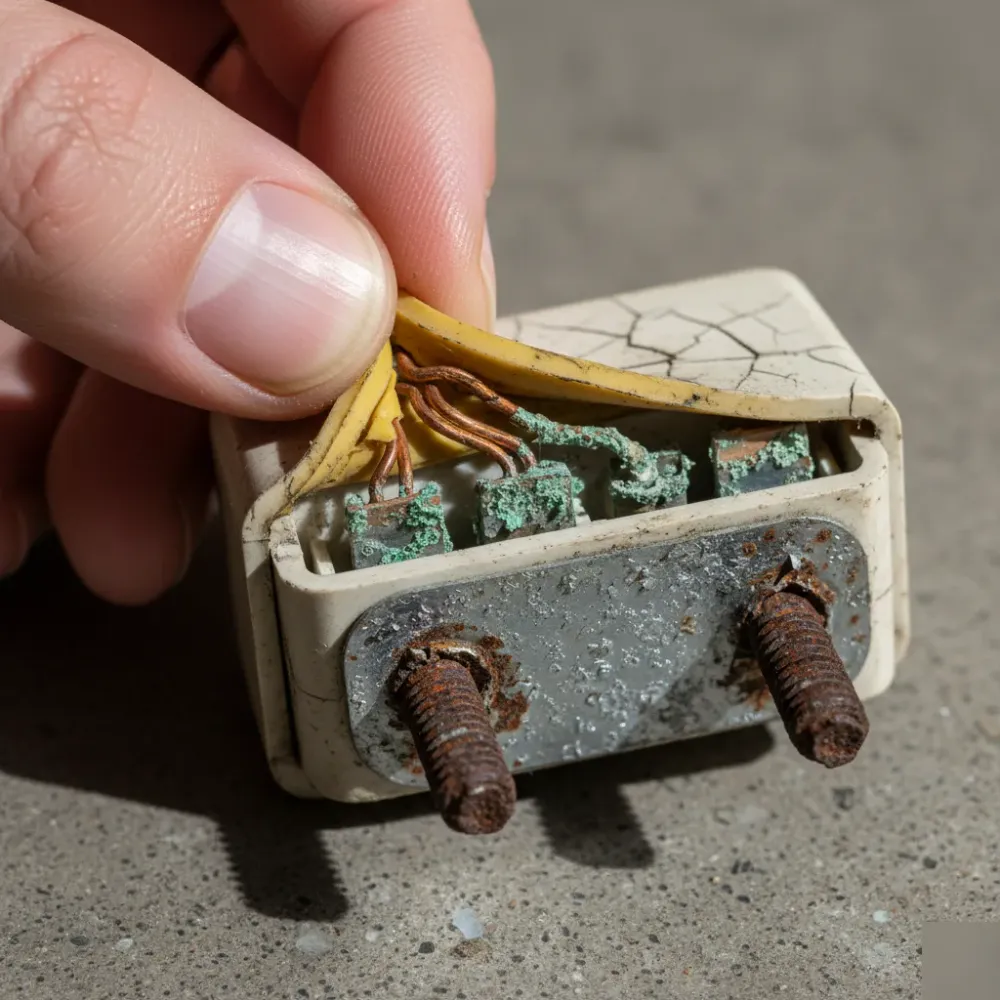
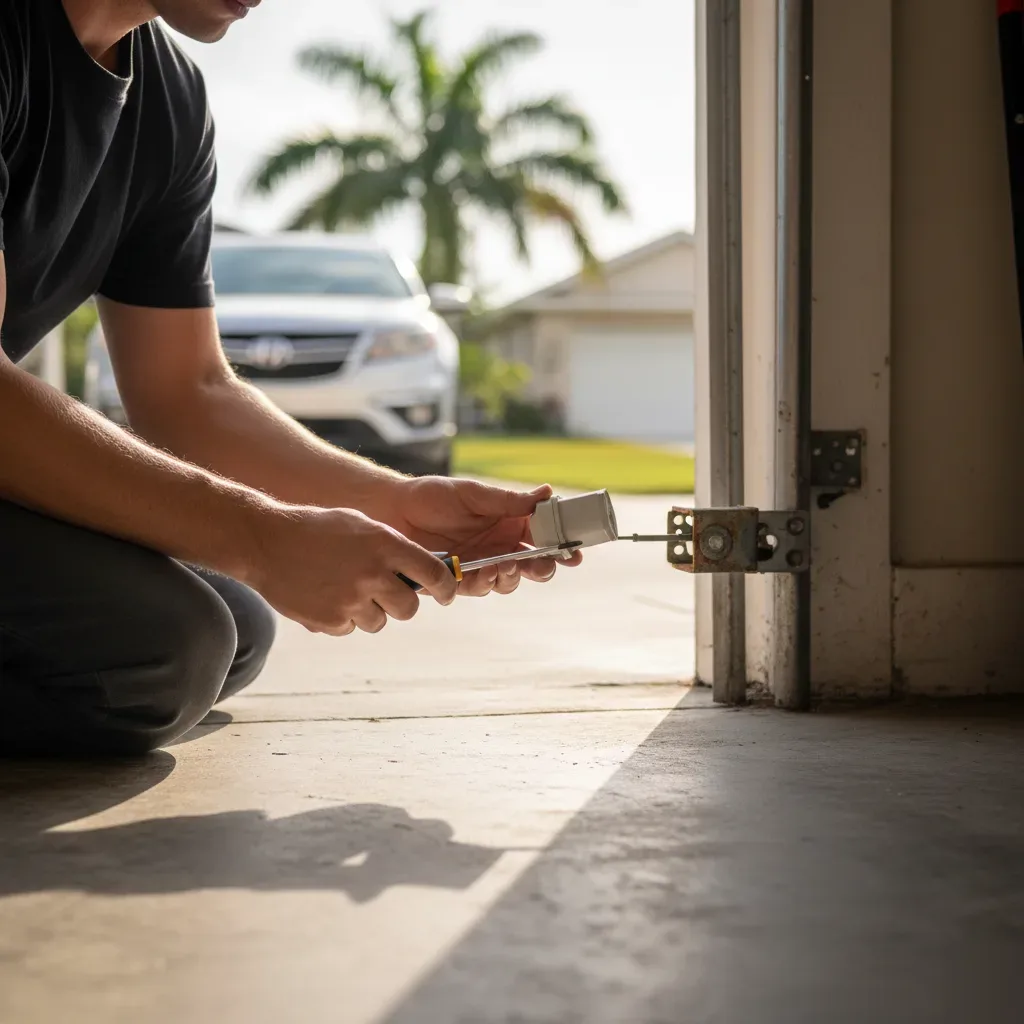
Garage door safety sensors are mounted near the floor, roughly six inches above the ground, where moisture gathers at every turn. A coastal climate, in which we live, has that moisture loaded with salt. Salt corrodes the metal in the electrical contacts; it can fog the lenses on the sensor; it can wear away at the insulation on the wiring. According to the International Door Association, environmental exposure is one of the leading causes of premature failure of sensors in residential garage doors. In our corner of South Florida, environmental factors that contribute to these failures include the humidity and the salt.
Here's what happens to sensors when they're near the beach:
- Salt collects on the infrared lens which can block the beam.
- Corrosion of the metal terminals on the end of the wires.
- Moisture in the air can warp the sensor's plastic housing which causes it to become misaligned.
- Sand kicked up during storms can get inside the sensor housing.
We have pulled sensors off a door near Golden Isles that were so corroded, the wires snapped apart in our hands. This wasn't years of abuse. These sensors were near salt and had no idea what that was doing to them.
Besides the salt, the heat of our summer days takes its toll. When a garage is closed, the temperature builds up in there and the sensors get hot. Then a storm blows through and cools things down suddenly. This thermal stress puts strain on the solder on the circuit board, eventually causing it to crack. One day it's working and the next day it's flickering like an old dying flashlight.
In most parts of the country, garage door sensors usually last about 5-7 years. We replace them at around 3-4 years in Hallandale Beach, occasionally before. It's part of life near the ocean, it eventually wears on everything in your house. The good news is, garage door sensor replacement is a quick fix when you catch it in time. Letting the problem go unattended can leave your door unable to reverse if something is obstructed. No one wants to gamble with that risk.
Signs Your Garage Door Sensor Needs Replacement, Not Just Realignment
Most of our customers don't know this, but they assume if a sensor fails, it's misaligned and they'll just adjust it and that will resolve the issue. It could be, or at least that's what it feels like. But what we see in Hallandale Beach is people constantly adjusting sensors that really need a full replacement.
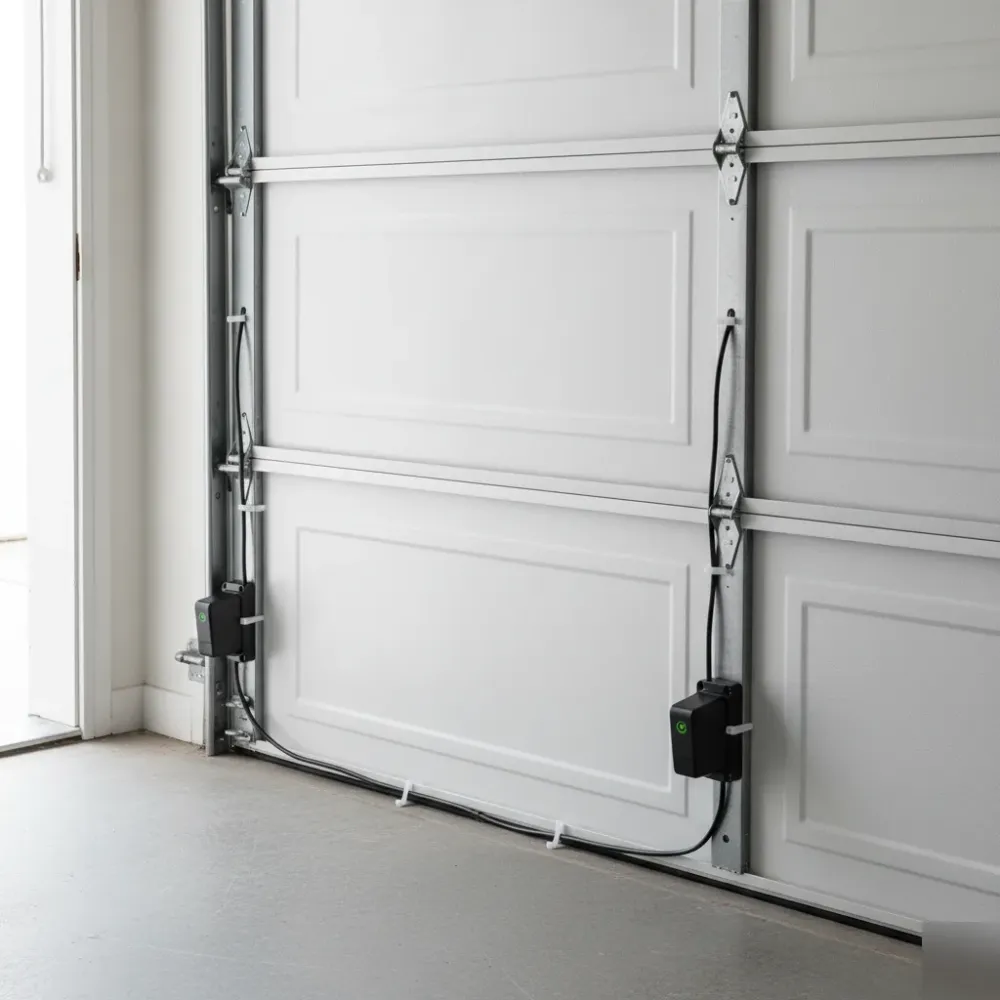
The way you know the difference between misalignment and a sensor that's actually failing internally is the lights. When a sensor is misaligned, typically the LED will have one light on solid and one flashing. You adjust it, you tighten the bracket, and your door operates smoothly for several months. However, a deteriorating sensor behaves differently. You’ll notice the indicator lights blinking even when the unit is calibrated properly. Your garage door begins reversing for no apparent reason. The sensors will operate flawlessly in the morning only to fail in the afternoon as the sunlight changes position. These are indicators that the unit needs replacement, rather than just realignment. You may require a replacement if:
- The sensor lights are unlit or dim even after cleaning the lenses on both sensors
- The garage door reverses without any obstruction on the path of the beam
- The sensors operate intermittently and sometimes function while other times they fail
- Cracks, corrosion, or signs of melted plastic are visible on the casing of the sensor
- The wires near the sensor connection are frayed or showing signs of discoloration
The final one is significant. In coastal areas like the Golden Isles, salt exposure can corrode exposed wires very quickly. We’ve removed sensors from garage doorframes with wires so damaged they were brittle, and barely conducted electricity due to green copper.
, if you have had to align the same sensor repeatedly over the past few months, it’s about to fail. Over the course of years, the photoelectric eye will deteriorate. The effects of humidity, heat, and direct sunlight in Hallandale accelerate this failure rate.
Finally, your garage door will fail to close, and the sensor light remains dead regardless of what you do. Your sensors have not been misaligned; they have been rendered inoperative.
Don’t waste time trying to correct the problem with a faulty component. If any of the above describe your situation, schedule a garage door sensor replacement in Hallandale Beach prior to your garage door getting left open.
What happens during a professional sensor replacement?
Many customers want to understand what occurs before scheduling a service. This is totally reasonable.
Upon arriving at your Hallandale Beach residence, we do not remove and replace components without further investigation. This procedure ensures that everything functions correctly once we depart.
- Complete visual inspection. We examine both sensors and the brackets, as well as the wires connecting the garage door sensors back to the opener unit. We are looking for damaged lenses, corroded wires, loosened mounting brackets or chewed wire insulation.
- Diagnostic testing. We test the transmission and reception between the two units to determine whether one unit needs replacing or if the receiving sensor needs to be replaced.
- Removal of sensors that are no longer operating. We disconnect the wiring that attaches the old units to the garage door opener, and disconnect the sensors. If the mounting brackets are corroded or bent, those will be removed as well.
- Installation and alignment. New sensors are installed, and the correct height and position are adjusted. We that both indicator lights signal the correct alignment.
- Operational verification. We cycle the garage door several times to test. We also perform an obstruction test by placing an object in the sensor's path to verify that the door reverses as intended. That final check is. The Consumer Product Safety Commission estimates that garage doors cause thousands of injuries annually, so sensors that fail to detect an obstruction and reverse the door are a critical safety issue. That's especially true for households with children or animals. Most residential installations take less than an hour for a standard garage. If you live in the Golden Isles area, older wiring may occasionally require extra time to repair; we'll let you know if that's likely before we start. We also routinely find customers assume a sensor problem is sensor-related when it's actually an underlying wiring fault concealed in the wall. That's why that diagnostic phase is critical, we don't assume, we determine exactly the issue before we recommend a repair. Once you have new sensors properly installed and tested, your door functions properly. It stops firmly, reverses with confidence, and no longer flashes warning lights in your face.
Sensor Replacement in Hallandale Beach HOA and Condo Garages
Condo buildings and HOA-gated communities in Hallandale Beach have special protocols for garage door repairs. We work in these locations on a weekly basis. Though your sensors are your repair to perform, the HOA manages the approval process. Most beachfront high-rises and Golden Isles neighborhoods feature large, shared parking structures with numerous garage doors. Each door requires its own safety sensor. A single pair of sensor failure can block access for scores of residents. When that happens, everyone complains and the HOA receives the majority of complaints.
What's the Difference with a Condo Sensor Repair?
The key difference is access. Whereas we're able to enter and begin work in a single-family garage as soon as we arrive, in a condo or HOA building, we often have to coordinate with a property manager or maintenance person, and a gatehouse may also be involved. We make sure to bring our documentation with us in case there's no response, so that can minimize wait time.
Common hallandale beach garage issues you may run into at a condo/HOA building:
- Sensors mounted in high-traffic zones where they can be hit by carts or cars repeatedly
- Wires running inside common or separate walls requiring precise work
- Many garage door sensors mounted on a single unit servicing the entire building
- Approval must be granted by the HOA prior to beginning work on community access doors.
We're happy to guide you on whether your sensor is on a garage door that's covered by your unit's ownership, or on one that belongs to your HOA. If there is a shared garage door on your building's common area, the HOA will likely address the sensor; if it is inside a private garage you will have to take care of it yourself. It doesn't take much to set off an auto-reverse on a community garage door, as improperly aligned safety sensors can cause it to reverse multiple times per day! Frequent auto-reverses wear out your garage opener much quicker than normal. An initial $150 sensor adjustment, if not addressed, becomes an entire opener replacement. We work closely with property managers in Hallandale Beach to streamline the process. We provide what they require, schedule work around quiet hours, and we leave things as we found them. The board receives their report, you have a garage door that works, and we all go on with our lives.
Storm Season and Snowbird Sensor Failure Window
This is the same situation every season: hurricane season starts in June and by October, we have homeowners calling about their garage not having been used for months! Sensors that worked great in April are dead in the fall. South Florida storms are hard on garage door sensors, especially when all else around your garage is fine. During and after hurricane season, we tend to see:
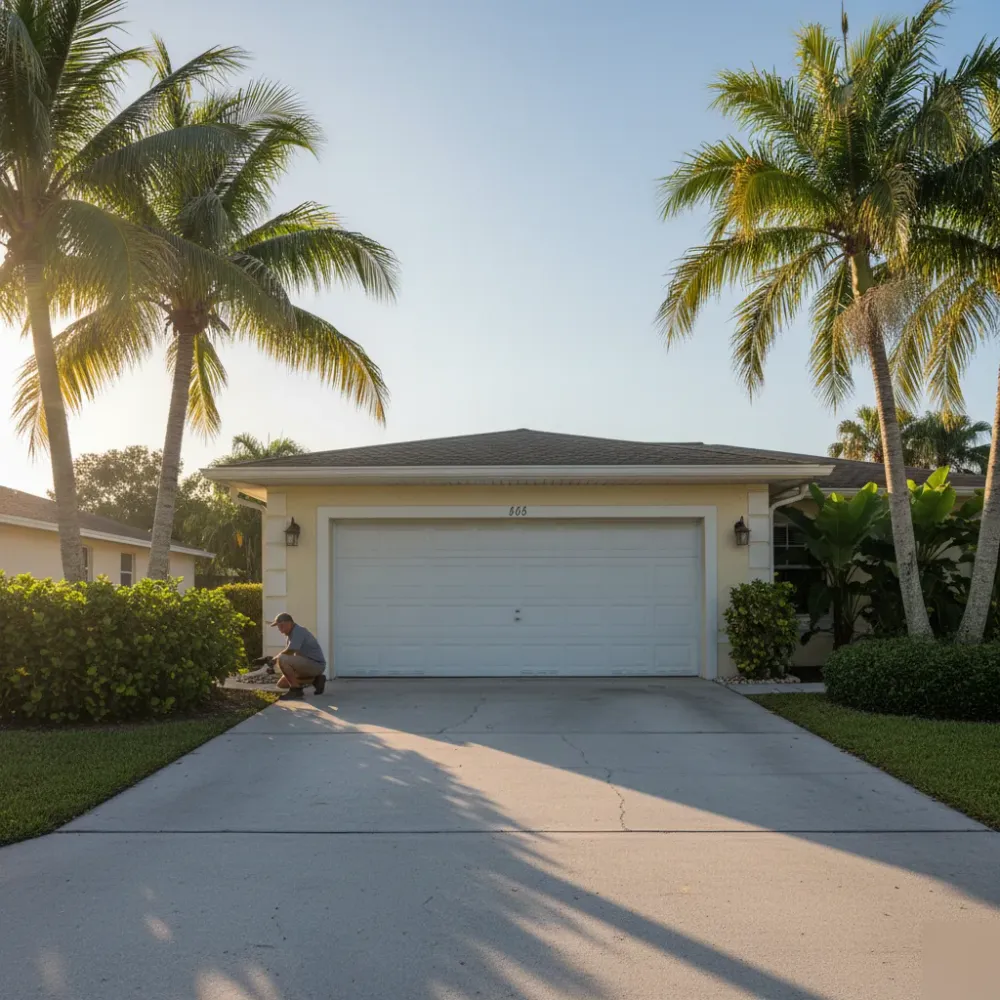
- A water trap or leak in the sensor, either from rain or humidity
- Power surges due to lightning strikes, destroying the electronics inside the sensor
- Physical damage to the sensor from debris impacts causing it to shift or its lens to crack
- Corrosion on the sensor wiring (and even the sensor itself) due to the salty ocean air, especially near the Intracoastal waterway
- Snowbirds: we have this issue almost every season. Someone leaves for Northern Florida in May, only to return in November and discover their garage won't close. With no one in town to witness a flashing sensor light, the sensors have gone unused for a good five months in the hot, humid, storm-filled climate, and corrosion has set in by the time they return. An adjustment to the sensors done in June will turn into a replacement of your garage sensors by November or December.
Even homes on or near Golden Isles in Hallandale are more likely to be affected because they are closer to the water. Corrosion on the exposed wires and other metal parts is accelerated near the water. We have had sensors fall off brackets due to the mounting screws rusting away on some homes near Golden Isles. One piece of advice if you are going to be gone during the summer: have someone check your garage once a month. Open the garage, close it, and wave a hand in front of the safety beam sensors at the bottom. It takes all of ten seconds and will help keep your garage running correctly.
Of course, once you have already noticed your garage door won't work, don't force it. The Consumer Product Safety Commission reports that malfunctioning garage door sensors can lead to crush injuries. Call us before attempting anything. We service many garage door sensor replacements in Hallandale during the snowbird's November return season, have the knowledge on what to look for, and can even replace your sensors in Hallandale with the parts we carry in our van.
Frequently Asked Questions
Common questions about garage door sensor replacement service services in 301 NE 3rd St. unit 206 33009 Hallandale Beach
How long does garage door sensor replacement take in Hallandale Beach?
Most sensor replacements are done in under an hour. A technician will inspect both sensors, test the beam alignment, and swap out the failing units. If the wiring near the sensor is corroded — which we see often in Hallandale Beach due to salt air — that adds a little time. But you will not be waiting around all day. Most homeowners are back to a fully working door the same morning we arrive.
Can salt air really cause my garage door sensors to fail early?
Yes, and it happens faster than most people expect. In Hallandale Beach, the salt air corrodes the metal contacts, fogs the infrared lenses, and can warp the plastic housing over time. Sensors that last 5-7 years in other parts of the country often need replacing at 3-4 years here. If your garage is near the water — like in the Golden Isles area — you may see failure even sooner. Salt is hard on every part of your door system.
My sensor light is blinking but the door still moves. Do I actually need a replacement?
A blinking light that won't go steady — even after you clean the lenses and check the alignment — usually means the sensor is failing internally. This is different from a simple misalignment fix. If your door reverses for no reason, or the sensors work fine in the morning but act up in the afternoon heat, those are signs the unit itself is worn out. Adjusting a bad sensor over and over will not fix the problem.
What should I do to prepare before the technician arrives?
Clear the floor area around both sides of your garage door before we get there. Make sure the opener is plugged in and the door can be operated manually. If you have noticed any specific behavior — like the door reversing at a certain time of day — write it down. That detail helps us diagnose faster. You do not need to remove anything yourself. We handle the rest once we are on site at your Hallandale Beach home.
Is it safe to keep using my garage door if the sensors are acting up?
No, and this is worth taking seriously. Sensors are a safety feature. If they are not working correctly, your door may not stop or reverse when something is in its path. That is a real risk for kids, pets, and vehicles. In Hallandale Beach, a door left partially open overnight also invites humidity and insects inside. If your sensors are flickering, reversing randomly, or showing no light at all, stop using the door normally and call for a replacement right away.
Ready to Get Started?
Call Today For A Free Estimate. Call 9543291361 today.

Recent Comments